bil.png)
Archive Record
Images
Metadata
Object ID |
2013.55.11 B |
Object Name |
Video Recording |
Title |
Daniel Igali Interview |
Interview Summary / Résumé d'entrevue |
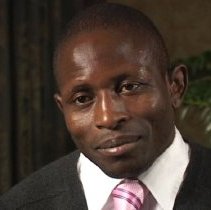
Daniel Igali, Order of Sport recipient, inducted in 2007, born in Eniwari, Nigeria, talks about growing up in Nigeria, his wrestling career, the 2000 Olympic Games in Athens, and his work with youth. Daniel talks about overcoming challenges and the role of mentors in his life. Daniel describes growing up in rural Nigeria, wrestling in his youth, and how he dreamed of winning an Olympic medal from a young age. Daniel explains how winning the Gold Medal in Sydney in 2000 provided him with a platform he has leveraged to work with youth in Nigeria, ensuring that people receive the necessities of life, emphasizing the importance of education, and being a role model. He describes talking to youth in Canada and Nigeria about endurance, achieving your goals, and having people who positively impact your life. Daniel explains why he left his family and applied for refugee status after competing at the 1994 Commonwealth Games in Victoria, British Columbia. He also talks in detail about his wrestling career, including wrestling through university with a 116-0 record, the 1999 World Championships in Ankara, receiving the Lou Marsh Memorial Award, and the 2004 Olympic Games in Athens. Daniel also explains how he felt after receiving the Gold Medal in Sydney in 2000 when he wrapped himself in a Canadian flag and wept. Entrevue avec Daniel Igali, 6 avril 2009. MP4 numérisé à partir d'une DVCAM 40 Advanced ME de Sony. Temps de visionnement : 01:49:43. Daniel Igali, récipiendaire de l'Ordre du sport, a été intronisé en 2007 et est né à Eniwari, au Nigéria. Il parle de son enfance au Nigéria, de sa carrière de lutte, des Jeux olympiques de 2000 à Athènes et de son travail avec les jeunes. Daniel parle des défis qu'il a surmontés et de l'importance de ses mentors dans sa vie. Daniel décrit son enfance dans une région rurale du Nigéria, ajoute qu'il a commencé à faire de la lutte à cette époque et qu'il a commencé à rêver d'une médaille olympique dès un très jeune âge. Daniel explique comment sa médaille d'or à Sydney en 2000 lui a fourni une plateforme qu'il a mise au profit de son travail avec les jeunes au Nigéria, veillant à ce que les gens puissent pourvoir à leurs besoins, soulignant l'importance de l'éducation, et agissant comme un modèle pour les autres. Il décrit des moments où il parle aux jeunes canadiens ou nigérians de l'endurance, de l'atteinte de ses objectifs et de l'importance des personnes qui ont un impact positif sur votre vie. Daniel explique pourquoi il a quitté sa famille et demandé le statut de réfugié après avoir participé aux Jeux du Commonwealth de 1994 à Victoria, en Colombie-Britannique. Il parle également en détail de sa carrière de lutteur, notamment de sa performance à l'université avec un record de 116-0, des Championnats du monde de 1999 à Ankara, des Jeux olympiques de 2000 à Athènes et du fait d'avoir reçu le Prix commémoratif Lou Marsh. Daniel explique aussi comment il s'est senti lorsque, après avoir reçu la médaille d'or à Sydney en 2000, il s'est enveloppé d'un drapeau canadien et a pleuré. |
Scope & Content |
Daniel Igali interview, 6 April 2009, digitized MP4 from Sony 40 Advanced ME DVCAM. Viewing time 01:49:43. 1 of 3: 00:14Advice to others on overcoming problems: "For a kid growing up, I'd say - you should be true to your values. The world doesn't end with distractions or obstacles. I think what obstacles are meant to do is to test your tenacity. It's meant to see how strong you can be if you overcome them. And it is not meant as something to stop you. It's meant to be there for you to scale it... For a kid growing up I say hold true to yourself and if you have a dream don't allow anything to stop you from achieving it. You just have to move forward with it, stay close to the people that love you and make sure that you don't take no for an answer." 1:40What gave him the strength to keep going: talks about growing up in Nigeria, in a family of 20 children, in crowded conditions, with one water source, not like Canada 2:37"My means to grow out of hardship was to remain steadfast to my dream and hold onto it very fast"; he wanted an education and the opportunity to come to Canada in 1994 as where this dream could happen and he was not going to let go of it 3:44How to persevere in the face of adversity: Daniel talks about his work in Nigeria, trying to ensure that people get the basic necessities of life and using his status as an athlete as leverage; he talks to kids to find an alternate way of life and to get an education 4:53He talks about working with Canadian kids in disadvantaged situations and stresses the values of hard work, ethics, time management, good neighbours, do not allow people to tell you that you cannot achieve goals 6:43Talks about the people in Canada who helped him after he decided to stay in 1994, how complete they were complete strangers and how that is how the world should be 8:37The role of mentors: Mentors are important in life; talks about his mentors and the concept of sacrifice, endurance, achieving your goals and how important it is to have people who care about you and have a positive impact on your well being 9:59What he is most proud of: Talks about Nigeria, building schools, encouraging education 10:42The Gold Medal has provided leverage to do what he is doing today 11:42Talks about the Future Aces Foundation 12:54What does your name mean? Baraladei means "I have got what I wanted"; given this name because his father wanted a son; Daniel is his baptismal name 13:25Talks about his large family in Nigeria, there were hard times but he had fun growing up, the traditional culture; strong bond with his maternal grandmother, raised by her when his parents were in England pursuing their education, talks about being close to his mother because culturally it was important that she had a son. 17:55Talks about wrestling being part of the Nigerian culture and his grandfather being a champion wrestler, he learned because everyone was wrestling but he learned the traditional style, not freestyle 20:08Talks about, at 10 years old, meeting Appah Macauley, a Nigerian wrestler who attended the 1984 Olympic Games in Los Angeles. It was a life changing experience, he decided then he wanted to go to the Olympic Games 21:33 Talks about attending his primary school and sitting on floors; goes to another city and sees a concrete school for the first time and realizes the inequality; (24:19) "When I finally had the opportunity I upgraded the school and the learning conditions around the school" (reference to the Maureen Matheny Academy) 25:21Talks about his wrestling career in Nigeria, he was a step above others in his age group and winning enough matches so people wanted to see him wrestle, he earned money doing this, at age 16 a coach found him and brought him to the city where he was introduced to freestyle wrestling, first time he wore shoes to wrestle, won his first National Championships 28:15At age 14 started taking care of his siblings and paid the school fees for his sister while his mother pursued her doctoral degree 29:36Talks about going to Egypt to wrestle in 1994 and how important and eye opening this was; talks about attending university and becoming a student leader (political activist) 32:151994 Commonwealth Games in Victoria: no pre-determined notions about Canada and about not returning home, military dissidents in university were being killed and if he returned he also could have been arrested or killed; when he decided to stay he wrote to his mother 35:40Talks about wrestling in the Commonwealth Games and that the three toughest countries to beat were Canada, India and England; he did not know anything about the calibre of these countries and as far as he was concerned he was the African champion and would win the Gold; he soon realized he was not at that level; honest about losing 38:11Talks about his early life in Canada, the uncertainty as he worked through the immigration process and about being unsettled until he was accepted as a refugee; attending Simon Fraser University in 1995 and started to wrestle in Canada 40:10Talks about his coaches being straightforward with him, they saw he was lacking in self belief and in responsibility; so they made him work overtime 2 of 3; 00:11Coaches saw something extraordinary in him and went to great lengths to make see it in himself, "My biggest problem was self-doubt"; felt that because Canadian kids had more opportunities so he could not be as good; his coaches made him apply himself, he also had a problem with stamina as he was not conditioned to wrestle at an international level 01:45Talks about a match he lost that he could have won and how his coaches had a tough talk with him and to stop making excuses and if you lose, you lose; changed his career and realized "any match I lose is because the person is better and not because I beat myself"; started training better, harder and started believing in himself 4:05Collegiate record of 116-0; the podium was a means to get onto the next level 6:421998 Canadian citizenship: "That was the moment I was waiting for - to be a free citizen." (7:08) Up until that point worried about being sent back. "A Canadian passport means you are a world citizen, it is respected all over the world"; talks about his surrogate Canadian mother Maureen Matheny and how she was the first one he called when he got his citizenship 8:341999 World Championships in Ankara; difficult time for him as Maureen (Canadian surrogate mother) was sick with cancer and he had injured his knee; talks about winning and coming back to Canada to put his medal around her neck in the hospital; honestly did not think he was going to win, his goal was top 8 to qualify for the Olympics 14:502000 Olympic Games Sydney: media attention as the World Champion (first for Canada) plus sponsers plus the weight of the Olympics equalling a lot of pressure, the money meant he had access to more help; he wrestled the top 6 men in his weight category, talks about how you want an easy draw and did not get one, coach told him he did not get the bad draw, his opponent did since that person had to wrestle the World Champion 19:36Talks about Lincoln McIlravy who was the toughest opponent he had ever wrestled; after the match Lincoln told him he was the best athlete he had ever wrestled 22:34Talks about Arsen Gitinov (Russian athlete) and the final match, he had never met this opponent and only saw the tapes 24 hours before the match; strategy - be explosive, make the match quick; he let Gitinov score on his mistake and expected a negative reaction from his coach, instead was told to do what he did well and to back out and explode again 26:48Talks about his coach, Dave MacKay, and Bob McCormack, the team doctor and himself making a good team 29:05Talks about running around with and kissing the Canadian flag upon winning the Gold: "I was just so overwhelmed with pride. I was just so thankful to this country that had given me so much, everything that I had wanted in life - education, sports, and opportunity to compete."; "In my mind I was running around Canada and celebrating with Canada" 31:17Talks about what the podium meant to him, goes back to his childhood and the letter to his mother in 1994, remembers his grandmother sending him a letter telling him she was proud of him 3 of 3; 00:15Talks about his schoolteacher who was disparaging of his dream and his grandmother telling him "Dreams should come in one size too big"; he met her after winning the Gold and they agree she would never use the words "cannot, never, impossible" with kids 0:20-1:33"We had a rule in the school that you can't get dirty. Your uniforms can't be dirty and they have to be tucked in all the time. So when we wrestled, we came back in and we'll all be dirty of course. I think I was in grade four or five. I'm not exactly sure. She (my teacher) took me to the front of the class, and said, 'Why are you dirty'. I said "I want to wrestle. That was my first practice for the Olympics.' And she said, 'What Olympics? Do you know what the Olympics is? Do you think people from this village goes to the Olympics? Has anybody from here gone to the Olympics?' She said, you should have realistic goals in life, and for getting dirty, you will have six strokes of the cane...I could live with the six strokes, but this thing about the Olympics not for us, it bothered me." 3:59Talks about the support of his family and how his relationships with them grew and understanding the needs of the people and how we need to do something about it 5:13 Talks about winning the Lou Marsh award and being excited since it was not an award just for professional athletes but also for amateurs; (7:00) talks about how it was a good year for him and the other outstanding athletes of that year 8:39Why did things come together that way for you? Feels it was divine, predetermined; talks about how his coaches Mike Jones and Dave MacKay protected him and how the wrestling community supported him 10:54Talks about the change in the weight classes at the Olympic level, winning the Gold medal at the 2002 Commonwealth Games and being selected as the flag bearer "I was content with myself". 13:10Athens 2004: talks about the spinal problem he had, saw it as an adversity to be overcome, felt the results were fair since he had less training and preparation 15:17In 2002 started working with Right to Play Foundation - "...need to use myself to help less fortunate people"; 3 months before the Olympic Games in Athens he discussed his career with his coaches and afterwards "it was done". 16:572007 Induction to Canada's Sports Hall of Fame: special moment to be celebrated for your contributions to sport and society 19:47"you should keep pushing the envelope because its only then that you can know how far you can go. Push as hard as you can, otherwise you won't know what limits you have." 20:29Most proud moment of his career was the 1999 World Championship, so unexpected, so tumultuous, came out knowing he was the best in the world 21:28Opening of the new school in Nigeria: involved in a process, involved in bringing change in education and athletics to the lives of very disadvantaged kids in the delta region of Nigeria, change with support of numerous people, change that will reap dividends 10 to 15 years from now that we could never have imagined; the school was named for his Canadian mother and it was a moment that ranks with the athletic moments of his career; (23:54) named for Maureen because she was someone who believed in him, who wanted him to go to school and to think beyond wrestling 24:54"I got what I wanted, still a lot more that I want to do, build more schools, give kids opportunities to have a better life." 26:14Thoughts on the first 35 years of his life: "well spent..." |
Date |
2009/04/06 |
People |
Igali, Daniel Matheny, Maureen Steiner, Terry McIllvary, Lincoln Jones, Mike McKay, Dave Macauly, Appah |
Search Terms |
Daniel Igali Wrestling Freestyle Interview Olympic Games SIlver Medal Gold Medal Lou Marsh Trophy Pan American Games 2000 Olympic Games Sydney 1999 World Championships Gold 2002 Commonwealth Games Manchester 1999 Pan American Games Winnipeg 1994 Commonwealth Games Victoria Citizenship |