bil.png)
Archive Record
Images
Metadata
Object ID |
2013.55.4 B |
Object Name |
Video Recording |
Title |
George Athans Jr. Interview |
Interview Summary / Résumé d'entrevue |
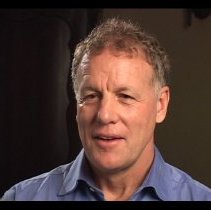
George Athans Jr., Order of Sport recipient, inducted in 1974, born in Kelowna, British Columbia, talks about his water skiing career. George recalls growing up in a family of athletes and how, as a youth, he was on the water in the summer and the ski hills in the winter. George describes how he focused on water skiing at a young age after winning his first national title at 13 years old and training in California during the summertime so as not to sacrifice his studies. George talks about overcoming his first significant loss at the 1969 World Championships in Copenhagen and how he better prepared for and won the Overall World Championship title in Spain in 1971. George also explains that defending and winning the title again in 1973 was important but that the most meaningful win for him was the US Masters title. George describes the technological changes that led to lighter and more aerodynamic skis. George explains how his career ended in an injury and how he hopes that his successes paved the way for future Canadian water skiers. George explains that he learned that "you don't get anything in life without a lot of hard work" and that sport gave him self-confidence. He talks about his role models, the benefits of sport for youth, and what it means to be inducted into Canada's Sports Hall of Fame. George shows his Order of Canada, World Championship medals, and Queen's Jubilee medal. He also displays a well-known action shot of him water skiing and describes when the photo was taken. Entrevue avec George Athans Jr., 23 et 24 octobre 2006. MP4 numérisé à partir d'une DVCAM 40 Advanced ME de Sony. Temps de visionnement : 00:45:10. George Athans Jr., récipiendaire de l'Ordre du sport, a été intronisé en 1974 et est né à Kelowna, en Colombie-Britannique. Il parle de sa carrière de ski nautique. George se rappelle son enfance au sein d'une famille d'athlètes et décrit comment il a passé les étés de sa jeunesse sur l'eau et les hivers sur les pistes de ski. George décrit comment il s'est concentré sur le ski nautique dès un jeune âge après avoir remporté son premier titre national à l'âge de 13 ans et s'être entraîné en Californie pendant l'été pour ne pas sacrifier ses études. George parle de comment il a réussi à surmonter sa première défaite importante lors des Championnats du monde de 1969 à Copenhague et comment il s'est ensuite mieux préparé pour remporter le titre de champion du monde toutes catégories en Espagne en 1971. George explique également qu'il a été très important pour lui de défendre ce titre et de le remporter à nouveau en 1973, mais que la victoire la plus significative pour lui a été celle du titre des Maîtres américains (US Masters). George décrit les changements technologiques qui ont conduit à des skis plus légers et plus aérodynamiques. George explique comment sa carrière s'est terminée par une blessure et comment il espère que ses succès ont ouvert la voie aux futurs skieurs nautiques canadiens. George explique qu'il a appris que " dans la vie, on n'obtient rien sans travailler fort " et que le sport lui a donné confiance en lui. Il parle de ses modèles, des avantages du sport pour les jeunes et de ce que cela veut dire pour lui d'être intronisé au Panthéon des sports canadiens. George montre sa médaille de l'Ordre du Canada, ses médailles de championnats du monde et sa médaille du jubilé de la Reine. Il affiche également une photo d'action bien connue de lui en ski nautique et décrit quand la photo a été prise. |
Scope & Content |
George Athans Jr. interview, 23 and 24 October, 2006. Digitized MP4 from Sony 40 Advanced ME DVCAM. Two tapes with a total viewing time of 00:45:10. 1/2: 00:30Tell me about growing up in Kelowna? [talks about playing on the beach and on the water; skills close for both sports; also playing pond hockey] 1:46You grew up in an accomplished athletic household, what was it like growing up in that household? [father an international diver, mother a synchronized swimmer, brothers Gary an alpine skier and Greg a freestyle skier. His parents were supportive and a role model: "They always realized that it was important that you got two things in life. One was a good education & the other was that you should be active in sports." 3:56At what point did you decide water skiing was your chosen sport? [started skiing at age 3, at age 7-8 was pretty proficient and started winning local competitions that created the stimulus to continue and do more] 5:07Are water skiing and snow skiing complementary? [raced as a snow skier and Nancy Greene tried to recruit him but he preferred water skiing; hard work, discipline, setting goals needed for both sports, talks of the motion/glide of both sports] 6:30Did swimming ever come into play? [swam and enjoyed it but water skiing was what it was all about] 6:52What is the most difficult aspect of water skiing to master? [talks about the 3 events of slalom, jumping and figure skiing, later he found the most boring and most difficult; slalom was his best event and jumping gave the most thrill. 8:07 You went to a World Championship at a fairly young age. What was that like? [won his first national title in 1967 at age 13, attended the Worlds in Canada]; introduction to the big levels of sport and highest levels of sport and competitors from everywhere. "I had my laissez-faire attitude of having a good time and it will all work out. Made me realize I wasn't too far off the leaders and if I worked a bit harder maybe I could catch them someday." 9:53 My approach to this sport all along, I made it enjoyable, I made it fun, I didn't really drive myself crazy 10:20How did you build on that on that experience and go on to become World champion? [people in charge of the sport decided he needed to train out of Canada, so he spent his childhood summers, Christmas and spring breaks in California training with the Americans 11:11I had a different approach to skiing than other people. I wanted to ski on my own terms and I wanted it to be enjoyable and I didn't want it to be all year long, because I thought I would get bored and stale, so I skied really hard for four months of the year. The rest of the time I did something completely different. It worked for me. 11:37[1969 World Championships in Copenhagen, he was ahead after 2 events and needed a jump of 120 feet to win the overall title, so many skiers that when it came to his competition the weather had changed with increased wind and he could not get the distance needed], So I lost the World title and learned another lesson. 12:42How did you build on that experience for the next World Championships? From discussions with his advisor: "What you probably learned is that you have to be prepared for all kinds of conditions, you can't simply ski in idyllic sort of circumstances, so I went away and trained in much harder conditions that were really adverse for the next time." 13:33World Championships 1971 Barcelona, Spain: "I wasn't going to let this one slip away." 14:18What did it mean to win the world title? "I was more excited the night before I won the world title than winning the world title. It was a long journey and it was there and it was very possible. And the thought that I could possible accomplish something that I thought about many, many years ago was kind of amazing. When I actually won the world title the next day, I was happy and sad at the same time." 14:57"In a way it was actually anticlimactic. I accomplished everything I set out to do and the question is now "What do you do?" And then there is also the fear that you have reached the highest level of your sport, and so it is it all downhill from here." 15:22What kept you going after you won the first world title? [he talks about "you're never really a world champion until you've defended your title." The coverage by ABC TV that mostly ignored his accomplishments, slanting coverage towards the Americans & being motivated to win again] So I decided next time I'm going to win it again and by a bigger margin. 16: 48What was it like to be World Champion? "Proved like anything that if you have a big enough challenge and enough adversity and you want to work hard enough you can climb to the highest level of a particular sport"; [he talks about being a trailblazer and promoting the sport and getting its recognition amongst other sports; talks about 2nd world title in Bogota and the most important win (to him) was the US Masters title. He was the first non-American to win the title. 20:00I accomplished what I set out to do. 21:02[talks about the fairness of the competition, ensuring the drivers of the boat and all elements are equal for each competitor. Talks about how the main change in the sport is in the technology and athletes being more prepared and dedicated and involved in aspects, including nutrition, etc.] 22:42What is your legacy to sport? "I hope that I inspired a bunch of Canadians to know that you can come from a cold climate and you can have a lot of odds stacked against you but you can still succeed in this sport." [talks about other Canadians and mentions Jaret Llewellyn, who he considered to be one of the all-time greatest water skiers] ..."and if he is one of legacies then I'm proud of it." 24:04When did you know it was time to retire? [talks about injuring his knee in California during a jumping competition, which led to the end of his career; he wanted one more world title but he has no regrets] 26:43Is there anything else you'd like people to know about sport? [talks about water skiing being a great physical activity and can be incorporated everything you would want in a fitness program] 27:54What is the most important lesson you learned from competitive sport? "The single most important lesson that I learned from sports over the years is that you don't get anything in life without a lot of hard work." 28:47What skills have you taken from sport and applied to the business world? "Sport has given me a tremendous amount of self-confidence, knowing that if I want to tackle something and my mind is in it, then I can certainly probably do it. A lot of time without that confidence you might back away from a challenge but I think sports has made me realize with proper research, discipline, research, hard work and an educated approach to something, setting goals, realizing goals, time management, if you can play on those things, the same kind of things you've learned in sports can be a valuable part of anything you can do in life..." 30:04"You have to have passion for what you do." 30:32[talks about some people being team players and others not] 31:34"I do things at the best level I can. It may not be as great as some others..." 32:34Who are your role models? [looks up to people who have worked hard to achieve a particular goal in sport or business... inspired by Nancy Greene, Sir Edmund Hillary. "The stories of why people do things...why do they succeed, why do they fail...the human story and drama..."] 34:50What do you say to young people to inspire or to encourage them? "Sport is important to every Canadian, whether it is in a competitive way or as an activity... or for the health benefits..." 36:00"You don't have to compete at the highest level to get the benefits of sport. It is great if you do it and not everyone is going to be an athlete." 36:43What does it mean to be a member of Canada's Sports Hall of Fame? "Being inducted into Canada's Sports Hall of Fame and receiving the Order of Canada were two significant tributes to my career... I don't have any memorabilia from my sporting career but the two things that are displayed prominently in my house are my Hall of Fame award, my two Overall World Medals that I won and my Order of Canada.." 40:08"I think athletes have the responsibility to encourage fitness" [in reference to kids in sport and getting kids active] and doing sport at all levels. 2/2 00:01Shows plaque with Order of Canada, World Championship medals and Queen's Jubilee medal - "inspires and pushes me to be the best I can be." Shows black and white action photo which was used extensively throughout his career and recalls when it was taken during training in Sacramento, California. "A classic slalom shot." |
Date |
2006/10/24 |
People |
Athans Jr., George Athans Sr., George Greene, Nancy |
Search Terms |
challenge competitive confidence accountability work ethic determination enjoyment discipline Interview George Athans George Athans Jr Water skiing skiing Order of Canada Water Skiing World Championships Water Skiing Overall World Champion |