bil.png)
Archive Record
Images
Metadata
Object ID |
2013.55.16 B |
Object Name |
Video Recording |
Title |
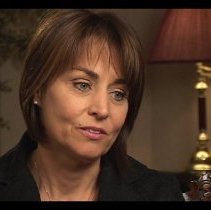
Sylvie Bernier Interview |
Interview Summary / Résumé d'entrevue |
Sylvie Bernier, Order of Sport recipient, inducted in 1987, born in Ste. Foy, Quebec, talks about her diving career. Sylvie explains that she had asthma when she was young and had one particular doctor advocate for her to be active. Sylvie recalls watching the divers at the 1976 Olympic Games in Montreal and deciding to pursue diving as a competitive sport. Sylvie describes moving to Montreal to train with Coach Donald Dion, specializing in the 3m springboard, and working towards achieving an Olympic medal. Sylvie recalls the 1980 Olympic boycott and how she focused on training for the 1984 Olympic Games. Sylvie also describes serving as the 2006 Assistant Chef de Mission in Torino and Chef de Mission at the 2008 Olympic Games in Beijing. Sylvie explains her pride in her perseverance while competing and her accomplishments after retiring, including earning her university degree and working and raising children. Sylvie recalls winning the Olympic Gold and how her parents were role models. Sylvie emphasizes the value of sports for children and the lessons in perseverance, teamwork, and goal-setting that it teaches. Entrevue avec Sylvie Bernier, 11 décembre 2008. MP4 numérisé à partir d'une DVCAM 40 Advanced ME de Sony. Temps de visionnement : 00:41:32. Sylvie Bernier, récipiendaire de l'Ordre du sport, a été intronisée en 1987 et est née à Sainte-Foy, au Québec. Elle parle de sa carrière de plongeon. Sylvie explique qu'elle souffrait d'asthme quand elle était plus jeune et qu'un de ses médecins l'avait encouragée à être physiquement active. Sylve se rappelle avoir regardé les plongeurs lors des Jeux olympiques de 1976 à Montréal et avoir alors décidé de faire de la compétition de plongeon. Sylvie décrit son déménagement à Montréal, effectué pour pouvoir s'entraîner avec Donald Dion. Elle explique qu'elle s'est spécialisée au tremplin de trois mètres et a travaillé en vue d'obtenir une médaille olympique. Sylvie se souvient du boycottage des Jeux olympiques de 1980 et raconte comment elle s'est ensuite concentrée sur la préparation pour les Jeux olympiques de 1984 à Los Angeles. Sylvie décrit également son rôle comme chef de mission adjointe aux Jeux olympiques de 2006 à Turin et chef de mission aux Jeux olympiques de 2008 à Beijing. Sylvie explique qu'elle est fière de sa persévérance pendant sa carrière de plongeon et de ses réalisations après sa retraite, notamment l'obtention de son diplôme universitaire, et le fait de travailler et d'élever ses enfants. Sylvie se souvient de sa victoire aux Jeux olympiques et de comment ses parents ont été des modèles pour elle. Sylvie souligne la valeur du sport pour les enfants et les leçons qu'il enseigne : la persévérance, l'esprit d'équipe et la capacité de se fixer des objectifs. |
Scope & Content |
Sylvie Bernier interview, 11 December 2008. Digital MP4 from Sony 40 Advanced ME DVCAM. Viewing time 00:41:32. 00:20Talks about after retiring from diving and going to university, the Gold Medal was overwhelming, she got married, had kids, worked full time, started her own company; finally got her degree in Business Administration 15 years later - very proud of her perseverance 02:21Talks about being a young girl and going into diving: she had severe asthma, most doctors and teachers at that time did not encourage anything physical as it could trigger an attack; her doctor wanted her to do something, she always like gymnastics, tumbling, somersaults so she took up diving; he was at the airport to greet her after the Olympic Gold Medal win 04:04When did you first stand on a diving board? Her first day at the pool stood on the board, became a passion for her; on progressing quickly: at age 10 attended the Quebec Games and the Nationals, went really fast, trained doing gymnastics and trampoline, "You didn't have to push me, it was something I always enjoyed doing". 05:28Did you have something that made you great at this sport? Felt she was talented, just a game, enjoyed it, good at something is good for your self-esteem, so you train harder because you start winning; also enjoyed the social aspect; realized at age 13-14 if she wanted to compete, she would have to really start to train 05:56On having "air sense": it is a special orientation, something she had, learned really young, talks about how important this is, consistency in diving is important and the more you know where you are when you spin, the more consistent you are" 8:34It is something you can learn or do you just "have it"? probably can learn it; she was always interested in the circus and doing things with her body 10:27What was the turning point? Talks about being 12 years old at the Montreal Olympic Games in 1976 and watching the 3 metre diving event and seeing the best in the world, (11:12) "I remember looking at my parents and telling them 'This is what I want to do. This is where I want to be'"; for the first time I told myself maybe I could do it; 1980 at the Olympic trials did not make the team, then the boycott happened (12:00) "And that's when I decided that the next ones, the next Olympics, I would not only be there but I wanted to be on the podium. So age 16, that was when I really started to make decisions around my diving career"; talks about moving to Montreal to train, away from her family, met her coach Donald Dion and felt that he was the one who would get her there, it was very hard but no one was pushing her, it was her decision; she and the coach had the same dream - we wanted to win the Olympics, and they worked as a team 14:10When did you realize that you accomplished your dream? Had been dreaming of being on a podium for 2 years and she was a big user of visualization - she visualized her dives, walking onto the podium, getting the medal, this was so powerful even when she was tired it helped her continue; at the end there was relief, so proud, happy her family and friends were there, special for an athlete to share because you can't do it alone 16:38Very consistent, very clean, what was your methodology? Choosing her events, going to school, very focused and not wasting her time, disciplined, knew she was going to retire after 1984 so there was an end in sight and could give it everything she had 18:26Assistant Chef de Mission in Torino 2006 and Chef de Mission in Beijing 2008: had been out of sport for a long time, wanted to be around athletes because they are so inspiring, so she called the Canadian Olympic Committee and they offered the Assistant Chef for Torino, she had a great time and felt it was a privilege to be around the athletes; On being Chef de Mission in Beijing - it was incredible to help athletes achieve their dreams and be part of that big team; "when you are Chef you forget about yourself and you focus on the athletes, making sure everything is OK."; as a support person it is very draining but you get so much out of it. 22:261984 was a great milestone - the first Canadian woman to win Gold in diving and the first Quebec athlete to win Gold in diving; mentions Gaetan Boucher winning double Gold at Sarajevo 22:30Run up to 1984: the good results gave her confidence she could do it, just had to give the performance of her life when she had to do it; talks about her focus on her event and forgetting about the distractions of the Games, had a plan to really concentrate on her performance, wore a walkman and ignored her competition, entered the competition like it was a World Cup or World Championships 26:15Who decided 3 meters was the thing for you? Her Dad, he was a doctor and did not want her to dive off the platform, she was one of the first specialists; the 3 metre is usually a harder event and the older athletes do it, had to work hard, to have technique, to be consistent; he helped her to make a good decision 30:03How did it feel to stand on the podium - response in French 31:26On being inducted into Canada's Sports Hall of Fame - response in French 32:39Glad to see the Hall getting a new, permanent home, to see her name with other great Canadian athletes, great for sport in Canada 33:38Practice was critical to succeed: trained close to 35 hours a week, always want to stay in school, to be consistent, focused, not waste time 34:42Greatest memory: the Olympic Games because her parents, her coach and her friends were there and her siblings were watching her on TV - a moment I could share and they were part of the process 35:44Role model - her parents, they taught her that if you want to win the process is important; her coach as a person helped her to build confidence and self-esteem 36:33Do you think young people should play sports - "Sport is one of the greatest schools for kids because you learn so many things. At the same time you enjoy, you learn discipline, perseverance, set goals, timetables. You decide you want to achieve something. You learn how to win, you learn how to lose which is not easy. You work as a team." 37:49On Learning about yourself: The most important thing that I learned in sport was that if you have a dream and you believe it's feasible, it's possible and you are ready to work hard at it, it can happen. And everything I do today, when I set myself some goals and I'm ready to work hard at it, I know it is possible. Everything is possible." 38:38Advice to kids: "Don't be afraid to set high goals... listen to people around us who say it's not possible - but so what - you can do it." She let her kids chose their own sport 40:03If you could only tell me one thing about sports what would it be: Sport is the best thing that happened in her life. Sport is a way of living, part of her family, and taught her the values she has today |
Date |
2008/12/11 |
People |
Dion, Donald Bernier, Sylvie |
Search Terms |
Sylvie Bernier Diving Olympic Games Order of Canda Interview 1984 Olympic Games Los Angeles Chef de Mission FINA World Cup Pam American Games Commonwealth Games |