bil.png)
Archive Record
Images
Metadata
Object ID |
2018.2.2 |
Object Name |
Video Recording |
Title |
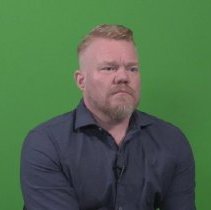
Jeff Adams Interview |
Interview Summary / Résumé d'entrevue |
Jeff Adams, Order of Sport recipient, inducted in 2018 and born in Mississauga, Ontario, recalls how he first started wheelchair racing and chose wheelchair racing over basketball because he felt he would have a better chance of success in the sport. He elaborates on the sport's appeal and how "there's no refereeing…no judging." Jeff describes the funding challenges related to wheelchair racing and how he was fortunate enough to have corporate sponsors, which allowed him to train full-time. He remarks on the advantage athletes who train full-time have over athletes who must juggle part-time jobs. He recalls a time when he considered quitting because of financial difficulties but was able to win prize money to sustain his career. Jeff talks about what he is most proud of: his youth talks, being part of the Paralympic movement, and "us[ing] the platform that sport provides to talk about important social issues." Jeff believes that it is essential to normalize disabilities and to put people with disabilities into positions of power to affect positive change. When asked about messages to youth, Jeff says that young athletes should play a sport they love and are good at. Jeff talks about the role models he had as an athlete, such as André Viger, Chantal Petitclerc, and Bob Steadward, and the honour he feels to be inducted into Canada's Sports Hall of Fame. 2018.2.2, entrevue avec Jeff Adams, 25 avril 2018, MP4 d'origine numérique, temps de visionnement : 00:14:41. Jeff Adams, récipiendaire de l'Ordre du sport, a été intronisé en 2018 et est né à Mississauga, en Ontario. Il se souvient de ses débuts en course en fauteuil roulant. Il a choisi la course plutôt que le basketball parce qu'il avait l'impression qu'il réussirait mieux dans ce sport. Ce qui lui plaît dans la course, c'est " qu'il n'y a pas d'arbitres, pas de juges. " Jeff décrit les défis liés au financement dans son sport et parle de la chance qu'il a eue d'avoir des commanditaires privés, ce qui lui a permis de s'entraîner à temps plein. Il remarque que les athlètes qui s'entraînent à temps plein ont beaucoup d'avantages par rapport à ceux qui doivent jongler l'entraînement avec des emplois à temps partiel. Il se souvient d'une époque où il a pensé abandonner en raison de difficultés financières, mais il a remporté un prix monétaire qui lui a permis de continuer sa carrière. Jeff parle de ce qui le rend le plus fier : ses entretiens avec les jeunes, sa participation au mouvement paralympique et " l'utilisation de la plateforme qu'offre le sport pour parler de questions sociales importantes ". Jeff croit fermement qu'il est essentiel de normaliser les handicaps et de placer des personnes vivant avec un handicap dans des situations de pouvoir pour créer des changements positifs. Lorsqu'on lui demande quel est son message pour les jeunes, Jeff dit que les jeunes athlètes devraient pratique le sport qu'ils adorent et auquel ils excellent. Jeff parle des modèles qu'il a eus lorsqu'il était athlète, tels que André Viger, Chantal Petitclerc et Bob Steadward, ainsi que de l'honneur qu'il ressent d'être intronisé au Panthéon des sports canadiens. |
Scope & Content |
Jeff Adams interview, 25 April 2018, born digital MP4. Six videos with a total viewing time 00:14:41. Video 1 1.When you first started wheelchair racing, what got you started or interested in sports and were you inspired by any individual? Video 2 00:01.02-00:30.26 So when I first started racing I was also playing basketball and I got into a situation when I was 15, where I had to make a decision whether I was going to pursue basketball seriously or pursue athletics seriously, and I was naturally talented at athletics and I loved racing. I did love basketball as well, but I picked a sport that I knew I was going to be more inclined to be successful at. And so I made a conscious decision to train specifically for athletics instead of basketball knowing that by specializing I gave myself the best chance for success. 2.When you made that decision to specialize in wheelchair racing were there coaches or people around you who encouraged you to do that, or push you in that direction, or get you to that level? 00:43.05-01:09.07 I wasn't really pushed in either direction. The decision was mostly based on an incident where I was not selected to a basketball team and the subjectivity of that really bothered me, and I thought "first one across the finish line wins". And that was what part of what attracted me to athletics is that you it it's very black and white you either cross the finish line first or you don't, and there's no refereeing, there's no judging, and I just really, that aspect of athletics really appeal to me. 3.What were some of the biggest challenges you faced during your career as an athlete? This could be in training or competition or just in general? 01:31.28-02:14.00 Some of the biggest challenges I faced in competition were related to funding. Wheelchair racing is very expensive, the equipment is very expensive, and for a young athlete starting out it's very difficult. I was incredibly lucky, I had supporters like the telephone pioneers of Northern Telecom, and good corporate sponsors in the early parts of my career, people who just believed in me, and having that financial support let me concentrate on just racing. And I realized quickly as soon as we started competing that athletes who are training full time had an unimaginable advantage over athletes who were trying to work a second job, and unfortunately that's the case for most Canadian amateur athletes. I was one of the lucky ones and it has everything to do with the success I've had. 4.Was there ever a moment where you thought of quiting sport and what motivated you to push through? 02:26.02-02:55.17 There's definitely a moment where I was considering not racing because of, because of the difficulties. It was when I was young in university and I had to either win a race and win the prize money to fund my career, and if I couldn't it just really didn't make sense to continue. So I went down to this race in Florida called Gasparilla, and I finished third and I won enough money to continue going, and it really was a crossroads or a fork in the road like if I hadn't done well in that competition I would've had to seriously consider not continuing. Video 3 5.Over the course of your career you've accomplished a momentous amount, bnut you've also done a lot of public advocacy. What stands out to you most as your biggest accomplishment? 00:13.15-01:01.15 I think the core of the my career, I've been successful on the track no doubt, and it's been wonderful, but I think some of the best work I've done is been off the track. I'm proud of the talks I've done to kids across Canada, and I'm really proud of, I guess just being a part of the Paralympic movement, because I think it has had a dramatic and positive effect on the way people with disabilities are perceived, and how the abilities of athletes with disabilities have been celebrated in places like China, and Pyongyang, and all these places where people with disabilities really don't get celebrated very often. I think that that social change done through the Paralympic movement has been the best part. It has been wonderful to be a part of and it has been the best part of my career. 6.To expand on that a little bit, a lot of the work you do is for the rights and equality of people with disabilities, why is this cause so important to you to keep working in? 01:13.10-02:12.20 I think that the work I do in terms of trying to encourage people to recognize the ability of people with disabilities has to do with creating a social fabric, or communities that we can be proud of, that include everybody. And people with disabilities are often left out, through thoughtlessness, through bad design where there are stairs instead of a ramp, through these things where it's, they're not intentionally excluded but they're excluded by the way society is designed. So that's one of the aspects, but there are also times when they're just excluded and so I think that addressing that in an honest way and the way sport can do through demonstrating the ability of people with disabilities by making them decision-makers, by putting them into positions of power, which is the only way that you can elevate an underprivileged or disadvantaged group to equality, and I think this sport does an incredible job doing that and an incredible job over the course of the years of the Paralympic movement, in doing that. 7.Throughout your sports career you were also able to give back through advancement of wheelchair technology and going forward from that how did your experience as an athlete inform your pursuits after you retired from competition? 02:29.02-03:05.20 One of the, one of the proudest things about my career is the technological advances I've helped bring to the sport and it's a bit of a backhanded compliment I guess, but I designed and built my own racing chair for Beijing and it was so much better than what was available. Obviously better, that the organizers, the Paralympic movement put in a rule that says that any rule of wheelchair racing chair that used must be commercially available, to prevent the chair that I built from being used, and so it was a validation of the design and the build and I think probably a good rule too, it was neat rule to know that I brought in a rule. 8.Thinking about any role models you've had over the course of your life and in sports, what characteristics do you see in these role models that you look up to and going off of that how do you try to present yourself as a role model for future generations of athletes? 03:24.18-04:25.03 Yeah I get asked a lot about role models or heroes in my career or in my life, and I really try to recognize that I'm surrounded by excellence, I'm surrounded by people who do incredible things, and that first I have to take a step and make an effort to understand that, to recognize what they do that is excellent and then try to learn from it. So I feel as if everyone is a potential role model. Specific role models during my sports career were Andre Viger, he was just the toughest, best racer I've ever raced against. So whenever I needed to be tough in training or tough it out in a race, Andre was certainly the person I'd look too. My coach, Peter Erickson, was a very methodical strategic, and used science, the science of exercise physiology, and just the science of sport to help me to train and advance, so when you can combine those two things I think that's when you start to get to what you need as an athlete to reach these pentacles that we all strive for. 9.What values have been most important along your journey and why? 04.32.15-05:23.22 The values I think that have been the most important to me, you know revolve around teamwork, commitment, hard work, and then just to be able to always look at something and know there's a solution to it. I get really frustrated when people say there's no way to do something or you can't do that. And I'm really, part of what I love doing as an athlete and what I continue to love to do now after my athletic career is trying to figure out how to get things done, how to resolve problems and conflict. So the skills I learned as an athlete about working together or committing to a project or team, playing fair, having the honour that an athlete should have has carried over into my real life, you know the life you lead after your career is over, and those lessons are still important to me today. 10.What lessons or messages would you share with youth or young athletes today that you think would be helpful in their journeys? 05:34.24-06:17.15 The lessons I share with people, especially young people, would be to pick something that you love, but that you're good at. That combination is the best combination to give you the best chance for success. I see a lot of people picking things that they love but they're not talented at or things that they're talented at but they don't love. And it sometimes works out but if you can combine those two it's a much better chance of success. The other thing is to remember that these plans that we have, these things that we live by, these lessons that we try to learn don't have to be complicated to be valuable. Sometimes very simple things can be enormously valuable and just because something is simple doesn't mean it is going to be easy. 11.Reflecting back on your whole sports career, what are you the most proud of? 06:25.17-07:09.18 I think looking back on my sports career, the thing I'm most proud of is the way that I've been able to take the lessons I learned in sport and apply them to my life. The life I lead with my family, in my community, and the companies I've started and run, and the projects that I've participated in. So being able to use those lessons in your life makes sport more valuable, I think, and that is when sport becomes truly valuable. I'm also very proud of the way that I've been able to go outside of sport, and use the platform that sport provides to talk about important social issues. Issues that are important to me, to people with disabilities, and use the voice that I've been given, that I'm so grateful to have been given, to try to make improvements to society if I can and when I can. 12.What does it mean to you to be inducted into Canada's Sports Hall of Fame? Video 6 00:01.18-00:26.15 Being inducted into Canada's Sports Hall of Fame is probably the pinnacle of my career, it's the highest honor a Canadian athlete can receive, and it's just been wonderful. Knowing that I'm going in following some of the people that I really looked up to, Bob Steadward, and Chantal Petitclerc, Andre Viger, all of these people that have been just such amazing athletes and people. I couldn't be more proud to be included in this group. It's amazing. |
Date |
2018/04/25 |
People |
Adams, Jeff |
Search Terms |
Wheelchair racing 1988 Paralympic Games Seoul 1992 Paralympic Games Barcelona 1996 Paralympic Games Atlanta 2000 Paralympic Games Sydney 2004 Paralympic Games Athens Gold medal Bronze medal Silver medal World Champion Jeffrey Adams Jeff Adams Interview |