bil.png)
Archive Record
Images
Metadata
Object ID |
2013.55.156 B |
Object Name |
Video Recording |
Title |
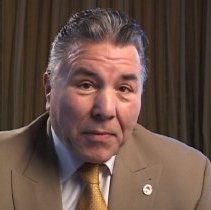
George Chuvalo Interview |
Scope & Content |
George Chuvalo interview, 5 June 2007. Digitized MP4 from Sony DVM60 ME. Two videos with a total viewing time of 01:03:52 Transcript (edited): TAPE 1: Interviewer (00:50): Perfect. Awesome. Okay. Well, let's start at the beginning then. Your childhood, when you were a kid, what sports did you play and how did you get involved in boxing? Chuvalo (01:00): Well, as a normal Canadian kid, I played hockey to some degree. I played a little hockey, played a little football, played a little baseball. And of those three sports, I liked baseball the best. I loved baseball. I used to pitch in hardball, catch a softball. And in boxing, I did both. And how do I get interested in boxing? Well, when I was seven years old, I went to a cigar store, actually like a variety store. It was called Morgan Cigar Stores in the junction, Toronto, [inaudible 00:01:29] Dundas area. And I went over to the magazine rack and I saw a magazine called The Ring. It called itself the Bible of Boxing. As it does it today. So I opened it up and I saw these guys with muscles punching each other. I said, oh man, that's for me. I said, ma, give me a set of boxing gloves. (01:44): So it took her a couple of years to get a set. I don't know if it was for Christmas or New Year's or excuse me, Christmas or my birthday, but she got me a set. And when I did get it, I went across the street to a place called the Macaroni Field, which is the unpaved parking lot of [inaudible 00:02:01] Macaroni. It was an industrial building across the street from my house. So I went over there and I got my buddies together and we started boxing, fooling around. And I remember reading some of the tips in the Wheaties boxes about how to box, jab to the body. Next time [inaudible 00:02:16] jab, so hooked the head, stuff like that. So I practiced on my buddies and I did okay. And an older guy, he was about 19 or 20, said to me, George, you're pretty good with your dukes. Why don't you go to a boxing club? I says, where's there a club? He says, about a mile away at Saint Mary's Polish Roman Catholic Church. (02:31): And that's where I went. And they had a gym in the basement and we started boxing. I boxed there for a couple of years until a new priest came in and he decided boxing wasn't Catholic. And also, Saturday dances weren't Catholic as far as he was concerned. So no more dancing, no more boxing. So I got to go to another club and I did. Interviewer (02:54): Baseball and boxing are so different. What was it about boxing that you liked? Was it the skill and the quickness or the finesse or the hitting someone? Chuvalo (03:02): I liked everything about it. I liked everything about it. I liked the competitiveness of it all. I liked the thrill of the fight before the fight, the anticipation of the fight and the fight itself and the aftermath of the fights. For me, it was like the greatest thing in the world. It was like the only thing I wanted to do. Once I really started boxing, that's the only thing I wanted to do. I wanted to box. I loved it. I would box with anybody. When I was a kid, I would spar with... When I was 16 years old, I sparred with James J. Parker. He was Canadian head boy. He was no more contended with the Canadian title. He fought Earl Walls, who was the Canadian Champion Fund to draw. I'd spar with Earl Walls. I was young. I was 16, 17. I would spar with him. And he was Canadian champion, were at number three in the world. (03:45): And Parker was also in the top 10 in the world. So I'd spar with anybody and I loved it. And I did pretty good for a young guy. And I was Canadian champion at the age of 17. And I turned pro at 18. And that was it. I had a manager. My first manager is Deacon Allen. And he was in a bit of a hurry because he was 80 plus, my former manager. Now Irving. I wish I'll remind him tonight about how old he is. And he was in a hurry. So instead of taking the time with me, they rushed me a little bit, which is okay as far as I was concerned. I didn't have any doubts in my abilities or whatever. But they did rush me a little bit. And I was fighting ranked contenders. The time I was 18, 19 years old, I was fighting guys in the top 10. (04:41): That didn't bother me so much as the fact that I didn't really get the kind of training here in Toronto that I should have received. All I asked for a big fight they give me, give a weak sparring, which is ridiculous. So when I was in my early twenties, I went to Detroit. I left the guys here and I went to Detroit, hooked up with my new trainer, Teddy McWhorter. And then I was on my own for a while, but it was too tough because I wasn't making big money and I was trying to support a family in in Toronto and all. So I was living by myself in Detroit. So it was too hard. So that's when Irving Ungerman came involved, got involved rather. And the rest of the sub, most people know about my fights with Ali and George Foreman, Jimmy Corey and Doug Jones, Cleveland Williams, all that stuff. Et cetera, et cetera, et cetera. Interviewer (05:34): What kind of a boxer were you? Was it speed or was it power or finesse? Chuvalo (05:37): Well, I had more finesse than I was ever given credit for. I had a much better defense than I ever was given credit for I think. A few fight guys will come up to me and say that to me, which I appreciate. But most people, when they think of me, they all think of me as really being much of a skilled fighter. But I think I was much more skilled than I was ever given credit for. I think I threw a lot in combinations. I had a decent jab, I got a good jab. When I utilized it, I had a real good jab. And I always had a good chin, which stood me in good stead. It helps to have a good chin in boxing. And I was good banger. I was in good shape most of the time. I think most of the fights I was involved, I took pretty good care of myself. So I was always well prepared, especially in my early middle twenties and late twenties. In my twenties, I was always good shape. Interviewer (06:29): Now, of course, as the legend has it, it's true, you were never knocked down as a professional. Chuvalo (06:34): No. Interviewer (06:35): Was there a time when you were an amateur or maybe in school with some friends, did anyone ever at any time? Chuvalo (06:40): No. I kissed a few girls, but I never kissed the campus. So I was lucky in that regard. No, I never hit the deck. No. Interviewer (06:50): Is there a way to train for that or is it something you're just blessed with? Chuvalo (06:56): I think the ability to take a punch is God-given, just like natural speed, natural power or whatever. I couldn't tell looking at a guy pretty well if he's got a good shot to take a shot or not. If he's got a very thin face with a neck like a stack of dimes, he can't take a shot. I can guarantee you. I think the shorter the neck, the better off you are, less chance of your brain getting reverberated when you get hit. I think a stronger jawline, a stronger head, stronger your skull looks, the thicker your skull looks. I've been called thickheaded before by a couple of teachers, so I think I was okay in that regard. Interviewer (07:34): So what was the closest you ever came? What one punch when you like, oh, that really hurt? Chuvalo (07:42): To tell you the truth, I've never really in a fight really been staggered where I wobbled around like this. You know what I mean? I've been hit pretty good. George Foreman hit pretty good. He hit me one good shot. But I didn't go down. I didn't even really stagger. It just stunned me a little bit. And they throw bunch of shots after and they stopped the fight, which was ridiculous. And when I see Irving, I'm always reminded he kept yelling and my wife was yelling, she was upset, but my wife's supposed to love me. So that's just she was upset. Irving got upset. She was upset that the referee stopped the fight. That's why I stopped the fight because of my manager, which is... I feel silly talking about that because it was so unprofessional. But anyway, that's apparently what happened. But have I been hit hard otherwise? Yeah, I was hit hard by a guy called Mike DeJohn. (08:28): He made a good right uppercut. And it's the only time I saw my knees really buckled in any fight. You'd want to see some of the old fights. I just buckled for the split second for about an inch. But Mike was a big puncher. Sonny Liston said he was the hardest punch he ever fought. And I would concur with that. It was the hardest puncher I think I ever fought. Probably Mike DeJohn or George Foreman, one or the other. Anyway. And that was about it. Other than that, I took great pains to make sure I didn't get hit, even though it didn't look like that. Most of the shots I took were up high on the head or jabs or something. I never got hit with any real bombs. I never really dealt with a real good, strong right hand or good left hook. (09:11): Most of the punches I got hit with maybe like soft punches, like jabs and stuff. I didn't really get hit with the real big ones. When I say that, people start laughing. I say, I'm telling you the truth, I got hit with very few real big punches. And a lot of times when you get hit, you pull back or you diminish the power of the punch by moving back or moving to the side or blocking it. Part of the powers taken away. So I was lucky enough that way. As I said earlier, my defense was a lot better than I was given credit for. Interviewer (09:38): Did you cut easily? Chuvalo (09:39): I'm sorry? Interviewer (09:39): Did you get cut easily? Chuvalo (09:40): I swelled up easier than getting cut. I didn't get cut so much, but I had a tendency to swell up I think. Like most guys [inaudible 00:09:50], you're going to swell up. But I had more apt to swell than to get cut. I had rounded features. Some people have what they call Nordic features on the eyes. And there are very sharp bones here. They have a tendency to get cut. But I was okay in that regard. It's fairly flat here, so I'm okay. But when guys get cut, when they say they have bad skin, it's not really the skin so much. It's the shape of the bone that indicates whether you'll be cutting clear or not. Interviewer (10:14): When you were young, 17, 18 and Canadian champion and working your way up and you had ambitions to be the best boxer in the world, was there one fight in particular you remember when you thought, I'm really good, I can be number one, or I can be a champion or I can be a challenger? Was there a moment when you thought, I'm here? Chuvalo (10:33): When I was 15 years old, I knew I had the stuff to be a fighter. When I say the stuff, the mental attitude to be a good fighter I think so. I think that was like, there was a [inaudible 00:10:45] passage where I got my nose busted. I was 15. I was sparring with a guy called Glen Molde. He was a bit older than me. He was about 24 or five. And he was Ontario champion. I was just starting out in the heavyweight division. Anyway, hit me with a couple few good jabs one night. Excuse me. He was fighting the following week. So he was fighting out on Monday at the Palace Pier in Toronto. And I was sparring with him, maybe me on a Wednesday. And I think he busted my nose. And I came into the gym the next day and my nose looked broken and I said to the guy, to my trainer, I think my nose is busted. He said, that's okay. Glen needs to spar. I said sure, no problem. (11:23): So I got wiped in the nose again a few times, there were blood all over the place. But I went to it all. And I had a little tough time with this guy when I was 15. But about three months later when I turned 16, I owned him. So I learned to slip the punches a little better and I took care of myself a little better that way. But it was in that sparring with him the second time when my nose was busted that I knew that I was going to be a fighter, that I knew I'd be okay as a fighter. I knew I had the stuff inside to be a fighter. Interviewer (11:52): So how did the Ali fight come about? Chuvalo (11:56): Well, I fought him on March 29th '66. But I was supposed to fight him a whole long time before that, quite a while prior to that. I was supposed to fight him on November the 8th, 1963, at the Miami Beach Auditorium. But he pulled out of the fight. And the reason he pulled out of the fight was that when I originally signed the contract to fight him, it was on September the 22nd 1963 in Louisville, Kentucky. And I met him for the first time at the weigh-in, at pre-fight weigh-in pre-fight medical. So I was fighting Mike DeJohn on a Friday night fight a few days later on the 26th. Four days earlier than that on the Monday because I was fighting on a Friday night. Remember the Friday night fights? You were little young, but you might remember them. Anyway, they were on the every Friday night from '44 to '64. (12:49): But anyway, on the Monday prior to the fight, I saw Muhammad Ali or Cassius Clay as he was known at the time. And Bill King, who was the promoter of the fight, asked me if I would sign a contract to fight Cassius Clay, if I beat Mike DeJohn. He said, Mike DeJohn signed to fight Cassius Clay if he beat me. So he said, well, I fight Cassius, sure if I win the fight, no problem. So I signed. And Mike signed that he would fight Cassius if he won. And Cassius signed to fight the winner of our particular fight. Anyway, prior to the fight, we took a pose. Cassius puts up his arms, showing off his muscles. Mike feels his right bicep, I feel the left biceps. And I thought, I have a little fun with him, because even at that time, he had a record called I Am the Greatest, all that stuff. (13:41): So I said, I have a little fun. So I said, hey Popeye. So he says, why you call me Popeye? Why you call me Popeye? I said, Popeye, you might have some pretty big forearms. He says, why you ask me that? He says, because you're awfully small biceps. So he didn't have an imposing build. Ali had a good body but didn't have an imposing body, and his biceps weren't that big, so I had a little fun with him. Anyway, after the fight, after I knock out Mike DeJohn twice to win a 10 round split decision, I knocked him out twice one, two times in the fight. Anyway, if you want me to tell you about that, what happened? I knocked him out on the second round. [inaudible 00:14:15] over the rope. He's six foot five. And I stand up and I'm standing over him and I'm drilling him. [Imitates punching]. (15:42): I swear I knocked him out twice in the fight. Anyway, fortunately the judges voted for me. So I won a 10 rounds split decision. The next morning, on Saturday morning, and all over papers, A big headline, one story about the fight, other story about Cassius Clay. It says, I'm not fighting Chuvalo. He fights rough and tough like a washer woman. And I didn't know what he meant by that. But 25 years later when I got ahold of the 16 millimeter tape, now everybody's got video, everybody's got video of the kids playing hockey, boxing, football, whatever. But in those days, it was not readily available. (16:13): Anyway, 25 years later, I see the fight on 16 millimeter film and I see myself hitting Mike DeJohn draped over the ropes and it looked like I was doing the scrub board. So I said, no wonder he called me the washer woman. But anyway, he said he wouldn't fight me. So people said to me, oh, how did you feel when you finally fought Muhammad Ali? You must have been frightened to death. What are you talking about? He didn't want to fight me. So why should I be afraid if someone didn't want to fight me? You know what I'm saying? But how did I get the fight? Interviewer (16:41): Sorry, one second. In 1963 when you signed to fight, was he already number one at that point? Chuvalo (16:46): No, this was just before he won number one contender. Yeah. Just before he fought Sonny Liston. The reason he didn't want to fight, another reason why should he fight a tough guy when he had a fight coming up with Sonny Liston on February 25th '64. It was shortly after that I found out that he signed the contract to fight Liston. So why should take a fight with me? He figured out prior to my fight with DeJohn, that it'd be easy to fight either one of us. But he know after the fight that it'd be a tough fight. Why should take a chance for the tough fight prior to fighting Sonny Liston? Anyway, he fought Liston. He fought less than twice. Beat him the first time, beat him a second time in a rematch. And then he had a couple of fights. I'm trying to remember who he fought, a couple other guys. Anyway, now he was supposed to fight Ernie Terrell, whom I really did beat in Toronto. November one, '65. But did I get the decision? Do you want me to tell you about what happened there? Interviewer (17:39): Sure. Chuvalo (20:07): A lot of people didn't like what he stood for. A lot of people who had brothers fighting in the war, who had father fighting in the war, or cousins or friends, whatever, a lot of people weren't too happy. So a lot of the ex war veterans put up such a strong front against Ali fighting in the United States, that they literally chased his upcoming fight with Ernie Terrell out of New Jersey, and then to Montreal, Quebec, Canada. 17 days prior to the fight, I was at Irving's office. We got a call from the promoter, Mike Mallons. And on the loudspeaker, he says, George, Ernie Terrell is not going to happen. Ernie pulled out of the fight. (21:49): Anyway, Mike Mallons says to me, George, you want to fight Muhammad Ali in 17 days? I hold for a second, I'm on the loudspeaker with him. I said, let me call my wife on the other line. I'll see what we're doing that night. So I call her up, I said, Lenny, hey doll, what are we doing on the 29th of this month? She says, nothing, why? I said, where you going to fight? She says, who's fighting me? Who are you fighting? Muhammad Ali. She started laughing. I was sitting around. I said, no, no, I'm fighting Muhammad. The fight's on. I say, Mike, it's okay. The fight's okay. I'm not doing anything that night. So we're okay. I'm not going to the movies or anything. So we're okay. The fight's on and the fight took place of course on that date, March 29th, '66. Interviewer (22:31): So 17 days before, what shape were you in? Chuvalo (22:36): Well, I was in decent shape, walking around shape as I say. But I had 17 days to prepare for 15 rounds. Not enough for me. I would like at least another month over and above the 17 days. But I was pretty good shape and I was pretty determined. I trained as hard as I could for that 17 day period. I got a whole bunch of spar partners from all over the place. Houston, Miami and Chicago, New York, Detroit. I got a whole bunch of guys. A couple days, they were all there and all lined up and I would spar whatever. I was spar like sometimes 15, 16 rounds a day. But most of time, maybe eight to 10 rounds. Seven to 10 rounds. That's a small day. That's a short day. And sometimes I'd go 15, 16 rounds. (23:24): So I had no choice. I almost over-trained in that period. I couldn't take it easy. Even the last week, I had too much to catch up time to take care of. So I worked as hard as I possibly could for that period of time, as I possibly could. And I got in the best shape. But anybody could get in, I think for that short period of time. And if I was in a little better shape, it would help me a lot. It would help me a lot. It helped you throw more punches. Let's face it. The better shape you were in, the more punches you're going to throw. The better shape you're in, the more difficult you're going to be for your opponent. And Ali was already in real good shape. He was already training for that target date of March 29th for Ernie Terrell. (24:06): Only thing is, I would say has made it a little different is I was a different type of fighter than Terrell. I was more aggressive than Terrell. I tried to get in close, work the body, where Terrell was more or less a stick and move guy, something like Ali. So he would've changed his sparring partner kind of thing. Studied guys who're more like me rather than Ernie Terrell. Interviewer (24:26): And when you found out about the politics behind it, Conn Smythe said, Ali shouldn't be fighting here. You found out about the Vietnam stuff. Did that influence you in any way, where you just say, hey, it's a fight I want to... Chuvalo (24:37): No, that part didn't bother me really too much. It's politics. Somebody's got a view... You know what I mean? I'm not going to worry about Conn Smythe worrying about whether we should have a so-called draft dodger fighting me or not. That didn't bother me at all. In retrospect... Someone asked me if a lot of American guys asked me about that I think it was fair that Ali should be allowed to fight or whether not. What I think of his stance as a resistor to the war. Well, as far as I was concerned, I felt he was right the other way. I wasn't for Canadians going to Vietnam to fight. So why should I encourage or want an American guy to go? Or why would I think it's wrong for him not to go? Anyway, I didn't have any acrimony towards Ali in that regard. I knew he was a heck of a fighter. I knew he was a champion of the world. He's a well deserving champion of the world. And I knew it was going to be a tough fight. (25:35): I knew I had the only certain amount of time to get ready for the fight. And the only thing that bothered me about the fight, the only thing was the Ontario Athletic Commission. You know why? You don't know? If you look in the record book with Muhammad Lee and George Chuvalo, it's a world title defense for Muhammad Lee. It's a world title defense. But the reality is that everywhere in the world outside of Ontario, if I would've won the fight, I would've been recognized as the heavyweight champion of the world. But in Ontario, it wouldn't have happened. They wouldn't have announced me as the heavyweight champion of the world. They were so gutless because the commission felt the sting of some criticism by some people who said I wasn't deserving of the shot at the title, et cetera, et cetera. And when you look at some of the guys that Ali fought, the total, I was by far one of the better fighters that he fought. You know what I mean? When you think of guys like Richard Dunn and Karl Nollenberger. You know what I mean? Interviewer (27:35): When you look back at that fight, was there anything about Ali that surprised you in a good way or a bad way? Something that you didn't expect or something that you expected that didn't happen? Chuvalo (27:45): Well, I knew he'd be fast and he was fast. It's still an eye-opener. And in some places if you get enough jabs, it'd be an eye closer. But anyway, yeah, he was very fast. I knew he'd be quick. I don't know if he got anything that surprised me that much. But he was a strong guy. I [inaudible 00:28:07] pretty good and he took it quite well. But after the fight, as I always say, probably heard me say before, he went to the hospital after the fight. I would dance with my wife. But he was bleeding from the kidneys for about 16 days. He had a severe problem with his kidneys after the fight. But he's a tough guy. He took it well. And you're not champion for nothing. You're not champion because you're not a tough guy. You have to be pretty tough to be a champion in the world. He doesn't look like a tough guy, but he is a tough guy. Interviewer (28:37): So what were the circumstances around the second fight six years later? Chuvalo (28:40): Well, six years later when I fought him, he was not the heavyweight champion of the world. So the fight that took place wasn't a 15 rounder. It was a 12 rounder. When you see the fight, a lot of guys think I won the second fight. And I would argue with that. I did a lot better than the second fight. A lot better. I got down, I have a head down more. In the first fight, I was more successful when I got my head down more, when I bent down more. When I stood up straight, I got hit more. So when I bent over and did a lot better, I was more effective every which way, every phase of the fight. And the second fight, I did a lot better. And anyway, was he the same as he was in the first fight speed wise or whatever? Maybe speed wise, but he wasn't as energized as the first fight. And if you're asking me if it was he as good a fighter in the second fight, I would say no. (29:32): He was never the same as he was pre the three and a half year absence, in his exile, when he went away, when they took the title away from him, when the commission took the title away from the World Boxing Association, took the title away from him, put him in exile. Not the same come back. He missed the best years of his life. He was around 25 or so when he was taken out of the game. So that's your best years. 25 to 28, 29 years, they're your best years. So when he came back, even though he's still the heck of a fighter and he depended a lot more on guile in a lot of ways. Like when he fought George Foreman in Africa, he didn't depend so much on his physical ability, but his intelligence and his boldness and brashness in a lot of ways. He'd even go on the ropes and rope a dope and let Foreman punch away at him. You know what I mean? (30:29): He knew on there, of course he exploited one of his weaknesses, and that's a lack of stamina. That's where George has a problem. He also throws punches out the window, and it doesn't set his man up. And Muhammad encouraged him to do that. And when he did, when George started to tire a little bit, Muhammad took care of business and knocked him out. But if he would've fought him when he was younger, he wouldn't have stayed on the ropes. He would've been sticking and moving and trying to head from the outside and using a lot of movement. But just like when you're a little older in life, in a lot of parts of your life, you realize some of your limitations and you got to cool it and maybe work on some other parts of your abilities help you to win. (31:17): But just like me, I'm going to be 70 years old in a few months. And am I the same as I was when I was a kid? Hell no. I'm the [inaudible 00:31:24] difference. But you make up for it another way. So you're probably a little smarter, a little wiser. But my intelligence in the ring now still, if I'm smarter now than I was, that still wouldn't help me too much. Too far gone. Too old. Too old. Interviewer (31:38): When you were in your prime in the sixties and in the seventies, and let's say when you were training for the Alley Fighter or whatever and you had ample time, what would a typical day consist of when you were in full training mode? Chuvalo (31:51): Well, when you're in full training, usually I'd get up around six o'clock or so, 6:30. I'd drive to [inaudible 00:31:59] have a cup of tea with lemon and honey. If I was in Toronto, I'd go to Hyde Park and I'd run for 45 minutes to an hour up and down the hills. So I'd do a lot of sprints, especially sprinting up in the hills, I do a lot of that. And then after that, I would grab a tree and do a bunch of chin-ups, maybe do 20 chin-ups or so. And then I would go back to my house. In the backyard, I may have a big truck tire. I wanted take a sledgehammer and I'd pound it. It's a poor man's chopping wood. I didn't have a tree to chop down, I'd have a truck tire. (32:34): I have a buddy of mine, Chucky [Schreiber?] in the New York Auto Wreckers. So he'd supply me with the truck tires. Anyway, I bang away maybe for a half an hour. I go in the house, maybe stand in my head for 15, 20 minutes. Sometimes a half an hour. It all depends. Work my neck muscles out, a whole shoulder girdle area back and forth, side to side. Might even go on the phone and talk to somebody on the phone as I'm standing my head. And by that time, we're talking now about 8:30, 9 o'clock. And I have a shower and lay around for about an hour and I would have a late breakfast. You want to know what I would eat for breakfast then? In those days, I would eat... Well, I have tea, lemon honey after the run. And then I have some juice, maybe some water. (33:20): And then I would have maybe some lamb chops, a couple of poached eggs, whole wheat toast and a cup of tea. And then I would go to the gym around one or two. It all depends. One or two. And usually, I'd warm up for a couple rounds. Most of the rounds are three-minute rounds. Most of the rounds, three minute rounds. But Lloyd Percival got involved with me for that fight. And sometimes I would do six-minute rounds because he would have me doing blasts of punches, combinations of punches. So as many punches I could say in 10 seconds. 10 seconds, I would just try to get my wind back. And then for 10 seconds, throw as many punches as you can on the heavy bag. As many as you could throw, as hard as you could throw them. (34:02): So some rounds were six-minute rounds while I was working with Lloyd. Anyway, warm up couple of rounds that aspire for anywhere like seven to 16 rounds. At least, I would boxing about seven rounds. I don't even think I boxed maybe seven rounds, maybe once or twice. But most of the time, it would be like, because I'd have my five or six spar partners, at least two or three rounds each of them. So that's what would happen. And then I would hit my trainer's hands a little bit. The pads. Two, three rounds. I would go in a heavy bag for a few rounds, three or four rounds. Punch the fast bag and pair of back. Couple of rounds. And if I ran, I didn't always skip rope. Someday I would skip rope if I didn't run. Well, sometimes I would skip rope if I ran, but a lot of times I wouldn't. And then I would do a whole bunch of exercises. What else I would do? I would do circuit stuff. Lloyd had me doing circuits. (35:01): Not too many people could do what I did then. And after doing all that, I'd do some certain exercise plus a circuit. And a circuit would consist of me doing 10 pushups and touch my chest, push up, touch my chest and drop down and back on the... I'd go to floor, jump, push up again, touch my chest and then starting position. Do 10 repetitions like that. Then I would go all this as fast as I could go with the cheerleaders. I'd have cheerleaders. I'm trying to beat my previous times. So the next exercise would be jumping jacks, jump up in air, squat down and jump up again. Jumping jacks. And then I would do a [inaudible 00:35:42]. I would touch my toes in midair, lay on my back, touch my toes in midair, lifting my legs up and my upper body at the same time. (35:48): Then I would do lunges back and forth with my legs. And then I would do crunches where I would pull my knees up to my chest as I'm doing a sit-ups. Ten, ten, ten, ten, ten. Five exercises, 10 repetitions a piece. That's one circuit. That's 50 repetitions. I would do five of those. 250 repetitions. I'd go like a bat out of hell. But it'll help me. It helped me a lot. And circuit training is tough work. It's good. I do that all at the end of my workout. Plus I would do weights with Lloyd. And we had long workouts. They were tough. Lloyd was a fitness guru and he's the guy that helped the Russians get in shape and almost beat the Canadians when they were thought to be pushovers back in '72, in the hockey at the World Cup. Interviewer (36:37): He sounds serious. Chuvalo (36:38): Yeah. Interviewer (36:38): How did you get to meet him or how did you get hooked up with him? Chuvalo (36:41): I saw Moore Greenberg. And Moore Greenberg is a friend of mine. He is a well known photographer with CBC at the time. And he was a good friend of Lloyd and started talking and I talked to Lloyd and he made a lot of sense to me. He was a very intelligent guy, light years ahead of a lot of the other guys in the fitness business. Yeah, he was a very smart guy. Only trouble with Lloyd is he would preach stuff, but he wouldn't live the right way. You know what I mean? Smoking, drinking. But he knew all about stuff. He knew what was right. He knew what was wrong. Very smart guy. Very smart guy. Interviewer (37:17): How much time would you have between circuits? Chuvalo (37:21): Zero. Zero. What you talking about? Interviewer (37:25): You do the sets five times. Chuvalo (37:27): I do 250 repetitions. But I have cheerleaders that are trying to urge me to beat my previous times. Interviewer (37:33): Cheerleaders meaning guys, not girls in skimpy skirts? Chuvalo (37:36): No. No girls in skimpy skirts. That's all. That's Vegas stuff. That's like, that's today. Yesterday, we all had guys in the ring. No distractions. But no, no, you're going as fast as you go. As fast as you can go. But I'll tell you the truth, I've never seen anybody do close to what I can. No, I'm not bragging. I'm just stating the fact. My stamina was one of my strong points. I could do 250 repetitions in less than four minutes. And for a lot of guys [inaudible 00:38:11]. I don't know what that sounds like to the average guy, but I know that I'm going as fast, like I'm going like a machine. In the movie called The Last Round, they showed, it's a documentary by the... Excuse me. The Film Board. The National Film Board. (38:32): Anyway, my wife, my present wife would see this and they show all pictures of me running or all pictures of me doing the circuit. She said, George, why are they speeding up the film? I said they're not speeding up the film. That's way I used to run and that's the way I used to do an exercise. But she couldn't believe. She thought I was fooling around with her, that they were already speeding up the film. I say, no, that's the way I was. First of all, if you're that level as an athlete, you're supposed to be a world class athlete, you're supposed to do things better than the average guy could do, the average guy in your particular profession could do so, which I could. TAPE 2 George Chuvalo (00:03): Mama Mia. Did I prefer to fight? Interviewer (00:07): What was your preference? Chuvalo (00:09): Well, so to tell you the truth, there's so many. There's only one place that... the greatest place in the world to fight is Madison Square Garden because that's like the Mecca of boxing. It didn't bother me so much to fight in someone else's hometown. It's easier to fight in your own hometown, I guess. But nobody does you any favors here though, to be honest with you. We're just talking now. They don't do you any favors in Toronto. I never want to, I don't think I ever won a decision here. (00:36): If I won a decision I'd be like... I've knocked guys out here. Lucky to win the fight too. I knocked out a guy called Alex Miteff when I was 20 years old. On June of 20, 1958 I knocked him right out of the ring. You know what the Canadian boxing writers did here? They all helped him back in the ring. And I'm swearing at them in the corner. "Get the hell..." I'm swearing up, "What are you doing?" And after the fight, Al Nicholson from the gold medal says, "We're Canadian and we did the right thing." I says, "Well, if I was in Buenos Airs where this guy's from, I got knocked out the ring, nobody's going to be helping. No Gauchos down there are going to be helping me back in the ring." You see what I mean? I knocked the guy out first. I go, "Why weren't you not helping me? Why would you help him?" You know what I mean? (01:17): And the same thing happened when the fight went to decision. I never won any decisions there. I think I had won one decision there. I mean, if I didn't knock the guy out, I wasn't going to win. They don't do any favors in Toronto. They do not. I was talking about, that's the way it was then when I was fighting. Like Ernie Terrell, I beat Ernie Terrell hands down. But I didn't get a couple other fights that I thought I won. I was, "Holy mackerel." Strange. For a hometown they don't treat you like a hometown. (01:44): But as far as fighting in front of my parents, my sister, my friends, my cousins, Toronto fans in general, the Toronto fans are great. They were good. It's your hometown. So naturally they're going to be rooting for you. And it's always nice to fight in front of your hometown that way. But as far as being big time, the big time in those days was Madison Square Garden. The most knowledgeable fight fans are New York fight fans. The accent of boxing to me is New York accent. "Hey George." You know the way they talk. It just feels like big time. Interviewer (02:29): Did you ever fight outside North America? Chuvalo (02:32): I fought in England twice. I fought in Bosnia and Herzegovina, in Saudi Arabia once. My folks are from Bosnia and Herzegovina and I fought there in 1970, 11 days after I fought George Foreman, by the way. I fought a guy called Mike Bruce. He was best known for being the first guy that ever knocked Joe Frazier off his feet. Joe stopped him later in the fight, but he was the first guy in the pro ranks to have him down. So anyway, it was okay. I knocked him out in a couple rounds and it was okay. A bunch of my relatives were carrying me out of the ring. It was kind of cute. It was kind of cute and it was kind of cute fighting over there because I'm related to half the people over there it seemed like. There's so many guys, a bunch of people from the village coming up to the fight all that. It was cute. It was nice. Yeah, it was fun. Interviewer (03:23): Now today you get someone like Klitschko or Lennox Lewis or something. It seems like maybe every 15, 18 months they'll have a fight. How often did you fight? Chuvalo (03:33): Well, they don't fight for good reason. They make too much money and pay too much taxes or I guess that plays a role in that. But I fought, I was pretty active most of the time. But I wasn't champion of the world. When you're champion of the world, you don't fight as often as you would as you're working your way up. But Klitschko and Lewis, all those guys were much more active prior to becoming champions. But when you're making that kind of money, you can afford to fight once in a while. They'd fight a couple times a year anyway, so every six months. Interviewer (04:07): What was your biggest payday? Chuvalo (04:08): My biggest payday? My biggest payday was $65,000 with Muhammad Ali the second time. The first time I got $25 grand. Interviewer (05:05): What was your best fight? The one fight when you look back and say I was in my prime, that was absolutely superb, perfect. Chuvalo (05:14): The best fight I fought, I think was against Manuel Ramos. He was Mexican heavyweight champion. He's number four in the world. And he was undefeated until he fought Joe Frazier. But he had Joe down, knocked Joe down. Joe stopped him later in the fight. And my fight with Manuel was the first fight after the Fraser fight. If he would've beaten me, he would've fought Frazier again. But he didn't fight Frazier again. So you know what happened, right? Knocked him out in the fifth round. That was sort of... One night... It's the night everything worked a hundred percent. Everything was the way it was supposed to be. That was me at my best. (05:48): Another good fight was with Jerry Quarry. I knocked out Jerry Quarry, also number four in the world. And Doug Jones also number four in the world. I never had any problems with fours. You know what I had problems with? One's, twos and threes, not four. Not four. They were a piece of cake. Interviewer (06:05): Did you ever become friends with any boxers? I mean, it's a very solitary sport and you go into the ring, the only thing you want to do is either hit them hard or knock them unconscious. Were there ever any friendships? Or after your career? Chuvalo (06:20): Well, I'm friendly with guys that I fought when I see them. But is everyone friendly with me? No. Most of the guys are though. Most guys I fought, whether I beat them or whether I or lost to them, I couldn't care less if a guy beat me or I lost him. It's always nice to see him. But not everyone's like that. Cleveland Williams wasn't like that or Doug Jones. They were a little upset. They weren't too friendly after that. But most of the guys are okay. Most of the are okay. Most guys shake your hand, nice to see you or whatever. Yeah, no problem. When I see Muhammad, I mean no hard feelings with him and I. When we see each other, we always laugh and Kibbitz. Know what he said to me last time? I saw him at the Renaissance Hotel in the Sky Dome, now the Rogers Center back in 2002, October. And he was here for a fundraiser at the football game. Argo was playing the Ottawa Rough Riders, halftime. There were a bunch of us making a speech and Muhammad was the event. (07:28): We were there with... Who was there? Moon, Warren Moon, a football player, the wrestler Daniel Igali, Bernard Hopkins, middleweight champ of the world, Larry Holmes, former heavyweight champ of the world, Evander Holyfield, former heavyweight champ of the world, maybe somebody else. Interviewer (07:53): I think Lennox was there too. Chuvalo (07:54): I think Lennox, I'm not sure. Yeah, I think Lennox was there too. I think Lennox was there. Yeah, he was there. Lennox was a quiet guy. He's easier to forget. He is a quiet guy. He is. Anyway, they're all there. And Muhammad, he saw me, we were talking for a few seconds and all of a sudden McLean's magazine had a guy there taking a picture and he was touching my hair. You know what he said to me? "Hey man, you got some pretty hair." So that was kind of cute. But no, Muhammad and I are okay. We're okay. He's not in the best of shape, but he can still think properly but has trouble from there to here. That's the problem now, tough to communicate. Interviewer (08:32): Can you talk about who was your corner man for most of your career and what's the importance of the corner man to a boxer? Chuvalo (08:39): Well, corner man is supposed to guide you along, supposed to tell you what you're doing right, what you're doing wrong, what you need to do to win. Or if you have to change tactics in the middle of a fight, he's got to be able to spot things or spot weaknesses in the other guy. Or make sure you keep your game plan, all that stuff and try to get you ready physically for the next round, to take care of you You can't have a guy coming right back to the corner start, yaking at you. "Ba, ba, ba, ba, ba." You got to calm you down first. You got 60 seconds, you sit down, you get back in the corner, sit down, you got to water you down a little bit. Take your mouth, give you some water, douse a little water on your head and just kind of relax you. Try to rub your muscles a little bit and try to just try get you calmed down for about a half minute. Then start telling you what you're supposed to do. What you're doing right, what you're doing wrong. And encourage you to do the right things. And if you spot something along the way that then you're supposed to work on, that's what he tells you. (09:35): And who was my trainer for most of my career? Teddy McWhorter. He was from Detroit. Originally from Alabama, but he lived in Detroit most of his life. And anyway, he worked with me since 1962 to the end of my career, basically '79. And Irving Youngman was my manager for about... Let's see, seven, eight years from '64 to '70, '72, '73. Then he was still around, but he wasn't in my corner anymore. Not that I fought very much from '73 to '79. But I was still active enough. And prior to that I had Deacon Allen, a long time fight guy. He was the guy I was talking about earlier who was 80 years old plus when he took over my career. And Tommy McBeigh. And a guy called Sonny Thompson, who was my manager or trainer so-to-speak. He trained me as an amateur most of the time when I was at the Earlscourt Boxing Club at Davenports and Landsdowne Avenue. For those who might want to know. Right next to a lawn bowling club. We had the lawn bowlers there and also a running club that got most long distance guys. It was funny, the funny gym. It was funny, a real mix of people. You'd see these old guys, lawn bowling. I'm a fighter. Mama Mia. It was cute. Interviewer (11:10): It's quite a contrast. Chuvalo (11:10): Yeah, quite a contrast. Interviewer (11:14): So now a few things about Yvon Durelle. You fought him I think '58 or '59 when you were just- George Chuvalo (11:19): November 17th, '59. Yeah. Interviewer (11:20): You were just starting up. And it may have been his last fight even, I think. Chuvalo (11:25): It was his last fight. Interviewer (11:26): What do you remember about the fight? Chuvalo (11:28): Well, Yvon wasn't the toughest guy in the world to hit. You know what I mean? He was a wild punching guy. He was a good banger. He was a tough guy. He was almost champion of the world. Today he would've been champion of the world with Archie Moore. He had him down a whole bunch of times in the first round. They would've stopped the fight. He should have been champion. But anyway, he was very tough guy, a lot of heart. And he's the kind of guy you'd love to have if you've ever got in a street fight. You had another buddy with you, he'd be good to have as your buddy. But he was a very tough guy. Very tough, very hard, tough minded, didn't have an ounce of quit in him. Real tough guy and he was a very good light heavyweight. (12:10): He went up in the heavyweight division and he was still strong as a heavyweight, but he was an easy guy to hit. But he had a lot of guts and didn't have one ounce of quit in him. I knocked him out, knocked out seven times in the fight, seven times. And I remember when I knocked him out, his leg was shaking like this the last time I knocked him out. And then I said to myself, you got to kill this guy to beat him. But he had a lot of guts. He was about as gutty as they could come. You don't have to worry about him ever being called fainthearted. He was a tough guy. Would fight anybody. And he gave it his all each time. Interviewer (13:20): Did you see or listen to the Archie Moore fight? Chuvalo (13:23): I'll tell you the truth, I was in the bathroom and my wife started screaming at me, "George, George, you got to come down here." Because the fight just started. I went upstairs to the bathroom and she started screaming. And my wife wasn't really a fight fan, but when she saw that. I mean we have a Canadian guy knocking Archie Moore on his can three or four times in one round. I mean, it's pretty exciting stuff. And I was up there in the bathroom, she's screaming, "Come on down. Come on down." So I finally got down and it looked like Archie was through at first. I came in from last knockdown of the first round, and he looked like it was curtains for him. But Archie being Archie Moore and using all the guile and intelligence and the experience of his lengthy career, he came back. Even after suffering another knockdown in the fifth round, he came back to stop Yvon I think in the 11th round. (14:14): I mean, Archie was a heck of a fighter. One of the greatest light heavyweight champions we've ever had. And Yvon to his credit would've been a champion today because they would've stopped that fight today. They didn't stop fights that readily in the old days. They let them go. I mean, I knocked Yvon down seven times. They didn't stop the fight. They had to count 10 over him. Same thing happened with Louie [inaudible 00:14:37] in Toronto, knocked about four rounds. I knocked him out seven times. The last knockdown, same as Archie Moore, the seventh knockdown, his leg was shaking. And they still wouldn't stop it. The guy goes flat. He's laying there, flat, looked like somebody shot him. Think they wouldn't stop it? No, they got right to 10. The referees want to show off they can count to 10. So that's what happened. Interviewer (15:00): When you fought your last fight, did you know beforehand this is it? Chuvalo (15:03): No. Interviewer (17:44): How have you stayed in such incredible shape? I mean, it just boggles my mind that you're almost 70 and your mind is sharp as a tack. You're don't have the problems that Ali, you don't have the problems that Berbick obviously had, which had nothing to do with health. But I mean, you're just this incredible survivor. George Chuvalo (18:06): I don't know what that is. Who knows? All I know is that I'm around and I still have people in my life that care about me, that I care about. And the only thing that I think about, and it sounds so simple, and it sounds almost hokey, but it's love in your life. People that love you, that you love them, and you love them, they love you. You have a reason to want to live. And you have people in your life that are important to you. (19:09): And I have a beautiful wife. I have my son and my daughter. I have a couple stepchildren who I get along with also very well with. A lot of people depend on me. I have a lot of good friends. I have a lot of good friends. Friends that I speak to every day. I mean good friends, people who share things with me. I share things with them. People who make you feel good, make you feel important. And we all have to feel important. And when you have love in your life, that's what happens. So I have too many people that I care about, too many people that care about me to ever want to do anything crazy. I take care of myself at the gym. I train a few times a week, few buddies of mine that come in the gym. I have a group of guys that come every Saturday morning if I'm in town. (19:59): I have a friend of mine, Loren, who picks me up from Brampton every morning, 7:30 Saturday. We go to the gym and we have a couple few other buddies that show up at the gym. Then we go for some Vietnamese soup after the gym. It's like a ritual. We have a lot of fun. We have a lot of fun. No, and you have to have friends in your life. You have to have people who care about you too. That's very important. Taking care of your body physically makes you feel good. And taking care of yourself with friends helps you emotionally. If people that you can call anytime middle of the night if you have a problem, that's the kind of friends I have. I can call them anytime. They can call me anytime. And I think that's very important. (20:40): I think it's very, very important to have good friends in your life. It's very important to have people who care about you. It sounds so simple, but it's so true. It's so true. You have the people who care about you. You have the people that you can talk to. Like I say, anytime day or anytime in the night people who would welcome a call if they felt that you were in distress and need to talk to somebody. I have good friends. I have a lot of good friends and it's important. I have six grandchildren and I want them to be proud of me. I want them to look at me as a source of inspiration. I never saw my grandparents, never saw them. Bosnia and Herzegovina never saw them. I saw a picture of one of my maternal grandparents, one little picture in a book, only because my mother's uncle was famous. They had a book written about him there. So I saw a little wee picture of my grandfather, a little wee picture of my grandmother. (21:33): But I always thought how wonderful it would be to have grandparents. I never had them. My mother and father came from the old country and they never went home again. They never went home. They came here. My father, on his 23rd birthday, he was married seven months to the day. He brought my mother over 10 years later. It was 10 years later, slow motion my father that way. And my mother came over and then they never went back. But I never saw my grandparents. But I always thought it'd be wonderful to have grandparents. I see other people with grandparents. I say, "It must be kind of cool to have grandparents, your mother's mother, your mother's father, your dad's father, your dad's mother to be there. A continuation of life in your family. The different generations, have three generations in your family when you're growing up. That'd be nice." It'd be nice. (22:19): I never had that part of it. But my mother loved me enough for a lot of people. So did my father. So I was okay that way. But I always thought it would be nice to have grandparents. And I love being a grandparent and having grandchildren makes me feel strong. Having grandchildren makes me think about the future. Having grandchildren makes me feel like living. And to take good care of myself. I take good care of myself. Good example for them to take good care of themselves, to learn a healthy lifestyle early in life. |
Date |
2007/06/05 |
People |
Chuvalo, George |
Search Terms |
George Chuvalo Boxing Heavyweight Champion Order of Canada |