bil.png)
Archive Record
Images
Metadata
Object ID |
2018.2.1 |
Object Name |
Video Recording |
Title |
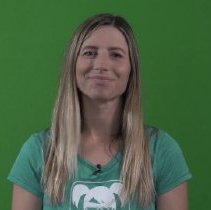
Chandra Crawford Interview |
Interview Summary / Résumé d'entrevue |
Chandra Crawford, Order of Sport recipient, inducted in 2018 and born in Canmore, Alberta, comments on growing up with parents who loved being in the outdoors. She remarks on the impact of growing up where the 1988 Olympic Winter Games took place. Chandra tells the story about being kicked off the A-team, leading her to work harder, resulting in winning gold at the 2006 Olympic Winter Games. She also talks about how she developed an eating disorder in her twenties and recovered. She considers her low placing at the 2014 Olympic Winter Games as one of her most significant accomplishments, as simply being there represented her recovery from an eating disorder and overall pride in making it as far as she had in her career. She talks about the organization Fast and Female, which she founded, as something she is incredibly proud of. Chandra elaborates on how she believes it is important for female athletes to have fun and be supported by teammates. Chandra talks about the importance of role models in sport, and breaks down the values that matter most to her: "people, movement, and health." Chandra believes that she is just at the beginning of her journey and is honoured to be inducted into Canada's Sports Hall of Fame. Chandra finishes by mentioning the Master's of Business degree she achieved and by providing some examples of positive self-talk that she has transferred from sport into her current life. 2018.2.1 Entrevue avec Chandra Crawford, 26 avril 2018. MP4 d'origine numérique, d'une durée totale de : 00:47:37. Chandra Crawford, récipiendaire de l'Ordre du sport, a été intronisée en 2018 et est née à Canmore, en Alberta. Elle raconte comment elle a grandi avec des parents qui adoraient les activités en plein-air. Elle note l'effet d'avoir grandi là où les Jeux olympiques d'hiver de 1988 ont eu lieu. Chandra relate le récit de comment elle s'est fait expulser de l'équipe A, ce qui l'a poussée à travailler plus fort et l'a menée à remporter la médaille d'or aux Jeux olympiques d'hiver de 2006. Elle parle aussi de comment elle a développé un trouble alimentaire durant la vingtaine et comment elle a surmonté ce défi. Elle considère que ses résultats aux Jeux olympiques d'hiver de 2014, où elle a terminé très bas au classement, constituent en fait l'une de ses plus grandes réalisations puisque le simple fait d'être là signifiait qu'elle s'était remise de son trouble alimentaire et qu'elle était fière de s'être rendue si loin pendant sa carrière. Elle parle de l'organisme Fast and Female, qu'elle a fondé, et dont elle est très fière. Chandra discute davantage de l'importance pour les athlètes féminines de s'amuser et de sentir l'appui de leurs coéquipières. Chandra parle de l'importance de modèles dans le sport et énumère les valeurs qui lui tiennent le plus à cœur : " les gens, le mouvement et la santé ". Chandra croit qu'elle n'est qu'au début de son parcours. C'est un honneur pour elle d'être intronisée au Panthéon des sports canadiens. Chandra conclut en mentionnant son diplôme de maîtrise en administration des affaires et en donnant des exemples de discours positif, pratique apprise en sport et qu'elle applique maintenant à sa vie actuelle. |
Scope & Content |
Chandra Crawford interview, 26 April 2018, born digital MP4, total time 00:47:37. Transcript (edited): 1.Can you take me back to the beginning, when you first started skiing? So what got you interested in sports and where you inspired by anyone in particular, if so then why? I was born and raised in Canmore Alberta, a small mountain town just west of Calgary and my parents, Glenn and Louise, just love being outside in the mountains. They are pretty much Mountain hippies. They're out canoeing, and hiking, and backcountry skiing, and dehydrating fruit for the winter, and gardening in the summer; they're just such outdoorsy wonderful people. Non-competitive. They competed a little bit actually in whitewater kayaking for fun but, that was the extent of their competitive drive, they just loved being outside and they exposed my brother and sister and I to all kinds of adventures; we were always out biking, running, swimming, hiking, all the kinds of skiing and it was an amazing way to grow up. A complete dream come true. Because Canmore was the site of the Nordic events in the 1988 Olympics, then "boom", we had this world class venue right in my backyard and that resulted in all kinds of ski races coming through town with all the best skiers in the world. I remember being 9 years old and seeing this whole train of skiers swish by and all their multi-colored Spandex, and all the snow flying everywhere, feeling the atmosphere of all the different countries there competing, and of course cheering for the Canadians. I was very inspired by my role models on the Canadian National Ski Team - Sara Renner, Beckie Scott, Milaine Thériault, Amanda and Jaime Fortier - picture this Fab Five, five women super strong, going for their dreams, I was completely inspired by them as a kid. 2.What were the biggest challenges that you faced in your career as an athlete? This could be in training, in competition, in your personal life? The biggest challenges that I've faced in my career and life, have been interesting to me because as I overcame them I became grateful that the challenges happened in the first place because it made me stronger. For instance I never would have won the gold medal in 2006 if I hadn't had some adversity; I was kicked off the A-team, the coaches thought I wasn't working hard enough and I was so mad and frustrated that I wanted to show them that I was a great ski racer and show myself that I could do it for myself, ski my own way, do a great job and that led to me getting in amazing shape, amazing focus, I did everything as well as I could and that was the secret to my success in 2006. I was in great shape and I had a lot of confidence in my ability, but I was very focused on the process of doing everything as well as I could. So little things like that made a difference, but in the bigger picture some of the adversity I've overcome has been later in my career. -Start again - Some of the adversity I overcame was later in my career. Actually, in my late twenties I developed an eating disorder and was bulimic for a full year; even though I founded Fast and Female, and had spent 10 years empowering girls, and telling young girls "we can be strong, we can be anything we want, we don't have to be narrowly defined by what the culture tells us about our appearance". Well I had had a really tough breakup of a relationship, a long relationship in my personal life and took it really hard and ended up just so upset that I was throwing up my food, and it made me feel better. It was awful, it was a really sad time for me I was very, very, very deeply upset. And to get through it, I had to stop doing all the crazy things I was doing; running around being so angry and so angry at myself and I had to start speaking more kindly to myself in my head. I realized I was actually being a jerk to myself and saying mean things to myself and I had to start being more inwardly compassionate saying "it's okay, Chandra, you're doing your best, you can do it, get out there and ski today believe in yourself." I tried to hang out with people that were really cared about me and positive, and I also saw a whole bunch of neat psychologist, sports psychologists, regular psychologists, and learned all kinds of things about how to manage this inner dialogue where I was being so hard on myself, it was really valuable time. I learned to meditate. I took antidepressants for a year which also helped me. I was on the journey, I really worked hard at getting my head right and my life right, and that was something that now I'm actually glad happened. I have all this inner peace and confidence and I know who I am, it's weird how it was the worst time in my life but it has created the best time in my life. There's so many different kinds of adversity, the adversity I've experienced might even be considered adversity light in some you know compared to others but it certainly has made me a stronger person because of how I've grown, I appreciate the adversity I've been through. 3.Was there ever a moment that you thought about quitting sports, and what motivated you to push through? I often thought about quitting my sport cross country skiing. I was really lucky to grow up doing a ton of different sports and didn't focus on cross-country skiing until I was about 14. When I was 14, I started wanting to be on a training plan, and I started going to camps with the provincial team, and my dream started to take hold that I would try and go to the Olympics. Before that though, I got to do all these different sports, it was great. I credit the longevity of my career and my success to that late decision to specialize, it was a different time and it worked so well. But I thought about quitting because I have a lot of different interests and every year I would say "okay I'm just going to do one more year of cross-country skiing" and I would then go to the National Championship, see all my friends, have a great time and say "okay I'll do another year" and this went on for a while until I was in my teens, and I said "okay I'm really committed". But thinking about quitting was great because it made me realize because I want to, I don't have to, I have tons of interests at that time. As a teenager I was doing photography, and drama, loved school, French immersion and training for my sport cross country skiing, but I had the idea that if I didn't cross country ski race I would become a travel show host and I definitely would have done that if skiing hadn't worked out. So I don't think there's anything wrong with thinking about quitting for the right reasons. What I would like to see change today in the sport system is that kids quit because they want to go pursue something else, not because they've had a bad experience. I would really like, especially young women, to have a positive empowering experience in sport. It just kills me when I hear a parent tell me her coach really was a jerk and that kind of stuff turns kids off of sport or the team dynamics weren't there or maybe the parents themselves put too much pressure on the kid. I met some parents who say "I really want them to find their thing and specialize and get some success" and their kid might be 9 or 10. I totally disagree, I think they should try lots of things and I don't think success necessarily makes us happy. So it's pretty interesting going on the parenting journey myself now, I'll be interested to see when my kids want to quit their sport, what I will say, but I think I'll find a way for it to always be fun and we'll always have some physical activity in our family. I am glad that I didn't quit sport in my teens, and that I kept going one more year and one more year and that turned into 13 years, 3 Olympics, and a wonderful career. 4.What stands out most in your mind as your greatest accomplishment? My greatest accomplishment is sort of a secret to me in my heart but I'll tell you it. I placed 42nd in my third Olympics in the event that I won my gold in, but it was so hard to make it to the Olympics to overcome my eating disorder and stress with the ski team, and make it to that games and do my best, that 42nd Place on that day when I cross the finish line at Sochi Olympics on a mountaintop venue, blazing sun, white mountains everywhere, I felt like I had won a thousand gold medals. It was a personal victory to make it to the games, and to succeed, and how much personal growth I've been through. I'm so proud of that result. I'll never forget riding the gondola down from that mountain top venue through these different layers of foggy clouds, I was all by myself sitting in the gondola, it was my last ski race of my whole career and I felt so good, so radiantly proud I did it. I achieved so much, I pushed myself beyond my limits, I did everything I could possibly have done that was in my control and that to me is my most proud achievement in my whole ski career and something I take with me and really cherish. 5.You've done a lot of work with your role in Fast and Female to motivate and encourage girls and women to participate in sport. Why is this cause in particular important for you? My work with Fast and Female is so, okay, let me think about that for a second, why is it so important to me, yeah I just can't give it up, I love it. So rewarding. Even as a teenager I wanted to have an organization to encourage kids in sports, I have a drive to bring sports to kids I know the benefits of sports are so huge and I really want everyone to have access to that, but I learned that girls quit sports more than boys and I understand now how girls participating in sports is the key to so many wonderful things that society's driving towards, especially females in leadership positions. Think about it, girls are winning at school, there are more girls in school than boys we're amazing at school, we're perfectionist, and we sit quietly and try to get a hundred percent, but the rules of life change after grade school. And perhaps the boys who have been playing more sports, and getting coached more, and bouncing back from failure, and being more scrappy in the mud, and just experiencing more adversity, 'cause that's what sports offers, more failure, picking themselves back up, they're perhaps a little better equipped for what life actually is about, resiliency, confidence, teamwork, coach-ability. Because the life skills available in sports are so valuable to girls I am driven to ensure more girls participate in sport, to ensure the environment in sport changes so that the girls have those positive empowering experiences. Fast and Female puts on events all over North America. We believe in the power of role models, we believe very strongly that getting the kiddos in front of the amazing athletes and hearing those stories of resilience, and bouncing back from failure changes their lives and I've been doing this for 12 years. I've been doing it since 2005 and I really have seen the power of it first hand, testimonials from parents come back all the time and that's what keeps me going. I'm on a huge journey to empower as many girls as possible, and every day I wake up excited to do something about this, and every night I force myself to stop thinking about it and fall asleep because I really love the work that I get to do at Fast and Female and it's so rewarding making a difference in the lives of young women. The future leaders are the girls who come through sports and I really believe that the more girls we can give access to the resiliency and life skills/experiences of sports the better. 6.What would you say is the most important lesson that you could share with up and coming female athletes? Well if I could share one lesson with up and coming athletes, and up and coming female athletes, it would be the secret to success in sports is fun. I know, you were hoping for something so much more serious. Fun is important, it's incredibly freeing to have a good time, you perform better mentally, physically, when you're loose and relaxed and happy. In ski racing I noticed that happy is fast, I'm trying to go fast on my skis, and fast makes me happy and I made a virtuous circle out of that. The number one reason we girls and females are quitting sports more than boys, is lack of fun and lack of social belonging. If I could have a magic wand and change one thing across all the sport experiences we're having I would make sure we have a good time, it's funny because it seems like "oh to be great at sports I should probably work on my skills more, and visualize more and eat more broccoli." The truth is to have a better sport experience, better career, better performance, longer career, all the things that you probably want in life and want in your sport experience, it's important to have team dynamics, social dynamics, and support each other and celebrate each other's birthdays, and make up cheers, make friendship bracelets. It sounds silly but it's critically important and some of the elite teams you can even see doing this, the Canadian Ski Team were at the height of the female success levels; they were laughing all the time and they made it light, they made themselves have fun, made it a priority to have fun and it works. I hope that everyone places more emphasis on having fun, because girls aren't quitting sports for lack of skills or lack of practice or lack of special coaching time they're quitting from lack of fun, at all levels whether they're 60 or 10 years old it's what keeps the whole sport experience together is that enjoyment so I wish everyone a very, very fun sport experience, I had a ton of fun. 7.In Fast and Female and in sports in general, you've taken on an important role as a leader and as a role model and a mentor. How did your experience as a professional athlete influence your endeavors, including Fast and Female, after you retired? My time in sport influenced Fast and Female so much as an organization. While I was ski racing I started to be a little bit bored of just trying to go fast around the loop, you know I don't know I've been doing that for years, it's great but it's not that compelling. Changing the world is very compelling, empowering girls very compelling, and I started thinking to myself "if I succeed in this ski race I'll get media exposure and I can talk about the power of sport for girls", it was a huge motivator for me. Because of that experience Fast and Female now works with over 400 athletes just in Canada. We have close to a hundred Olympians, and they're just like me, they want something meaningful, they want to go empower the girls, they want to bring their sport experience into a more richly layered context. There's more to it than just trying to go fast and beat the world, I mean that's great but sport as a vehicle for betterment in society that is what I'm talking about, and that's why so many athletes are drawn to help Fast and Female and volunteer tons of time and come out and meet the kids. It also enhanced my sport performance because I would feel really down "oh I can't crack the top 30 in the world everyone else is better than me", but going to a Fast and Female event, some 8 year old kid would probably grab me around the waist and say your awesome, or we would get the chance, as athletes, to tell stories about how we overcame adversity and suddenly realize, "oh yeah I am strong, and oh yeah I am amazing", and in telling it to the next Generation it would remind me how much value I get out of my sport experience. So the relationship between what has come to be Fast and Female and what we do with those events and what I experienced as an athlete is very closely linked. It's so great for us athletes to get out there in the community and give back, tons of athletes do this, it's really impressive and it's great for the next generation of female leaders so we tied that together into a circle of inspiration. Kids, like when I was a kid, I saw my female role models and heroes, and then I went for it and skiing and managed to elevate my game to get on top of the podium and inspire the next group. Today some of the young girls who did Fast and Female 10 years ago are competing Internationally, competing at the Olympics and telling their stories of coming up as a participant, and now joining me standing on the stage as the ambassadors. That full circle is really cool and something we're going to keep doing, it's really working well. 8.What characteristics do you see in the role models who inspired you and how do you try to present yourself as a role model to future generations? Role models are pretty much a shortcut to amazingness in life, rather than have to design some big complex thing about what kind of athlete I was going to be, I really just looked at Sara Renner and Beckie Scott and decided to be as similar to that as I could. They were having a great time laughing, the camaraderie was incredible, and kicking so much International butt they were on the podium. It was so cool to see how Canadians can be successful in cross country skiing, which wasn't always the case. I had this shortcut to success because I was able to see my role models, learn from them, I could sit down with them and ask them all my questions from how much they lift in the gym to what do they think about during their warm-up. I loved every moment, and I was so lucky to have that connection to them that I could sit down with them and talk to them, that they aren't just these larger than life heroes in the newspaper because they were larger than life to me. I remember going for a jog with Sara Renner when I was 17, and I was just nauseous with star-struck overwhelm, I was sweating, I remember thinking "what should I ask her, oh my God, oh my God, Sara Renner", you know that hero feeling when you're a kid getting to meet your hero, or meet someone amazing who becomes your hero, is so valuable. The characteristics of my role models that I've tried to emulate, I love their integrity, tenacity, strength, determination. The national ski team women that I grew up, really revering were so strong and so courageous, but also brought a levity to it, they were always laughing and joking, and just so impressive. I was able to emulate them in my own career and life. As a role model myself for the next generation of young women I'm trying very hard to do something very uncomfortable that I don't enjoy, but I'm doing it for the girls, being authentic and vulnerable about my struggles. I understand that it's great to hear the story of when I won the gold, and how awesome that was, but it's even more valuable for girls from all walks of life to hear how I overcame getting kicked off the team or having an eating disorder. These kinds of struggles that really gave me the skills that I used today overcome adversity. That's more important to share. So now when I get on the stage with my other Olympic medalist buddies like Cassie Campbell-Pascall, or Erica Wiebe, I don't ask them "tell us what it was like to win your medal", I ask them "what's the hardest thing you've overcome, how do you do it, how do you keep your confidence up, what do you even say to yourself in your head, how are you doing what you're doing, how are you combatting that negative voice in your head, your inner critic to continue shining, and how can myself and all the girls in the audience acquire the same skills". I believe confidence, self-confidence is a skill that we can work on and the athletes, we have had multimillion-dollar sports psychology put into our brains, let's share it with the next generation of female leaders and we can all raise our game. I really appreciate the strength, tenacity, determination, and openness of my role models and I try to bring that forward when I'm sharing my stories with what will be the next generation of female leaders. 9.What were the most important values in your journey and why? Three values that have always really mattered to me: I really value people, movement, and health. So much of my life has been built around pursuit of those three things at the highest level possible, and through my ski career I was really fortunate to have the resources to improve myself across the health and movement fronts. I was always able to refine my physical capacities and be as healthy as I could, but the people are what stay with me forever, the interactions with, for example, the ski technicians who travel the world with skiers and work on our equipment on our skis they work so hard all the time, completely thankless job. I will win a medal and they will cheer, but they made it happen, and they won't get to stand on the podium, they'll have to pack up all the gear and go on to the next venue, and the people like that are so memorable to me. The wax technician who worked a lot with our team from Quebec his name Steve Bilodeau, and whenever I would succeed, he would have tears streaming down his face right away, he just cared so much. And rewinding to the start line before the race, who would I want to see? The wax technicians would make me laugh, keep it light, so I can go out and perform. The people and the values that we shared of health and achievement are something I will always remember, and I really appreciated the support from so many people during my ski career, from my community in Canmore, from the national ski team, the skiers, and people all across Canada who cheered us on. It's a huge group effort to support our Canadian athletes and everyone has played a role in encouraging us. 10.Reflecting on your career in sport, what are you most proud of? While I'd like to do it again and fix all the mistakes I made, it's like hindsight. Let's see, reflecting on my career in sport and from the age of 14-15 till 31, really focusing very hard on my Nordic ski racing pursuits, what I'm most proud of is Fast and Female. What it is able to do while ski racing, and what my success was able to do for the movement for female empowerment. I am definitely not the first person to be pushing for girls in sports, the Women's Sports Foundation has been around for 40 years, Cause the Canadian Association for the Advancement of Women in Sport has been around 25 years. Fast and Female's been around close to 15 years but I'm so proud of how I was able to take what I was doing in skiing and make it more meaningful, and make it valuable, and make it make a difference. Make sport a vehicle for betterment across society with Fast and Female. I'm really proud of the depth of the experience I was able to have. I was able to ski really fast, have a great time, travel to awesome countries, but while I was doing that I was able to work a little bit every day on making the future better for the young women coming up in sport right now. 11.What does it mean to you to be inducted into Canada's Sports Hall of Fame? I'm so honored to be inducted into Canada's Sports Hall of Fame. I'm really obsessed with Fast and Female, I'm really die hard about the goals I have for Fast and Female, to grow and reach more girls with female empowerment, so when I am recognized in Canada's Sports Hall of Fame I immediately think this is a great boost for Fast and Female. But it is truly an honor to have that recognition and to have that recognition for the work that I'm doing that something so significant as the Hall of Fame says "you Crawford good job, good job on that empowerment for females" right it means a lot. I should say that again. It was a little bit casual. Being inducted into Canada's Sports Hall of Fame is a huge honor because I'm interpreting it as a nod to Fast and Female and the female empowerment work that I continue to do even more now that I'm retired, because I don't have to ski race and travel the world. I really see it as a boost to this cause and to be part of the Class of 2018 which represents incredible people doing fantastic work and lifetime achievements, it's a huge honor. I feel like I'm still at the beginning of the life time of achievement I'm trying to do, so to have this award so early in a project that I consider maybe 34% done; I'm 34 years old, I'd like to live to a hundred and I'm going to work on Fast and female the whole time. To have the recognition right here, right now, is a great boost, a great honor, and a great encouragement for all of us working out there to make sport better for girls. Some of the things I've taken from my sports career into what athletes called regular life, which is trying to have a job and have a family and be happy; I've really taken the growth mindset. I learned through my sports career that whether we see skills as acquirable or as something we're born with, makes a huge difference in our health, and happiness, and success in life. So seeing myself as someone who can learn things, I'm a learning machine, I can always improve, I can apply effort and grow, it's not that I'm born good at math, or business, or skiing even, it's that I work at it and grow and make myself into something; that mindset has helped me so much in life. After retiring from ski racing I did a Master's of Business at the University of Calgary and it was hard, I was struggling so much with those Excel spreadsheets and so many of the concepts and skills I was learning were not in my passion area, which is empowering girls or leadership. But because of my sport experience of seeing myself as someone who can learn this, I just got to work. I'd set my alarm for 5 in the morning when I felt my brain was most clear, and tackle the hardest challenges first, calling on support, something I learned in sports. I used all the tricks in the book especially positive self-talk I used in my post athletic career, which in ski racing would be like something like "just this hill just this stride, reach, stretch," and little keywords that would make me not think about how many kilometers I had to do and how tired I was. Just think about one step at a time that's so important in sports, staying in the present moment and not getting overwhelmed. Similarly in life, in school, I would say to myself once I'd be looking at a whole spreadsheet of crazy complicated calculations that I just stay to myself "what's in that little sell c16 it's not going to hurt you it's okay that's a number okay where's the other number that it's talking to" and really break it down into the small chunks, speak nice to myself in my head to cheer myself on, "you got that one Chandra, good job, on to the next one". And use those skills from sports in life, to be confident, to be resilient and to learn and grow. It's something I'm very passionate about and something that we teach at Fast and Female; the athletic mindset is available to everyone it's about chunking things down into laughably small steps and tackling them with all you've got. |
Date |
2018/04/26 |
People |
Crawford, Chandra |
Search Terms |
cross country skiing 2006 Olympic Games Torino gold medal Fast and Female Chandra Crawford Interview Athlete |