bil.png)
Archive Record
Images
Metadata
Object ID |
2013.55.13 |
Object Name |
Video Recording |
Title |
Chantal Petitclerc Interview |
Interview Summary / Résumé d'entrevue |
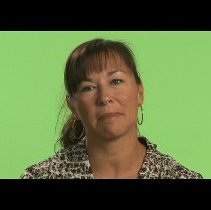
Chantal Petitclerc, Order of Sport recipient, inducted in 2010, born in Saint-Marc-des-Carriéres, Québec, talks about her Para athletic career. Chantal recalls the various Olympic Games and the 2006 Commonwealth Games she competed in. She reflects on her successful pursuit of five Gold Medals at the 2008 Paralympic Games in Beijing. Chantal also talks about sportsmanship and how Team China cheered for her at the Olympic Village after she won the 100m race. Chantal explains how sport is an equalizer and expresses pride in representing Paralympic sport. Chantal talks about the life-changing accident that happened when she was 13 years old and highlights the resilience she had to redefine her life as a high-performance athlete. Chantal talks about being competitive and the technique required for wheelchair racing and explains the differences in strategy needed for the 100m and 800m races. Chantal discusses how important it was to have Peter Erickson as a coach and how well they worked as a team. Chantal also talks about winning the Lou Marsh Memorial Award (now Northern Star Award) and what it means to be inducted into Canada's Sports Hall of Fame. Entrevue avec Chantal Petitclerc, 16 août 2010. MP4 numérisé à partir d'une HDCAM. Temps de visionnement : 01:22:08. Chantal Petitclerc, récipiendaire de l'Ordre du sport, a été intronisée en 2010 et est née à Saint-Marc-des-Carrières, au Québec. Elle parle de sa carrière para-athlétique. Chantal se rappelle les nombreux Jeux olympiques et les Jeux du Commonwealth auxquels elle a participé. Elle revient sur sa quête réussie de cinq médailles d'or aux Jeux paralympiques de 2008 à Beijing. Chantal parle également d'esprit sportif et raconte que l'équipe de Chine l'a acclamée à son retour au village olympique après qu'elle a gagné la course du 100 mètres. Chantal explique que le sport est un facteur d'égalisation et exprime sa fierté de représenter le sport paralympique. Chantal parle de l'accident qui a bouleversé sa vie alors qu'elle avait 13 ans et souligne la résilience dont elle a fait preuve pour redéfinir sa vie en tant qu'athlète de haut niveau. Chantal parle de son esprit de compétition et de la technique requise pour la course en fauteuil roulant, expliquant les différences nécessaires au niveau de la stratégie pour les courses de 100 mètres et de 800 mètres. Chantal discute de l'importance d'avoir Peter Erickson comme entraîneur et de la bonne entente qu'ils avaient en tant qu'équipe. Chantal parle également de sa fierté d'avoir reçu le Prix commémoratif Lou Marsh (aujourd'hui le Prix Northern Star) et de ce que cela représente d'être intronisée au Panthéon des sports canadiens. |
Scope & Content |
Chantal Petitclerc interview, 16 August 2010. Digitized MP4 from HDCAM. Total viewing time 01:22:08, French and English. 1 of 26: 2:00Decision to go for the 5 Gold in Beijing - her coach and her team discussed doing this, she felt she would not be allowed to lose 1 of the 5 because it would be seen as a failure; they decided "to focus on every sing we needed to do, every medal was an end to my dream" 3:08This was the biggest challenge she ever faced, it was a different challenge from Athens, more difficult as everyone had watched her and was catching up 2 of 26: Her team consisted of Chantal, her coach and a sport psychologist; discussion centered on the 100m & 1500m races were the most challenging and most risky for the gold and whether they secure the medals they were sure of 3 of 26:The 100m race in Beijing: it was the most challenging; in covering all those distance could not focus on the 100m, it was her start that was the problem as her reaction time was a little slower than it was in Athens; it was the first event on the track and important to start strong with that first gold and takes pride in winning as it is so difficult to come from the back "it becomes a race against yourself, a race where you need more than speed, but you need to go with your head and your heart and your soul and give it everything, but that's what makes it the medal I'm most proud of." 4 of 26:The strategy for the 100m: knew it was going to be the toughest race of her life; "I realized that I could not control what other athletes were doing. I could not control the race of the two Chinese athletes. The only thing I could focus on was my own race, my own plan and my own strategy. I knew I needed to have the perfect 100m. I could not allow myself any mistakes and I also knew that I had everything in me to give my best 100m and that is everything I could focus on. It's easy to say once now that I have the medal to prove it but I never gave up on this race. I know when you look at it half way, I was two chair lengths behind those two Chinese girls. I don't even know myself how I caught up to them, but I was really focused on my technique, my speed. I was keeping my head down. And not looking at what they were doing, and really trying to make it may race against myself and I won." 5 of 26: 13:42She did the sport for herself and to push her own limits, inspire others to compete and to try hard, hopes she left her sport a little better in terms of equipment and technique and getting her sport up to the next step and feels privileged if she can inspire other athletes 6 of 26: "Every event was challenging and if everything went well then I could accomplish that dream. The 400m was the safest event for me. I didn't try to break the world record because it was said the track wasn't fast enough."; talks about being disappointed in herself that she did not set a world record; she broke the world record in the 200m and it is one race she is proud of - "if you are doing something you want to do it right"; talks about racing in the rain for the 1500m, which is not always good for her, this was going to be her last race on the track as she was going to retire, she took it as a challenge to face her fear of racing in the rain; talks about the emotion of that last race, how the whole week was based on one medal at a time; "There is no such thing as too small or too big a dream. And to have those big dreams, to do everything to make it happen and when they do happen it is a great sense of accomplishment, for you and everyone who is working with you and for your country. It is possible to make these dreams happen and a trust that what you will want to accomplish in life, you have everything to make it happen". 7 of 26:Talks about recovery time after winning the 100m and her coach making her take a cool down time; the entire Chinese team was waiting for her at the Olympic Village to great her and to applaud her, she was very touched by their genuine generosity and sportsmanship, "It is a symbol of what it means to be a true champion when you can recognize someone that day was better than you." 8 of 26"Sport has no frontiers. Athletes are the same. They can recognize when someone accomplishes something"; talks about the Chinese people giving her their support and the team giving her their respect; talks about the lesson that as an athlete you race your own race and don't take time to build a relationship; talks about not knowing what to expect in China as a person with a disability but how the Chinese very quickly accepted and supported the Paralympians 9 of 26Talks about having both Olympic and Paralympic medals; the Olympic medal was for a demonstration event that showed that wheelchair racing has the same values as any Olympic event and wishes they were still part of the Olympic programme 11 of 26Talks about the accident and the time after it, having good days and bad days and doing a lot of journaling; "When you are that young (age 13) your life is ahead of you. You have to redefine everything, your relationships with others ... You take a new direction and build from it. When you are that young you really don't have to give up on a dream."; compares her situation to older people who are already established; her adjustment was to defining herself in a wheelchair and that she sees herself more as a high performance athlete that someone in a wheelchair 12 of 26Talks about being competitive was an instinct for her; "As a small town kid, not that I didn't have it but that I didn't know about it", responsive to challenge and goal oriented 13 to 21In French 22 of 26Most significant memory from Beijing: hard to capture one moment but after the last race she sat by herself in the empty stadium - "I had done it" 23 of 26Talks about the technique required for wheelchair racing, how you must be precise where the hand touches the wheel, how the position in the racing chair is different for each person and having to learn for yourself where the perfect racing position is, demands a lot of work 24 of 26In French, (see #23) 25 of 26Fell in love with wheelchair racing with the speed and competitive event; finished last in her first race: "I was in love with the sport and I had a great passion for going fast and I knew it was possible for it to happen and from that race I knew it could only get better." 1:44It is always about pushing my own limits, to be my very best and to trust myself. 2:34Talks about the pressure of trying for 5 gold medals for a second time, it was fun but also exacting and stimulating to push my limits and the limits of my sport 4:00Talks about the 800m race being the toughest, too short to be an endurance event and too long to be a sprint, you need to be very quick and very smart 5:15Talks about the 800m and the 100m being very different, she likes the 800 for the challenges it represents and the 100 because it doesn't allow for mistakes 6:44Commonwealth Games: the atmosphere is competitive and friendly, inclusiveness for wheelchair racing is not just on paper but we really feel part of that team; talks about being the flag bearer in Melbourne; (7:45) "great symbol of paralympic sport being included and athletes recognizing other athletes whether they are in a chair or running shoes" 9:48Talks about the Bird's Nest Stadium in Beijing - she used a picture of it as her screen saver, the Chinese people were there for us, compares to Atlanta 12:57Talks about her coach and how they worked as a team, he protected her and his mission was to make sure that nothing would prevent her from winning the 5 14:02"The toughest challenge for every athlete is to find a coach that works well with them and when I found Peter Erickson in '91 I knew he was the coach I needed - that will have the strength to balance your weakness: she talks of discipline, tough, understanding, building a relationship from coach to friend and being able to communicate and trust 16:48On winning the Lou Marsh award: "very, very proud of it, as a paralympic athlete and someone who has been doing it for 20 years, you do want the recognition of the press and you do at times fight for it.", also talks of the recognition being from people who are involved in sport 18:05Induction - part of a group of excellent people who had the same dreams and some struggles, who made a difference in other sport, which is what I wanted to do 26 of 26Induction - in French |
Date |
2010/08/16 |
People |
Petitclerc, Chantal |
Search Terms |
Wheelchair racing Chantal Petitclerc Interview Women in Sport Paralympic Games 1992 Paralympic Games Barcelona 1996 Paralympic Games Atlanta 2000 Paralympic Games Sydney 2004 Paralympic Games Athens 2008 Paralympic Games Beijing 2002 World Championships 2002 Commonwealth Games Manchester |