bil.png)
Archive Record
Images
Metadata
Object ID |
2018.2.5 |
Object Name |
Video Recording |
Title |
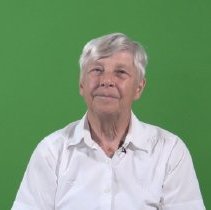
Dr. Sandra Kirby Interview |
Interview Summary / Résumé d'entrevue |
Dr. Sandra Kirby, Order of Sport recipient, inducted in 2018, born in Calgary, Alberta, recalls growing up on army bases in Western Canada and finding consistency in sport. She recalls instantly enjoying and doing well when she first began rowing in March 1975 and was on the 1976 Olympic team in Montreal. Dr. Kirby talks about the challenges she faced during her career, including how she juggled training, working, and studying. She talks about her most significant accomplishments, including Safe Sport, and how she was among the first to research sexual harassment and abuse in sport. Dr. Kirby describes the importance of formal education and how earning a doctorate "opened doors of authority." She describes her scholarly work and advocacy for gender equity, 2SLGBTQ+ equity, and access safety and fairness for disability in sport. Dr. Kirby is asked how she presents herself as a role model and her advice to coaches and parents on encouraging girls to participate in sport. She believes that parents should be present with children as they engage in sport, and that we need more women coaches. Dr. Kirby is also asked about her values and lessons to share with youth. When asked what she is most proud of, Dr. Kirby talks about her supportive family and the legacy of her scholarly work on sexual harassment and abuse in sport. Entrevue avec la Dre Sandra Kirby, 14 juin 2018. MP4 d'origine numérique. Deux vidéos d'une durée de visionnement totale de : 00:26:53. La Dre Sandra Kirby, récipiendaire de l'Ordre du sport, a été intronisée en 2018 et est née à Calgary, en Alberta. Se remémorant son enfance, elle raconte comment elle a grandi sur les bases militaires de l'Ouest canadien et comment le sport a pu lui procurer une forme de stabilité et de continuité. Elle se souvient que dès qu'elle a commencé à pratiquer l'aviron, en mars 1975, elle a tout de suite aimé ça et elle s'est sentie bien, faisant ensuite partie de l'équipe ayant participé aux Jeux olympiques de 1976 à Montréal. La Dre Kirby parle des défis auxquels elle a fait face pendant sa carrière, y compris comment elle devait jongler l'entraînement, le travail et les études. Elle parle de ses réalisations les plus importantes, notamment Safe Sport et le fait d'avoir été une des premières personnes à faire de la recherche et à mener des études sur le harcèlement et l'abus sexuel dans le sport. La Dre Kirby décrit l'importance des études formelles et comment le fait d'obtenir un doctorat " ouvre les portes et confère une certaine autorité ". Elle décrit son travail académique et son activisme pour l'équité des genres, l'équité 2SLGBTQ+, ainsi que l'accès sécuritaire et l'équité dans le sport pour les personnes vivant avec une déficience. On lui demande quels aspects font d'elle un modèle pour d'autres et quels conseils elle souhaite partager avec les entraîneurs et les parents pour encourager les filles à pratiquer et à s'engager dans le sport. Elle croit que les parents devraient être présents lorsque les enfants commencent à participer à des sports et qu'il nous faut davantage d'entraîneurs féminins. On demande également à la Dre Kirby de parler de ses valeurs et de quelques leçons à partager avec les jeunes. Lorsqu'on lui demande de quoi elle est la plus fière, la Dre Kirby parle de sa famille qui l'a appuyée ainsi que de l'héritage que représente son travail académique sur le harcèlement sexuel et l'abus en sport. |
Scope & Content |
Dr. Sandra Kirby interview, 14 June 2018. Born digital MP4. Two videos with a total viewing time of 00:26:53. Video 1 Sound testing Video 2 1.Take me back to the beginning when you first started rowing, and what got you interested in sports, and who inspired you and why? 00:10.05-01:14.16 So when I was, I grew up on army bases all over Western Canada, and sport was the consistency from place, to place, to place, to place. I also found fairly early on that I was good at learning sports so I was never really, really good but I was good at learning sports, new sports, so I could do a lot of sports reasonably well, and then I found rowing. And rowing was the sport that I could do very, very well from the moment I started so I started in March of 1975, before all of you were born. 1975 and I was on the Olympic team and competed in 1976 in Montreal; so it changed my life, the Olympic movement changed my life and the rest has just been using that legacy of the Olympic movement to actually make positive change in sport. 2.What were some of the biggest challenges you faced during your career as an athlete, this can be in training, in competition? 01:21.21-02:50.25 First of all I'm female, so I have a card actually, I was tested female at the Olympic Games, which I find a bit absurd. But being a female athlete was more difficult than being a male athlete. I trained hard, I trained as hard as any male around me for sure but the number of opportunities for competition were less, were fewer. Another of the challenges was that there was just me so I had a career, so I was working full-time, I was training full time as an athlete, and at one point I was also studying full-time for my various degrees, so keeping the balance of those three and then you add on the advocacy that I was doing, which was around in the early days around gender equity - I mean my life was full of challenges and I don't remember having time for any of the normal things, like going to dances and partying with friends on the weekend and so on, and I never missed it. My life was so full and so satisfying that I didn't miss those things so, so the challenges were there but the joy of being able to do it all together was also there. 3.What stands out in your mind as your greatest accomplishment? 03:09.20-04:35.27 I did go to the Olympics, and I did get a PhD, earned a PhD in Sports Science on athlete's retirement, I did work with UNICEF and I continue to work do some work with UNICEF and with the IOC, but my biggest accomplishment is the work that I was able to do on Safe Sport. I did a piece of research, I mean I've worked on many things, but I did a piece of research in the mid-90s on sexual harassment and abuse in sport, and it was the study of Canadian high performance athletes and recently retired Canadian athletes and it was the first study in the world on the nature and scope, or how much of what kind of harassment and abuse there was in high level sport and I wrote a book with Lorraine Grieves on that. And that book was the first book in the world on that and that lit fires in various countries around the world on the need for those kinds of studies. So that's my greatest accomplishment, that first piece of research, that book, and then watching it radiate out and seeing other countries pick up the work, and you can see some of it even today. 4.What importance has education had in your life? 04:46.05-05:38.15 Education is the carrier of everything. Without education it's very hard to, it's very hard to put complex ideas together, it's very hard to encourage people to move forward in their lives, it's very hard to simply facilitate the development of athletes if you don't have education, if you don't know what you're talking about, if you don't have a factual base. Education for me, actually the PHD in particular opened doors of authority, so now my voice has authority so I'm saying the same things I was saying before, but now my, I'm regarded as an expert. So that's of certain value as well, but I often say, you know when we look at issues of poverty, I think the solution is education, education, education. For girls in particular education, stay in school, get as much as you can, be as diversified as you can, find yourself in education, so it's the promise of everything. I'm obviously passionate about education. 5.Can you give us a brief description of your scholarly work and the issues you advocate for in sports, and then tell us why you think it's important to the advocacy work you do? 05:49.04-08:04.20 So the sense of iniquity, inequality has pursued my career all the way along so one of the first things I worked on was gender equity around the number of boys and girls in sport and the opportunity, more opportunities for girls in sport. So it was very very simple, just equity. And then I started to link gender equity with LGBT issues, so lesbian, gay, bisexual, trans, the language at the time was LGBT and it was simply about how if you are, particularly if you were male and a gay male, there was no place for you to come into sport and bring your full self through the door, you had to leave that part of you behind. So I started to do some work on opening doors around LGBT, then I moved on also to include when you're talking about gender equity and LGBT it's easy to talk about the other, the other discrimination. So the next one that I actually worked on while keeping the others going was on disability and I at that point had a sister who was disabled she had MS for about 40 years, she died in 2012, and she taught me some of life's most important lessons, so I did a lot of work on disability and sport around access safety and fairness. So those are sort of the three and they're all in a package around human rights you know if I have a human rights approach and I understand that everybody has a right to play sport, everybody has a right to achieve in sport, and everybody has a right to be safe in sport, and to be respected in sport, then all of the issues kind of fall into the same package so. 6.Can I get you to expand on why you think this work is important? 08:08.13-09:33.22 Because sport is a wonderful place, sport was very very good to me. I had sort of minor discriminations along the way, but in general I had respect because of my capacity, my achievement, 'cause I was able to achieve, but everybody deserves that. So that's what sport is to me it's the place where people learn to become themselves, it's a place where they express themselves and sport needs to challenge people so they can express themselves, and when people come to sport they have to be able to bring their full selves to that sport as well. So that's what I'm after all, to get rid of all the noise, and the discriminations, and make it a simple straightforward joyful place to be. 7.How do you try to present yourself as a role model for future generations? 09:44.13-10:55.05 Well I've taught a lot classes, and I've coached a lot of athletes, and I think this, the single approach that I use is that I'm there, they're the ones who are trying to move from where they are to a goal, and my job is to come in and to facilitate them in some way along that path and use my skills, and experience, and ability, and network to help me move them along and then when my contribution is finished I veer off and somebody else who has what they need later comes in and does the same. So I don't want them to look up to me, I want them to look at me and see how I can help them and to be able to approach me and say "can you help me". I want them to find themselves and if I can help them find themselves then that's good 'cause that's what I did, and I found myself, I found, my integrity, my integrated-ness, have found my purpose in life through sport and I would like to facilitate them along the way as well, so it's about them. 8.What would you say to coaches and parents, specifically to encourage girls to participate in sport and to stay in sport? 11:03.30-13:22.20 Sport is there, and so parents in particular, go with your children, go with your girls, explore sport with them, stand by their side, watch them grow in sport and watch them learn who they are through sport. And for girls, boy, the more sport they play, the more variety of sports they play, the more friendships they're going to have. That's what carries them through, it's the friendship and the connectedness, it's not necessarily the achievement, so let them make friends, let them keep making friends and build the friendships; and through the friendships will create a continuity in sport. If girls and boys are in sport for the right reason which is that they're there for their own purposes and their own exploration of themselves and their physical capacities in sport they will continue. Friendships, variety of sport, parental involvement, for the coaches - for the coaches we need more women coaches absolutely, more women coaches coaching little girls, so girls can see that women have a place in sport all the way through, from participating, to competition, to Olympic Games, to all of the coaching, and to being a medical doctor in the athletic trainer and all of that stuff. So we need more women at all of those places, so that is my big picture. 9.What values were most important in your journey and why? 13:31.09-15:52.20 So one of the values I had was it's up to me, it's up to me, it's up to me- I'm going to do it, I have to do it, it's up to me to finish, it's up to me to choose to start something, it's up to me to follow it through, to stick with it, to finish it. The value of integration, you know I talked about having a PhD and doing feminist activist work at the national level and the local level, trying to do sport at the same time, so integration is also a value for me. Underneath it all, sport makes me try to be the very best person I can be, so when I'm an umpire, in rowing and I'm going up and down in the race umpire boat and I'm telling people to move left or move right and so on, I try to do it in the kindest most straightforward way. So I try and be the best person, if there's a chance to go pick up a stopwatch because somebody forgot it, I don't pick it up I make sure that whoever lost it, finds it. They want you to be honest, and open with them so that it makes me be the best person I can be and I hope that's enough, and when I'm coaching I hope that's enough. 10.What lessons or messages would you like to share that you think could help youth in their lives today? 16:03.20-17:09.30 You out there, you the youth, you have more opportunity, more education, more knowledge, more access to information than we ever had, you have more energy, more spirit, you also have more challenges. It's a hard road, but it's a joyful road, and if sport is part of your road then hopefully like it did for me, it'll give you some consistency to get through some of those very tough places in life, the very tough places where you have to move from place to place and lose your friends and gain new friends, or where you lose a job and have to find another job and the devastation that comes with that. Sport is one of the continuities that helps you, helps you, helps you stay steady through. Life is pretty good and sport is pretty good part of that. 11.Looking back on your career as a whole, what are you the most proud of? 17:25.00-18:53.15 Well I'm very proud of having a loving family who is, who is there for me and understands enough about me and of my life to let me live it 'cause I'm very, I'm certainly a-typical. The thing I'm most proud of, is that there is, I hope, a legacy of the sexual harassment and abuse work, the safeguarding in sport work that will continue, that the next generation is certainly able and ready they're already chomping at the bit to take over, we have this new organization called Safe Sport International which is a clearinghouse for information on intended harms in sport, over medication, under medication, overtraining, neglect, the harassment, the abuse, all of those things. So the legacy of that, of my work back in the 90s that I am still doing now, the legacy of that I think is my proudest achievement; that it will carry on, sport will get safer, sport will continue to be a good place, now a better place for kids. 12.What does it mean to you to be inducted into Canada's Sports Hall of Fame? 19:01.05-19:58.15 It came out of the blue. I was sitting at the Crusty Bun, in Winnipeg with this little three-year-old girl I take care of, Lucy, and the phone rang and I answered, and I was so astounded that little Lucy spilled her hot chocolate, and then she told her mother that I wasn't paying her enough attention. Which was absolutely right, I was quite taken aback by the call. It represents an opportunity to have my story recorded, and my story is a, is a good story, it's a positive story about sport, and it will join the many, many other stories in this wonderful place and it will tell future generations what we have had to do in order to experience sport fully. So I'm just one of many stories, I think it's an important story and I hope that people will find inspiration in it but, I'm well aware it joins the myriad of other quite wonderful stories that are housed here. I mean this is a real, this is a really important place for sport and we should be doing a lot to support it. That's what it means. |
Date |
2018/ / |
People |
Kirby, Sandra |
Search Terms |
rowing women in sport equality in sport Safe Sport International Gender Sandra Kirby Interview 2SLGBTQ+ 1976 Olympic Games Montreal |