bil.png)
Archive Record
Images
Metadata
Object ID |
2015.5.20 |
Object Name |
Video Recording |
Title |
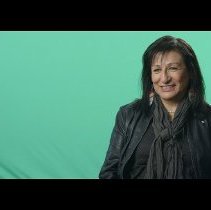
Sharon Anne Firth Interview |
Interview Summary / Résumé d'entrevue |
Sharon Anne Firth, Order of Sport recipient, inducted in 2015, born in Aklavik, Northwest Territories, talks about cross-country skiing with her twin sister, Shirley Anne Firth; about growing up and competing as an Indigenous Gwich'in athlete, her values, and her messages to youth. She describes growing up on her father's trapline with seven sisters and five brothers, which instilled a sense of competitive teamwork. Sharon Anne describes the 1982 World Championships in Norway at the Holmenkollen arena as her most memorable accomplishment because even though she didn't win a medal, it was amazing to be skiing with the greatest athletes in the sport. Sharon Anne talks about the importance of skiing with Shirley Anne because they were able to support each other and their cultural differences within the National Team and while competing in Europe. Sharon Anne talks about representing First Nations Peoples and Canada while competing, and she describes her values of perseverance and to never give up. Sharon Anne mentions the challenges of living below the poverty line and leaving their supportive family behind to train and ski. She also recounts the challenge she and her sister faced when their mother passed away before the qualifications for the 1980 Olympic Winter Games and the pressure they faced from their family and the team officials. Sharon Anne talks about growing up in the Northwest Territories without modern technology like cell phones and how they moved to Inuvik and went to Residential School. She describes growing up on the "Mighty Mackenzie River," always wondering what was beyond the bend, and finding her answer in cross-country skiing. Entrevue avec Sharon Anne Firth, 29 juin 2015. MP4 d'origine numérique, temps de visionnement : 00:19:07. Sharon Anne Firth, récipiendaire de l'Ordre du sport, a été intronisée en 2015 et est née à Aklavik, dans les Territoires du Nord-Ouest. Elle raconte comment elle et sa sœur jumelle, Shirley Anne Firth, faisaient du ski de fond ensemble; elle parle de son enfance et de son expérience des compétitions en tant qu'athlète autochtone gwich'in; elle parle de ses valeurs et partage des messages à l'intention des jeunes. Elle décrit son enfance passée le long de la ligne de piégeage de son père, avec sept sœurs et cinq frères, ce qui lui a inculqué un sens du travail d'équipe et de la compétition. Sharon Anne décrit les Championnats du monde de 1982 en Norvège au stade de Holmenkollen comme son exploit le plus mémorable parce que,s même si elle n'a pas remporté de médaille, c'était incroyable de skier avec les plus grandes athlètes du sport. Sharon Anne parle de l'importance de skier avec Shirley Anne parce qu'elles pouvaient se soutenir mutuellement y compris dans le contexte de leurs différences culturelles au sein de l'équipe nationale et en compétition en Europe. Sharon Anne parle de la représentation des peuples des Premières Nations et du Canada en compétition et elle décrit ses valeurs de persévérance et l'importance de ne jamais abandonner. Sharon Anne mentionne les défis de vivre sous le seuil de pauvreté et de partir loin de leur famille aimante pour s'entraîner et skier. Elle raconte également le défi auquel sa sœur et elles ont été confrontées lorsque leur mère est décédée avant les épreuves de qualifications pour les Jeux olympiques d'hiver de 1980 et la pression exercée par leur famille et les responsables de l'équipe. Sharon Anne parle de sa jeunesse dans les Territoires du Nord-Ouest, vécue sans technologie moderne comme les téléphones portables, et de comment elles ont déménagé à Inuvik et ont étudié dans un pensionnat pour Autochtones. Elle décrit sa jeunesse sur le " puissant fleuve Mackenzie " et explique comment elle se demandait toujours ce qui se trouvait au-delà du coude du fleuve et que finalement, elle a trouvé sa réponse dans le ski de fond. |
Scope & Content |
Sharon Anne Firth interview, 29 June 2015. Born digital MP4, viewing time 00:19:07. 00:24:19TEST (Territorial Experimental Ski Programme); her greatest inspiration was her coach Borger Peterson, who was from Norway; he totally believed in her and her twin sister; she fell in love with the sport when she first put on her skis 00:24:56On growing up within a large family on a trap line: she has 7 sisters and 5 brothers; she is proud to say she is a trapper's daughter; the first years of her life were crucial to her competitive career; they all did the chores as a team 00:24:56What stands out as the greatest accomplishments in her career: making the 1982 World Championships in Norway; placed 18th in one race, it was very tough; Norway is the hub of cross country skiing and to be skiing with the giants in the sport was unbelievable 00:26:45Most proud of in career: sticking in there through the ups and down; making it through four Olympic Games; 16 years of her life in sport at a high level 00:27:09How important was it to have her twin sister to share experiences with: being a twin and competing together was amazing, they totally supported each other because of the cultural differences among the rest of the team and the Europeans; they were a team within a team; they were the backbone for each other "we did it together" 00:28:12Accounting for her longevity on the Canadian team: love of the sport; love to compete and represent Canada and First Nations across Canada, in Europe, her home community and her parents; basically wanted to do her best all the time which doesn't happen all the time; have the endurance and determination to never give up 00:29:04Proud of being a member of the First Nation Community; what does it means to represent the First Nations in Canada and abroad : honour and privilege; did not look at it that way because being raised as a trapper's daughter; to step out of that environment onto the world stage was tremendous; to carry that beautiful load of representing First Nations and Canada was unbelievable 00:29:56Values: to never give up; never a quitter; her parents instilled in them that whatever they tried to best the best at it and not be a quitter; they persevered under every condition possible; set the pace in pioneering the sport of cross country skiing for Canadians and First nations 00:30:45Biggest challenges: living below the poverty line; leaving home and family; stepping out onto the world stage and competing against the giants; wonderful life, every day a new experience; she wanted to have that experience; want to know that when she finished she had done everything she possible could and was satisfied with her purpose in life at the time 00:31:55After skiing career, active in youth programmes in the NWT, why she got into that field: when she stopped skiing in 1985 she had no idea what she wanted to do because her life had been so structured as an athlete; wondered what to do for youth, she thought she had a wonderful life as a young person and wanted others to experience that whether in sports, education, music, dance; she approached the government of the NWT and suggested a Youth Secretariat and that is how the programme came about 00:33:14Lesson/message to youth: don't be afraid to try anything, we fail many times in life but we don't lay there, we get up, so long as you are getting up after a fall your life will be wonderful; the future is right in front of you; there are so many amazing opportunities out there; need to look for those opportunities and not be afraid to step up to the plate 00:34: 30Influence of her mother: her mother was a strong, powerful, Gwich'in woman, very soft spoken but very hard core; taught her children well, taught them the values of being Gwich'in and never to be quitters, to always do their best and to use their voice when necessary; she died in a house fire just prior to the 1980 Olympic qualification trials; she and her sister were devastated and had to make a hard decision to stay and compete or go home, the Canadian ski officials thought they were too old to compete at the Olympics, they asked how their mother would feel if they gave up; decided to stay because their mother wanted them to fulfill their dreams, she was there for us guiding, training, protecting, strong values they possess today; won all their races; felt very powerful - from any obstacles in life we can create an opportunity; brought the team together because they thought their mother was an amazing woman 00:37:36She lives now in Yellowknife 00:37:52What was it like growing up in the NWT: very wonderful, exciting, lived in a time when there was no modern technology, grew up with radio and the transportation was a dog team; loved her childhood; knew she wanted something better but did not what until she started cross country skiing; today youth are exposed more to the outside world and what is happening in and out of Canada, they are more tuned in and can travel more than she did 00:39:20What inspired her, what got her into the sport: there was just her family on the trap line; refers to her parents as "the PhDs of the land"; she wanted to know what was behind the next bend; they moved to town and attended residential school; wanted something better; when introduced to the sport if totally changed her lifestyle, brought excitement, learned what training was all about 00:41:12How did it start: had no idea that the Olympics existed; when her friends suggested she try the sport she fell in love with it |
Date |
2015/06/15 |
Year Range from |
1972 |
Year Range to |
2015 |
People |
Firth, Sharon |
Search Terms |
Sharon Firth First Nation Gwich'in First Nation Cross Country Skiing Order of Canada Indigenous Interview Women in sport TEST programme Olympic Winter Games |