bil.png)
Archive Record
Images
Metadata
Object ID |
2013.55.149 B |
Object Name |
Video Recording |
Title |
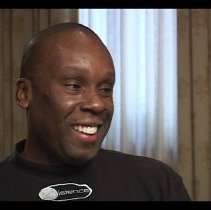
Bruny Surin Interview |
Scope & Content |
Bruny Surin interview, 5 November 2008. Digitized MP4 from Sony 40 Advanced ME DVCAM. Two videos with a total viewing time of 00:55:21 1 of 2; 00:03Introduction to Hall 00:42Childhood: born in Haiti, played soccer, always like running; moved to Montreal when 7; his idol was Carl Lewis, wanted one day to be like him and that is why he started track & field 01:43On the move to Montreal: his parents wanted an better opportunity to work, he is grateful for the sacrifices they made, talks about Haiti not having many opportunities today 02:52Sports: still playing soccer, played for 5 years, played basketball in high school; at 12-13 track & field coach told him he had potential in the long jump and triple jump, was still playing basketball; few years later tried track & field 04:26On the long jump: the coach was persistent to get him to try it, he competed in the end of school competitions and with only a few weeks of training was winning long jump and triple jump, if not for the coach he would never have known he had that talent, still thanks the coach when he meets him for the great things track & field taught him such as discipline and sacrifice that he used in his business life now 06:42Training for long jump: similarities in basketball and long jump, both need extension, to be explosive, quick; just natural at it, good spring in basketball 07:05When did you start to take long jump seriously: knew he could be a good long jumper at the international level after one year of practicing, talks about goal setting to jump from distance of 6,9 to 7,5 at the next competition, when he did that he realized if he was serious in practice he could to the Olympics, started to train seriously and made the 1988 Olympics after 3 years of training 09:04Techniques: in practise it is repeat and repeat, talks about the techniques, make it come naturally, same in all sports, practice all the time so it comes naturally in competition 10:33Separate training into different phrases such as the mark, take off, every detail is important and counts, key is to be relaxed 13:14On height: practice, know your body and what feels right, talks about Ben Powell's jump and technique 15:13On the 1988 Olympics: 15th place finish; affected by Ben Johnson, was devastated, proud to be Canadian, reports very aggressive, not fun, looking forward to going home; bad history but we have overcome that and have proved we can gave great Canadian athletes without using drugs; in life we all make our choices and in life we have to pay for them 16:50Was there a sense of "Ben got caught that's bad or that's not fair": bit of both, ready to give him one chance, if you cheat one day it is going to come back to you 18:03On being asked to become a sprinter: had been some sprinting already, had injured his take off leg for long jump but it was fine for running, decided to train seriously only for the 100m, moved to Italy because they had small meets so he could try to improve, won the Canadian championships with 10.14, put aside the long jump 19:50on running a 10:14: surprising; realized had to improve his last 30 metres, practised and his times came down 20:50On running the relay: also did the relay as well as the 100m, was an alternate on the relay team 21:58Was the anchor in 1993, talks about the World Championships, had an injury to his hand so hard to pass the baton, moved to 3rd position, to him it was a job 23:17On practicing the relay: did not practice a lot, had one training camp before the 1996 Olympics, everybody has a job to do, each practised their speed, big difference was the team spirit they had, knew the Americans were tough because they were all running under 10 seconds, on paper the Americans were better but they felt they could do it, belief in yourself, belief in the team 26:41On the team: four self-confident guys, not easy but the key in the relay is to put the ego aside, not easy, discussed it, some tension but overcame it 26:51On the race: Robert took off and then Glenroy, had no idea where they were, when he got the baton he was running the curve, had an angle to could see nobody, the American was not in sight, thought "we've got it", gave the baton to Donovan, we've got it; talks about Donovan raising his arms and not getting the world record, he apologized but they cared about was the win and proving to everybody that they existed; had won Gold the year before at the World Championship but the Americans never gave them credit and never took them as a threat 29:12Loved it when he raised his arms, a great feeling 30:06Did you feel between '96 and '99 did you start to take the 100m more seriously: talks about his running career; won the Gold medal indoors twice at the 60m, the end of his race was not perfect, in his mind he could have run faster but not sure why, tried things in training but not finding the solution, joined with Path as a coach, told he was using too much energy at the beginning of the race, taught him how to run bio-mechanically and run efficiently and dropped his time to 9:84 35:50On preparing for a race: takes lots of fluids for hydration, learned to relax right before night before, not to think about the race and stressing out for nothing, key is to use stress when going to compete 37:50In the warm up room: compares it like going into the jungle, they try to intimidate the other runners, he ignored them, concentrated by himself 2 of 2; 01:00Was your 9.84 the pinnacle: told by his coach that it was a 7:76 race but for the mistake he made, talks about the race, happy with the 9.84 03:49On his skill: grateful he was lucky to be discovered as a kid and ended up in the world as a sprinter and achieved great things, sacrifices at every level, training intense, talks about what he is thinking about during a race 07:16On visualizing: learned how when very young from his first coach, never used drugs because of the education his family gave him and because of his coach, if you condition your brain to believe something you can do it 10:03When crossing the finish line time slows down for him 11:13Greatest memory: the Gold in 1996, important because of team spirit and team work, individually they were not the four fastest guys on the track but worked when they put the effort together, the trust between them, they achieved great things 11:58Role model/mentor: his idol was Carl Lewis, a source of inspiration and motivation, wanted to jump as far and run as fast 12:37On young people playing sports: to go to the Olympics or to have fun, people need to do sports, high rate of obesity in kids, do anything, take a walk, doesn't have a to be in a gym 13:34What makes a winner: did you do your best, did you respect your opponent, did you have fun, that's a winner |
Date |
2008/11/05 |
People |
Surin, Bruny Bailey, Donovan |
Search Terms |
Bruny Surin interview athletics Track 4x100 m relay 1996 Olympic Games Atlanta 1990 Commonwealth Games 1994 Commonwealth Games Victoria 1988 Olympic Games Seoul 1992 Olympic Games Barcelona World Championships |