bil.png)
Archive Record
Images
Metadata
Object ID |
2013.55.161 |
Object Name |
Video Recording |
Title |
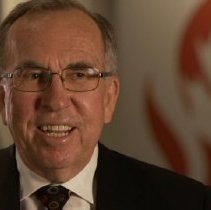
Richard Haskayne Interview (about Daryl 'Doc' Seaman) |
Scope & Content |
Richard Haskayne interview, speaking about Daryl 'Doc' Seaman, 23 August 2012. Digitized MP4, Viewing time 00:17:32. Crew (00:00): Rolling and we're good. Interviewer (00:02): All right. I think this is going to be easy, because I think you have lots to say about Doc Seaman, but let's go back. Let's go back, you said you've known him for 40 years or so. What are the circumstances surrounding your getting to know him? Richard Haskayne (00:16): Of course, we've both been in the oil business in one form or another for all that time. I'm a little bit younger than Doc, but not very much. We've known one another through the days of his involvement with the brothers in the drilling business, basically. Later, of course, they launched into many other businesses and developed Bow Valley industries. I saw them all the way along in different capacities. Everything from the actual business dealings and also, of course, things like the Oilman's golf tournament and all the social and business functions around town. That's how I've really known them, but the question is more about how did we relate? Perhaps, not to get ahead of your questions. Interviewer (01:00): No, no. Anything you want to say. Richard Haskayne (01:02): We both have rural roots. A classic example is Doc, as you know, is from Saskatchewan and he never lost a balance about what the values were ever. I always admired him for that. I came from a small town, too. I came from a little town of Gleichen. To give you an example about his roots, we sat on these boards together, like at NOVA and others, and the first thing he'd say, "Haskayne, I drove by your farms in Gleichen," because my farms are right on the highway. He said, "And I got to tell you, the summer follows up to date." Later when the crops were growing, he said, "The crop looks pretty good." That was the first item in his agenda always. Never forgot that. That's the relationship we've had. Just good friends, of course. Interviewer (01:48): Now, clearly you're peers in many ways. In terms of business, being close to the same age, both being philanthropists. Do you consider him an inspiration? Richard Haskayne (02:01): Do I ever? I mentioned to you that I still have an office downtown very similar to the thing that Doc, and even his longtime secretary, Mary Walker. We used to work together at Hudson's Bay Oil and Gas, so I've done something similar. I've been on 20 big public company boards, but I've been the chairman in the last few years, so I've maintained an office downtown very similar to the one Doc has. I've patterned my life in large part after doc. Of course, both of us got to the age where you have a mandatory retirement age on boards, so we still maintain an office and I patterned my daily existence in part because of philanthropy, but in my case, I spent a lot of time behind the scenes on the business school, the Haskayne School of Business. Crew (02:50): Perhaps you can speak to this then maybe, given your similarities more than almost anybody else can. Where does that drive come from? Its core to just be continually involved and nonstop. Richard Haskayne (03:07): The core comes from the drive to build something, not just from the point of view of money. Job creation was always one of Doc's important elements, "If I can create an organization that creates jobs for people like us coming from small towns or wherever." That was one of his main motivations and he did create organization like that. Even when he was on boards where he wasn't necessarily the controlling shareholder, that was always front and center, "What's this going to do for the country, and what's it going to do for people coming out of school?" I hopefully have tried to emulate him in that respect. Of course, the business school is one of my prime motivations these days, so Doc would be an important element in making that kind of a decision. Interviewer (03:58): I want to talk about his contribution to Calgary and building Calgary as a city. Obviously, you have a similar devotion. What do you think it is about the city that inspired that in him? Richard Haskayne (04:15): I guess that was the main motivation, building something that was worthwhile, but he also, of course, was very good at attracting good people. If you look at the people that he, if you will, trained or encouraged along the way, many of them have done so well after they got the education from Doc. I could name many, but the one that perhaps impressed me most without singling him out is Harley Hotchkiss. Harley's a wonderful person and one of my longest standing friends of the same number of years, more than 40 years. In fact, I was a master of ceremonies at his funeral. A great tribute, I considered, to me, but the relationship with the Seamans goes back even when Harley was quite young and starting in this business. They really were the key influence in getting him going. Of course later, he went on his own, but he always kept that association and that was classic of Doc. Once you are his friend or once you're a business associate, you're always a friend. I think that's perhaps a trait that sometimes we don't have so much anymore. Interviewer (05:26): Do you think that that's why he was so good in business, that he wasn't single-minded when it came to business? Richard Haskayne (05:38): One thing that I think people don't really visualize or appreciate as much here in Calgary, in the world of business, I've been involved with everything from banks to the distilled spirits companies and so on, is that they're all competitive. In the oil business, it's quite different, because as you know, sometimes you're a joint venture partner and the next time you're a competitor, so you can't really afford to be at odds with people. That's unique to this business, just the virtue of the business is structured with. Joint ventures, of course, Doc was a classic on that. He didn't alienate people, he always knew exactly where he stood, he was honest, he was very direct in a very nice way, and he was a man of few words. I can give you some examples of that. When he said something, you really needed to listen. The traits that he would have would be the ones that people like me and others have and continue to emulate. Interviewer (06:33): Now let's focus a little more on his philanthropic efforts of which there were so many. Richard Haskayne (06:39): Yeah. Interviewer (06:42): Part of being a man of few words also meant that the accolades were certainly not what he was in it for. What do you think his drive to give so much came from? Richard Haskayne (06:55): Of course, the one in medicine, he was on the forerun. Partly because of his engineering talent and knowledge, he was always on the forefront of everything from drilling to the things that were done at the hospital here with the imaging. He was always keen to create new technology as well as the jobs and doing right for society. I suspect some of that was more to do with is inquisitiveness and technical abilities to see some of those things. Even in the drilling business he was in. He was always ahead of their time, long before many other people did things. I suspect that was partly his engineering background and his motivation based on growing up in the rural community and actually building something. That's about as far as I can go there. Interviewer (07:42): Now, from an outside perspective, it looks like everything he touched turned to gold, proverbially. Nobody is complete without trials, tribulations, and obstacles. Did you see him go through any tougher times? Richard Haskayne (08:02): There were tough times in this business, of course. There were times when Bow Valley had its own share of financial issues to deal with, but they always got through them. Quite frankly because there was a volatile stock and they used a fair bit of debt along the way. There were times in that business when the drilling business would turn down and their other business turned down, but they always got through it. A large part of it, quite frankly, was their reputation. They were honest people, all three brothers, and they had good reputation with the banks, which I knew. They used debt to a significant amount, never excessive, but they did have tough times. There's no question. Some of the businesses they started were entrepreneurial, sometimes didn't work out. Good thing about the world, you only remember the good things, but they learned the hard way on lots of things. Don't kid yourself. Interviewer (09:00): What about being able to maintain his family connection, working with his brothers the way that he did? Richard Haskayne (09:07): I think that's unique, to go on as long as they have. Even today, I can tell you just recently there's a new room in the business school, it's going to be called the Seamans Family Room. Doc's not here, BJ is not well, and Don has agreed to do that. Everything was identified with the family, it wasn't just Doc, BJ, or Don. The family stuck together and they did different things in businesses. It's quite unique, because there are not a lot of families, quite frankly, who go across the country that have been as successful as they have and have carried on to the extent of the Seamans. It's unique, I guess it's just the character and the personalities they have. Interviewer (09:52): Now, part of what I think was important to Doc and what purpose projects like this will serve is to further inspire generations. Why do you think it's important that young people know about Doc and his life's work? Richard Haskayne (10:11): The reason is the key company they had, of course, Bow Valley Industries. These days, quite frankly, the world changes. I was with Hudson's Bay Oil and Gas for 25 years of my career. Today, if you went down eighth Avenue and asked who's Hudson's Bay Oil and Gas, even though it was one of the dominant companies, the average person wouldn't know it. The same thing is true of Bow Valley Industries. The Seaman name, their name was so tightly associated with the company, because they built it. I think it's critical that they say, "How did this happen? Where did these people come from? How did they make it happen?" Of course, the military service that Doc had was outstanding to start with. Comes back after the war, starts really on a grassroots basis with some small seismic ventures, and built it into a very substantial company. (10:57): Then of course, when the company was sold, they wound up taking that and putting them into different ventures. Each of the three brothers had different interests in different things. Sometimes together, sometimes separately. It's important to say, "These guys came from Saskatchewan, from a rural community, and they built this thing." It may not be there anymore, but you better understand how they did it. I think it's important that those names be retained and they will be. They're all over and for good reason. Interviewer (11:27): Now, you spoke of his military service. What do you think he got from that, that he was able to carry through the rest of his life? Richard Haskayne (11:38): I suspect there was a courage, because a lot of the things he did, he could have easily lost his life doing the things that he did. Flying airplanes and so on. I guess a camaraderie in being able to judge the personality of people. If he's had any strengths, it would be that he's been able to hire or work with people and make them into better people. That's a classic example of good judgment of people. Of course, that's in large part what made them successful. They didn't do it all on their own, they developed some wonderful people who then went out and did other... Harley Hotchkiss was the best example, or one of the best examples. Interviewer (12:21): Finally, if you were able to distill all that is and was Doc Seaman into a word, what might that word be? Richard Haskayne (12:33): I would say he was astute, would be as good a word. There are so many other adjectives that could go with that. One word is really not enough, because he had so many attributes. The thing that he was able to do, I'm wandering off your subject, but he could say something in one line that had an incredible meaning, because he was a very good listener. I can give you a classic example. He was the chairman of NOVA, an interim chairman, Bob Blair left him. He later conscripted me to do the job, but there were some difficult issues at NOVA. Ted Newall was the new CEO, he came in, and the first thing that Newall did was look at all the assets that they had in terms of the chemical business, which was his background, and determined that the value of those assets was inappropriate. Ted came to the board and recommended a write-down, which would've been their biggest in Canadian history, of $1 billion. Doc sat there as the chairman, listened to that, listened to other board members. (13:46): Finally, he said, "Ted, I only have one question. Have you got it all?" In other words, "Did you write everything down? Don't come back." One line, "Have you got it all?" For those sitting around the table, that's exactly the thing that he had. He'd assembled it all, he didn't need to ask any more questions. That's Doc Seaman. Interviewer (14:13): What do you think he would make of this particular honor? Richard Haskayne (14:13): He is very modest. Even in some of the things that he's received, he was really reluctant to even say very much. He's a genuinely modest fellow and said, "That's just what I do, and thanks for the honor." He certainly didn't get the honors by working in a way that put him in the spotlight, quite the reverse. Even this thing I told you about NOVA, he was the interim chairman. I got on the board and within about six months, all of a sudden he said, "Haskayne, this is what you should do." How do you say no to Doc Seaman being the chairman of a big company like that? That was his style, no debate, so say, "Yes, sir. I'll do it," and that's what happened. Interviewer (15:01): This will be my last question. Richard Haskayne (15:02): No, it's okay. Interviewer (15:04): What do you miss most about him? Crew (15:09): I miss the camaraderie and the thoughtful input that you'd always get from Doc, whether it was about driving by my farms and telling me how it was doing, or we would play a little golf, he was a much better golfer. He had wonderful expressions. I can tell you when Jerry Meyer, who later became the CEO of Bow Valley, Jerry and I were partners at Hudson Bay Oil and Gas. We're having this golf game and, of course, BJ and I were partners against Doc and Jerry. Both of them were better golfers than us, at least than me. We'd be going along, all of a sudden, BJ had a bad hole. You know what Doc's comment was? "BJ, you're running up a pretty big tab on this hole." Then we'd have a $20 bet. They were so competitive, you would think that the whole control block of Bow Valley Industries is at stake rather than 20 bucks. Interviewer (16:12): Is there anything I've missed or that you would like to add? Richard Haskayne (16:23): I don't think so. I've thought a lot about what the questions were going to be. No, I don't really have anything else to say. It's the roots that he came from that, in my view, are so impressive, and what he continued to do, because he didn't believe in retirement. That was the last thing in the world and that's what his book's all about. If he's had an influence on somebody like me, look at me, here I am. I'm 78 years old, coming up on 78, and I'm still doing what Doc did, trying to do something, and because he got a great kick out of it. It's a wonderful sense of satisfaction. He did it, because he liked it. He was not searching for fame and fortune in the normal sense of having his name all over. I was involved in a lot of fundraisers where often they gave money and didn't even want any recognition, even though they gave substantial amounts. He's got a wonderful legacy to leave, and of course, the book says it all. If people haven't read the book, I can recommend that. Interviewer (17:27): Thank you very much. Richard Haskayne (17:27): Okay. Interviewer (17:30): Thank you. |
Date |
2012/08/23 |
Year Range from |
1980 |
Year Range to |
2009 |
People |
Seaman, Daryl 'Doc' Haskayne, Richard |
Search Terms |
Richard Haskayne Interview Daryl Seaman Ice hockey Calgary Flames Olympic Winter Games Calgary NHL |