bil.png)
Archive Record
Images
Metadata
Object ID |
2013.55.78 |
Object Name |
Video Recording |
Title |
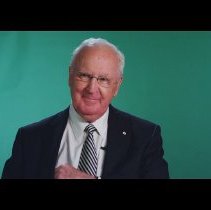
Murray Costello Interview |
Scope & Content |
Murray Costello interview, 15-16 October 2013. Digitized MP4, viewing time 00:13:02. 00:10Values: the lessons that come from playing the game, team sports are a valuable way to learn lessons in life, all the kids who play our game are going to learn some life skills in a pure setting and they are going to be better citizens and better leaders for having done so 00:46Life lesson: it helps to be in a job what you enjoy and love because then you don't seem to be going to work; do something you love doing and give it your all when you give it; try and bring everyone in, it was a team sport on the ice and off the ice; hockey has the largest contingent of volunteers, plus the professional staff, to get them all involved and working in harmony to build a programme is more rewarding than doing it alone 02:02Would you do anything differently: not a whole lot, few things would have like to have done sooner so we could have taken it farther than what we did; but I think that the fact that we got things rolling in a good direction, and got everybody to buy in and earned the following of the Canadian public, that was a pretty good start and I'm pleased with that 02:28How did you get involved in the game: grew up in a small mining town in Northern Ontario and the best and most ready vehicle to get an education was hockey; everybody played and played with passion to get notice and get either an education or a start in life other than being a miner 03:12What did you take from your experience playing pro hockey that assisted you in your builder's role: lesson is that when you take on the responsibility is to do it to your upmost, things that always impressed me was the difference between the really good guys and the average guys, the good ones did it well every night, did it because they were dedicated, saw he had to bring that attitude to whatever he was going to do 04:12What did you learn from the years with the WHL and WHA that applied to your position with Hockey Canada: great training ground and great learning ground, got involved on the administrative side, supervised referees in the WHL, worked with teams and players getting out the best in them and getting them to build the league, not be just teams or an individual; all those lesson came together to give me an idea of what I might do if I ever got into a key position 04:52On the Women's World Hockey Championship: more opportunistic than anything else; credit goes to Juan Antonio Samaranch [past president of the IOC], came to the IIHF, wanted more equality in women's sports at the winter Olympics, asked them to consider establishing a women's game and if they did and they did it well he would fast-track it into the Olympics; the President of the IIHF said the only place to try it was Canada and asked him to take on that responsibility; the first Worlds were in Ottawa, the whole staff made it work; great last game with the picture goal by Geraldine Heaney that was shown on Hockey Night in Canada 06:28On the women's game: impressed by a lot of things along the way, not least of which I never thought that women would train for the game as hard as men did and it turns out they actually train harder, they really want to learn and they really work at it, more than I ever imagined they would and because of that it took on a life of its own and it grew exponentially across the country. It pleased me greatly to see that young girls when playing the hockey found their mothers were interested in playing and now mothers are playing it. And I knew when that started to happen that we were onto something good. And now I'm really pleased to note that there are over 9,000 playing the game and to know that the joys of playing this game are open to the youth of our country, not just the 50% who are male. 07:40Programme of Excellence: started by necessity, in a bad state, the game was ours, it started in Canada and we were sending team internationally that were club teams, the one area where it showed up the most was the under-21 World Juniors which coincided with major Junior hockey in Canada and we send the winning team from the Memorial Cup from the year before to the competition in September but the team's top players had moved on and the team was rebuilding; talks about losing a game to Germany 8-2 and felt it was an embarrassment, pushed to get an All-Star team rather than a Club team and won Gold 08:53Are you surprised at how far the organization has come: in one degree I am since I could never image we would make it so quickly but in another way it only stands to reason that it should go that way because we brought the 2 organizations into a Hockey Canada; talks about his successor, the timing being good and players now in the NHL being willing to play at an international level 09:50On being inducted into the CSHoF: having Joe Sakic with me is special for me, he is a special player in so many ways, he played the game the way it should be played; really quite special to be recognized but at the same time it's humbling, because hockey is a team game on the ice and off the ice. It has the largest body of volunteers across the whole country with no recognition and on the other side of that there's the professional staff who work hard to get the development side to work and yet all this recognition comes to me as one person. It shouldn't be that way. It's a team game and they should share in that. And I don't know how to make that happen except to say that by accepting this I'm accepting on their behalf. 11:18Restates answer above in slightly shorter format 12:25Welcome to the Hall |
Date |
/ / |
Year Range from |
2013 |
Year Range to |
2013 |
People |
Costello, Murray |
Search Terms |
Murray Costello Interview Ice Hockey NHL National Hockey League IIHF Chicago Black Hawks Boston Bruins Detroit Red Wings |