bil.png)
Archive Record
Images
Metadata
Object ID |
2013.55.27 B |
Object Name |
Video Recording |
Title |
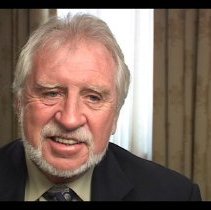
Brian Glennie Interview |
Interview Summary / Résumé d'entrevue |
Brian Glennie, Order of Sport recipient, inducted in 2005, born in Toronto, Ontario, shares his journey from playing minor league ice hockey in Toronto as a child to becoming a part of the historic 1972 Summit Series. Glennie details his progression through the levels of ice hockey, including captaining the 1967 Memorial Cup and playing for Team Canada at the 1968 Olympic Winter Games in Grenoble. Brian details his move to Winnipeg to pursue his education at the University of Manitoba and play for Team Canada under Father David Bauer and coach Jackie McLeod. Growing up, Brian was a fan of the Toronto Maple Leafs, particularly players like Tim Horton, Allan Stanley, and Johnny Bower, and was thrilled when he ended up playing with them. Reflecting on international experiences, including the 1972 Summit Series, Brian emphasizes the challenges and benefits of playing against top international players. Brian discusses the importance of teamwork and practice in ice hockey and the significance of sports for physical and mental health. Brian also emphasizes the importance of passion for the game and acknowledges key leaders in his ice hockey career, including David Keon and Phil Esposito, noting their exemplary leadership styles. Entrevue avec Brian Glennie, 4 novembre 2008. MP4 numérisé à partir d'une DVCAM 40 Advanced ME de Sony. Temps de visionnement : 00:26:26. Brian Glennie, récipiendaire de l'Ordre du sport, a été intronisé en 2005 et est né à Toronto, en Ontario. Il partage son parcours depuis son enfance, où il jouait au hockey sur glace dans les ligues mineures à Toronto, jusqu'au point où il a pris part à la célèbre Série du siècle de 1972. Glennie parle en détail de son évolution à divers niveaux du hockey sur glace. Il aborde notamment son expérience en tant que capitaine lors de la Coupe Memorial de 1967 et comme membre d'Équipe Canada aux Jeux olympiques d'hiver de 1968 à Grenoble. Brian décrit son déménagement à Winnipeg pour poursuivre ses études à l'Université du Manitoba et jouer pour l'équipe du Canada sous la direction du père David Bauer et de l'entraîneur Jackie McLeod. Pendant son enfance, Brian était un partisan des Maple Leafs de Toronto, en particulier il admirait des joueurs comme Tim Horton, Allan Stanley et Johnny Bower. Il a donc été enchanté lorsqu'il a fini par jouer avec eux. En réfléchissant sur ses expériences internationales, y compris la Série du siècle de 1972, Brian met l'accent sur les défis et les avantages de jouer contre les meilleurs joueurs au monde. Brian discute de l'importance du travail d'équipe et de l'entraînement dans le hockey sur glace. Il parle aussi de l'importance du sport pour la santé physique et mentale. Finalement, Brian souligne l'importance de la passion pour le jeu et reconnaît les principaux modèles et influences de sa carrière de hockey sur glace, notamment David Keon et Phil Esposito, en remarquant leur style de leadership exemplaire. |
Scope & Content |
Brian Glennie interview, 4 November 2008. Digitized MP4 from Sony 40 Advanced ME DVCAM. Viewing time 00:26:26. 00:45Sports as a kid: started playing minor league at Varsity Arena in Toronto, at age 7-8 played on the Toronto Marlborough team, at peewee age played under coach Roger Neilson up to midget, the first sponsorship playing midget was Bicks pickles, then joined Marlies Junior B team, was then captain of the Memorial Cup team in 1967. Choosing between turning pro or getting an education, and at the same time his father passed away. His mother told him his dad wanted him to play in the Olympics so went to Winnipeg and joined the National Team under Father David Bauer and studied at the University of Manitoba, won the Bronze at the 1968 Olympic Winter Games in Grenoble, then signed with the Toronto Maple Leafs 04:35As a youth his idols were the Cleveland Browns in the NFL and the Maple Leafs ice hockey and looked up to Tim Horton, Allan Stanley and Johnny Bower. Tim Horton ended up as his first roommate and playing with that lineup "was surreal" 05:45Where you always a defenceman? Originally thought he was a goalie until "I got beat 8-0" and became a defenceman because he was a big kid 06:24Were you taught hip checks? Roger [Neilson] taught him about defence, "tough position to learn," checking was natural to him, back then it was clean, open ice hits, "don't remember all this hitting from behind..." 07:24Before you joined the National team did you take hockey seriously? Wanted to be Physical Education teacher, did not expect to end up as a hockey player; joined the National Team so he could continue his education at the University of Manitoba and play for his country; when he returned from the Olympics the Maple Leafs offered him a contract 09:11The Olympic programme was run out of Manitoba, Jackie McLeod was the coach and Father Bauer was the head of it. It was before professionals could play in the Olympics... "thought we should have won the Gold... but back in the day when playing overseas was very new" 10:13How much did you know about the Russians? Had played against the Red Army Team with the Marlies c. 1964 or 1965 (exhibition series); "Seeing them then: they were controlled... from that experience I realized that was their job. They were part of the army but they played hockey and they did it year round; they played year round and trained year round" 11:43Losing Game 1 off the Olympic Winter Games to the Russians 5-0, what do you remember about that game: outplayed them in the first part of the game but things did not go their way - cheap goals, bad calls, they scored first when he went down on a stick left on the ice - focus can work against you 13:47Did you have trouble with the no checking rule? Not really aware of it, there was lots of physical play; felt they would have won the game if they had scored first 14:471972 Summit Series - he and Ken Dryden were the only players with international experience, did that help? "I did not believe... it would be a cake walk. Did try to tell the others that they were good, they are a machine"; it was a difficult situation since they only had a two week training period and the players were not all friends at the start; took a while to become a team and get in shape 15:36On the phone call inviting him to join the 1972 Summit Series team: It was unexpected and he was very flattered "couldn't say 'yes' fast enough" 16:01Brian's role in the 1972 Summit Series: at the beginning it was understood everyone was going to get to play but after the first game results they realized they had to play the best players, so all you could do was practice and be ready and help the team 16:51When you watched the game, where did you watch from? Couldn't sit in the seats, stood most of the time, "It was hard to watch... you want to play" 17:25Did you learn from the experience while practicing with the team? Benefitted in many ways: made him a better hockey player, "much more comfortable with my own skin, felt like I belonged... and friendships with the other players developed" 18:18Discusses the role of a defenceman, playing on a bigger ice surface, in international hockey the Russians would come back at you - taught you more patience 19:50What did you take from the Summit Series? Upon return to the Male Leafs, "everything had slowed down for me, easier to move the puck, understood what was going on better... playing on that level with some of the best players in our game and against some of the best players in the world, I learned a tremendous amount about how to play the game." 21:06What are the most important goals for practice? Practice is directed by the coaches... most of the time you have to pracice with your team and "the Leafs practiced an hour and a half to two hours per day..." 22:13Why do you think a young person should play sport? "It's healthy, from the standpoint of physical health and getting out and playing a game you love and enjoying the camaraderie with your teammates ... From a physical point of view it's just necessary. From the mental aspect, the things you learn from sport, accepting defeat, learning what it's like to contribute as a teammate to the general good of your team." 23:19What did sports teach you about yourself? "That I didn't like losing. I did not leave the game on the ice, which I eventually learned to do." 24:02What makes a winner? "Heart. You have to have heart. You have to be able to go the distance and never quit." 24:22Who was the best leader you ever worked with? "There's lots of them... Dave Keon... he led by example on the ice... the other person that comes to mind, although I didn't like him much in the beginning, is Phil Esposito... an incredible amount of respect and admiration." |
Date |
2008/11/04 |
People |
Glennie, Brian Bauer, Father David Keon, Dave Esposito, Phil |
Search Terms |
Brian Glennie Ice hockey Toronto Maple Leafs interview 1968 Olympic Winter Games Grenoble 1972 Summit Series |