bil.png)
Archive Record
Images
Metadata
Object ID |
2013.55.18 B |
Object Name |
Video Recording |
Title |
Cassie Campbell Interview 2007 |
Interview Summary / Résumé d'entrevue |
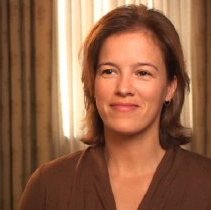
Cassie Campbell, Order of Sport recipient, inducted in 2007, born in Richmond Hill, Ontario, shares insights into her journey as a women's ice hockey player and the challenges the sport faces. Cassie talks about playing ice hockey with boys when she was a youth and highlighted that gender was never an issue; it was about being an athlete. Cassie discusses how her family moved from the United States back to Ontario when she was 10 years old and how she was able to play with the Brampton Canadettes Girls Hockey Association, then later playing in the Women's World Championships in 1994 after persevering despite not making the team the first two times. Cassie discusses captaining the historic Gold Medal Team Canada at the 2002 Salt Lake City Olympic Winter Games, the influence of early women's ice hockey pioneers like Angela James and the responsibility she feels to continue their legacy. Cassie addresses financial challenges to women's ice hockey, how the sport is beginning to grow globally, and highlights the importance of investing in the sport. Cassie talks about the importance of unity and the support needed to create a professional league. Cassie talks about body checking and how she does not see a need for it in women's ice hockey. Cassie talks about her broadcast work since retirement and continues advocating behind the scenes for women's ice hockey. Entrevue avec Cassie Campbell, 25 octobre 2007. MP4 numérisé à partir d'une DVCPRO DP121 de FUJIFILM. Temps de visionnement : 00:27:15. Cassie Campbell, récipiendaire de l'Ordre du sport, a été intronisée en 2007 et est née à Richmond Hill, en Ontario. Elle partage ses perspectives sur son parcours de joueuse de hockey sur glace et sur les défis touchant ce sport. Cassie raconte qu'elle jouait au hockey sur glace avec des garçons lorsqu'elle était jeune et souligne que les différences de genre n'étaient pas un obstacle; ce qui comptait, c'était d'être une athlète. Cassie explique que sa famille a redéménagé des États-Unis en Ontario lorsqu'elle avait 10 ans, ce qui lui a permis de jouer avec l'Association de hockey pour filles Brampton Canadettes. Faisant preuve de persévérance, elle a ensuite participé au Championnat du monde féminin de 1994, après avoir tenté deux fois sans succès d'être choisie dans l'équipe. Cassie discute de son expérience en tant que capitaine d'Équipe Canada, l'équipe ayant remporté la médaille d'or historique aux Jeux olympiques de 2002 à Salt Lake City. Elle évoque également l'influence des premières pionnières du hockey sur glace comme Angela James et de la responsabilité qu'elle ressent de poursuivre leur travail et leur héritage. Cassie examine les défis financiers auxquels fait face le hockey féminin et souligne l'importance d'investir dans ce sport qui grandit à l'échelle globale. Cassie parle de l'importance de l'unité et de l'appui nécessaire pour mettre sur pied une ligue professionnelle. Cassie parle des mises en échec et affirme que le hockey féminin n'en a pas besoin. Cassie parle de son travail d'annonceuse, auquel elle s'adonne depuis sa retraite du jeu, et explique qu'elle continue aussi de lutter pour l'avancement du hockey féminin. |
Scope & Content |
Cassie Campbell interview, 25 October 2007. Digitized MP4 from FUJUFILM DP121 DVCPRO. Viewing time 00:27:15. 01:06Sports played as a child; played every sport, emulated older brother, both figure skated to learn how to skate, always wanted to play hockey 02:02Idols when young: parents, Paul Coffey, Ken Dryden, Guy Lafleur; her mother played football, softball, and was a drag racer 02:58What made you keep playing hockey with boys when you were young? Boys didn't even know she was a girl but they didn't care, it was never boys vs. girls; could play as well as the rest of them, just about being an athlete 04:20When you could not play on a boys' team, where did you go from there? Moved to Brampton, which had the biggest girls hockey association at that time, 10 years old when started hockey with girls, cool sport to play and friends who played, just loved the game, the 1991 Canada Games at age 16 showed her that there was an avenue to get better at the game and to compete at higher levels, "I want to do this" 06:00Making something of hockey when only sporadic tournaments: first World Championships in 1994 at Lake Placid, not expected to make team at 20 years old but did, "This is what I want to do, where I want to go"; announcement that women's hockey would be in the 1998 Nagano Olympic Winter Games; had imagined herself at the Olympics but never as a hockey player "I knew it was exactly what I wanted to do," dedicated life to it by playing hockey at University of Guelph, playing on club teams - the Aeros and Mississauga Chiefs, full time commitment; talks about women players such as Angela James, wanted to continue the tradition they started 07:44When did you think I'm good enough - made the team in 1994 after being cut twice before, went to the camp "I can do this. I'm just as good as they are.", got the confidence to play and get better and better, played with Natalie Picard 09:20How did these girls become your heroes? Talks about how the 1990 team members came to a tournament and signed autographs, Cassie got to meet the Team Canada players, (10:09) "They got to wear the Canada jersey. They got to represent their country.", saw their passion and how they wanted to give back to the game and wanted to be like them; when on the national team they talked to the younger players about them, so these players are never forgotten, they are the people who started it all for us 11:00On making a living: carding started from the government in 1995, did odd jobs while at University, the team was centralized in Calgary in 1997, made a smooth transition from finishing university into training for Team Canada full time. 12:26On recruiting fans for the women's game: necessary part of the game, she had a full schedule but didn't want to say no to any speaking engagement, if not she felt she would be letting down the women's game 14:03On relationship between the women's team and fans - things have changed, Canadians love hockey and the women's team, they know the names of the players, talks about 2002 Salt Lake City Olympic Winter Games and how it is a great story that everyone remembers; now more opportunities come to the players, still a struggle to get recognition in the leagues that play in cities, even though there are Olympians playing 15:42Is there a disconnect between the Olympics and some players playing at a club level? We have exhausted our volunteers, need to find revenue to pay someone to market and communicate and increase revenue, need support at the elite level, money to establish a semi-professional league 17:14On the Clarkson Cup - controversy over who owns the Cup and where they will play, women's hockey takes 2 steps forward and 10 steps backward, disappointed that we haven't learned more from the men's game and their historical setbacks; (17:42) "Let's come together as one league. Let's fight for this game together. Let's take it to the next level together."; need NHL support looking at the women's game as a viable product and to help market the game 19:07On body checking: always someone who wants it, she never played with body checking, "I like the game the way it is. I think its fast... the biggest problem in the women's game today is the disparity among the different nations."; talks about Sweden winning the Silver Medal, the game is growing fast..." (20:20) "I like the game the way it is. I think it's pure. I think women are playing because they love it and that's what makes it so special." 21:00On the perception of women's hockey in North America and other countries: more choices in North America for a woman, the Olympics has helped that, talks about the Team China coming to North America to train; if we had more events in their own backyards... discusses other countries... women's hockey facing social and cultural struggles but building the sport worldwide 23:07Would having a world series help promote the game? Something that is being discussed, comes back to Hockey Canada, talks about the support by Bob Nicholson in promoting the game, a world series would help promote the game in countries where they are struggling 24:17What is your role since you retired? Would love to see a pro league, talking about it behind the scenes and promoting it, trying to bring in sponsors and working with the players to "step up"; (24:59) "the more you are out there the more you teach people about it, the more awareness there is."; she is accepted in broadcasting because she played the game, (26:16) "There's an unwritten rule that you have to give something back to the game and that's something I want to do for the rest of my life".; would like to see a Women's Hockey Night in Canada but need the NHL behind them to give it legitimacy |
Date |
2007/10/25 |
People |
James, Angela Campbell, Cassie |
Search Terms |
Cassie Campbell Ice hockey Olympic Winter Games Interview Women in sport 1998 Olympic Winter Games Nagano 2002 Olympic Winter Games Salt Lake City 2006 Olympic Winter Games Torino Women's World Hockey Championships Athlete |