bil.png)
Archive Record
Images
Metadata
Object ID |
2022.9.7 B |
Object Name |
Video Recording |
Title |
Blake Harding Interview (Chatham Coloured All Stars Representative) |
Interview Summary / Résumé d'entrevue |
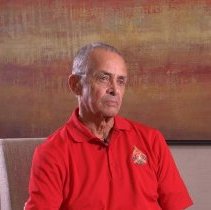
Interview with Blake Harding, representing the Chatham Coloured All-Stars, 6 October 2022. Born digital MP4, viewing time 00:18:59. The Chatham Coloured All-Star team, Order of Sport recipient, inducted in 2022, is represented in this interview by Blake Harding. From Chatham, Ontario, he is the son of Wilfred "Boomer" Harding. Blake discusses the team's legacy for Black people living in Chatham. He describes the team members as people you were proud to know and who gained a lot of respect in the community, which was retained throughout the years and through which the families and descendants benefited. Blake recalls a story that his father, Boomer, told him about experiencing racism off the field and how not to engage with racist behaviour. He also recalls how his father was interviewed and asked why he didn't play pro baseball, to which he replied by indicating that the colour of his skin was the cause. Blake mentions how he inherited memorabilia and donated it to the University of Windsor. Blake recalls how, as the team played and won, they gained respect from the community and how it was reflected in the language used by the sports journalists. When asked about the lessons that sport can teach youth Blake responds by discussing how sport can teach you how to persevere when you believe life is unfair. He also remarks on how sport teaches you how to learn to lose and try again. Entrevue avec Blake Harding, représentant les Chatham Coloured All-Stars, 6 octobre 2022. MP4 d'origine numérique, temps de visionnement : 00:18:59. L'équipe des Chatham Coloured All Stars, récipiendaire de l'Ordre du sport, a été intronisée en 2022 et est représentée dans cette entrevue par Blake Harding. Originaire de Chatham, en Ontario, il est le fils de Wilfred " Boomer " Harding. Blake parle de l'héritage que l'équipe a légué aux gens de Chatham. Il décrit ses coéquipiers en disant d'eux que c'étaient des individus qu'il était fier de connaître et qui étaient très respectés dans la communauté. Ce respect a perduré au fil des ans et a aidé les familles et les descendants des joueurs. Blake se souvient des récits de son père Boomer, qui lui parlait du racisme subi au-delà du terrain de baseball et lui conseillait de ne pas réagir face aux attitudes et aux comportements racistes. Il se souvient également d'une entrevue avec son père dans laquelle on a demandé à ce dernier pourquoi il ne jouait pas au baseball professionnel. Son père a répondu que c'était à cause de la couleur de sa peau. Blake mentionne qu'il a hérité d'objets souvenirs et a en fait don à l'Université de Windsor. Blake se rappelle qu'au fil des victoires de l'équipe, les joueurs étaient de plus en plus respectés par la communauté et cela a influencé le langage des journalistes sportifs de l'époque. Lorsqu'on lui demande de parler des leçons qu'enseigne le sport, il répond en expliquant que le sport peut enseigner aux gens à être persévérants quand ils croient que la vie est injuste. Il mentionne également que le sport nous apprend à perdre et à essayer de nouveau. |
Scope & Content |
Interview with Blake Harding, representing the 1934 Chatham Coloured All-Stars for the 2022 Order of Sport Awards Ceremony, 6 October 2022. Born digital MP4, viewing time 00:18:59. Transcription (edited): Blake Harding (00:43): Yeah. Good afternoon. My name's Blake Harding. I'm from Chatham, Ontario and I have the privilege of being in Toronto today to represent the 1934 Chatham Coloured All-Stars and their families for the induction into Canada's Sports Hall of Fame. Misty (01:04): Wonderful. Wonderful. Well thank you so much for coming, Blake. I know we are all very excited that the team is well represented here tonight. This morning hearing you talk and talk about the lessons and that your dad has set upon you. And talking to the kids today at the media session about commanding respect. What are the main lessons that you feel your dad and his teammates? Blake Harding (01:38): The main lessons that I think were passed on to me as a youngster, and I've alluded to it earlier in different interviews, that the Coloured All-Stars were a group of men, and I mean men in the truest aspect of the word. Something, somebody, if you knew them, you were proud to know them. And they passed on a legacy to the younger people. And I look around at the generation that I grew up with locally and they all went on to do something. They went on to be something, teachers, lawyers, factory workers, whatever they did, they did it with a great deal of pride. And I think that was one of the biggest legacies to go out, be proud of who you are. Tell people, "Look, here I am, I hope you like me, but if you don't deal with me and if you don't like me, do it from over there. I'm here to stay. This is my community, this is my home, this is my family." (02:51): And by walking straight and keeping the goals they set and the object lessons they put in front of us as young people, I think it's carried us as well in what we've done in our adult lives. I always told my children, and this came from my dad who is a very quiet man, but he only said things once and that was enough. But when you walk out the door, remember what your last name is because the people in this community know your dad or your grandfather. They know your uncles and your aunts and they've been raised in this community, which was about 40,000 at that time. (03:41): So you're wearing that name wherever you go out. So carry that with dignity, carry it with respect. Give what you get. And just try to be a good person. And that's part the biggest legacy I watched through sport. And I played sport to a certain extent, but then everybody would compare me with my dad and my uncles. So in a small community, that's pretty rough. Oh, are you Boomer's son? Or you know Fergie Jenkins? Yeah. But I'm not them. And so I went into the military and did pretty well in the military. My dad was, he got to be the rank of a corporal during the war. I retired as a chief warrant officer. But I took the same lessons that they used to get through a very rough time in our history. (04:37): In the '30s, Chatham Kent was supposed to be the end of the underground railway. But there was a lot of bigotry, there was a lot of prejudice, and there still is today. But you don't have to accept it. There's a recourse for it. And you do your part and go out there and be somebody that can hold their head up and then it's up to them to adjust to you. And I took that away from watching them play ball. They played with passion. They were extremely talented. They could hotdog it. And what I mean by hotdog it, they could go out there and put out a show if you want it. If they got ugly on the field, they could give what they got. But when they walked away, a lot of times with suit. (05:31): This story always bothers me. My dad told me father to son, played in a local community not too far out of Chatham. And they won the ball game. And when they were leaving, there was six and seven year old kids spitting on them and throwing rocks and stones and sticks with the encouragement from their parents. And I'm thinking, what would I have done? How would I have walked through that? And they just kept walking and got in their vehicles and came home and then went out and played the next day. But that's some of the things that were passed on. And it's done me well in life. But my children have it a lot easier than I did. And I had it a lot easier than my dad and my grandparents did. And that's something to be proud of. Misty (06:26): It's interesting as you're talking about that evolution of progression, if you want to say it that way, is on that note with the big feature on Chatham plays on and the LLG piece, adding them to the game. And now recognition of Canada's highest sporting honor, what would you say that speaks to in terms of society and that progression? Blake Harding (07:02): Everything that's taken place up to including tonight, has been a progression over the last few years. The All-Stars were basically just folklore in Chatham Kent until about 2000. And they were inducted into the local Sports Hall of Fame. And that kind of resurrected their story. But what I noticed, my wife, Pat, Patricia, she inherited all the newspaper clippings and trophies and everything else from my dad when my mother and father passed away. And she said, "What are we going to do with this?" Well, she microfiched it, she gave proof to it that it was legitimate. She made scrapbooks up and we donated them to the university of Windsor after my dad got into the Hall of Fame. But what that showed about the progression of society, is in 1934, when you read a newspaper clipping, it was the coloured boys. (08:10): As they played and gained respect and notoriety, it was the men from Chatham. You could see the journalist changed their attitude. It softened, it was giving them the respect they earned out on the field and off the field. And that has progressed to today. One of the things I said earlier this morning was they were fighting to be seen as human beings. Here we are, look at us. I'm a man, I'm 19, I'm 20. 2022, they're not only being seen, they're recognized for what they contributed to our community, to our area and to our province and basically to our country. (09:01): I think it's leaps and bounds, but we're not there yet. For anybody to think everything's roses, it's not. It's not. But it's subtle. A few years ago, not that far away, a couple years ago in the States bigotry and racism rose its ugly head to where people could say it and not be held accountable because the leaders of the country said it and weren't accountable kind of. But here it's subtle. And if you say it, you're going to have to be held accountable what you say. And there's a recourse for it. I was taught don't be bitter, just outsmart your foe. Just don't lose your cool, don't go off half-cocked with emotion. Think it out and just raise the bar. Again, that's the respect thing. Like I said, if you don't respect me, that's fine, but do it over there. Don't do it in my face. (10:15): And I can see the progression. There's a light, there's hope. And it's right across the country. And we're doing it for every visible minority. Our saying, we're here, we have to be recognized. We're part of this country. We contribute and accept us. Or don't. Misty (10:42): When you were talking, you remind me of, we spent some time with the Hall of Famer's son (the clipper in the CFL)… Misty (11:17): Anyway, it's interesting. When we were chatting with them, they were talking about, my point is that he said he was asking his father, "How did you just turn the other cheek?" And he said, "Beat him on the field, beat him at the game." So. Blake Harding (11:41): You just made a comment about how you retaliate or how do you beat him? And it was funny, my father, after he retired from sports, my son was quite a hockey player in travel hockey. And I remember him, my dad before he passed away, would always want to go to hockey games with us to watch his grandson play. And this kid could use his edges, he could skate. And he was about 5 ft. 2 or 5 ft. 3. And he would stand in front of the net and take a beating. I watched the kid break a stick across the calves on his legs and he didn't even wince. (12:14): So on the way home, my dad said to him in the car after we stopped and bought him as hot dog or a reward, or I think he was about 14. And he says, "Why do you put up with that?" And he says, "When I was playing," he says, "I used to take my stick about six inches up the knob. And when a guy would run me, I'd put it right under his lower ribcage. And next time on the ice, he wouldn't come into me like that." And Drew said, my son's drew. He said, "Did you see what I did at the other end of the ice?" And papa said, "That was pretty cool." And he said, "Yeah, that was for him." (12:49): And I don't know where he got that mentality from because it wasn't from me. But you beat him on the ice, you beat him on a scoreboard and then you walk out and say, "Have a nice day." But it takes a lot. It takes a lot. My dad was doing an interview with a writer, a well-known writer from London, Ontario, London Free Press. And his name was Ernie Miller. And he was prominent when Fergie Jenkins made his push to the major leagues. And he was interviewing my dad and he says, "Back in '34 or '35, you could have made pro ball and what do you think held you back?" And my dad just rubbed his arm to show is skin, but you could see the hurt in his eyes. But he didn't demand this pound of flesh. He just did what he had to do to improve the quality of his life and then his family's life. And he used sport to do it. Misty (14:31): So my question is, again, we talk kind of sports Hall of Fame to students about the invaluable lessons of sport. And you spoke to how it transcended sport. How in the military, those valuable lessons that your father and arguably the team sort of bestowed upon their children. What would you say are the invaluable lessons if you picked three main lessons from sport? Blake Harding (15:05): I would think maybe a couple, maybe three main lessons. Things you can take away from sport. Sport's not always fair, neither is life. An umpire can decide how a game goes. When you're playing against the umpire and a team, a lot of times as indigenous or people of color found out that if there was nine players on the team, there was two more wearing a mask and getting paid. (15:39): It's not always fair, but you've got to, if you want to play the sport, you got to get around it. You've got to push through it. You've got to say, "Okay, we won the game because we deserved to win the game. Nobody gave it to us." Life is the same way. It's not always fair. You don't always get the job you should get. You don't always get the promotion you should get. Somebody else may have worked their magic with the boss or whatever and got promoted or got something that you actually deserved. What they say, "Suck it up buttercup and get on with it." Because there's something else out there. (16:21): And the other thing is, that's an old adage that for every door that's shut, there's another one that opens. Just sport is so paralleled to life. And you know what? When you lose, get up the next day the sun's shining. Your wife's still probably speaking to you, your girlfriend or your boyfriend or whatever it is. I didn't learn that lesson until late. I played industrial ball and things we lost. My wife didn't speak to me for a week, she just said, don't poke the bear. But it's a game. It's a game. And it's got valuable lessons. And those are some of the lessons that, you know what? Your family comes first, the people around you and then go back the next day and start over again and beat them on the field, like your friend from the CFL said. Misty (17:26): Just one second. I think. Is there anything else you would like to say? Blake Harding (17:34): Other than the fact that being here today, I'm humbled. To speak for those families and for those men that I really idolized. My dad, he was my hero. He wasn't a saint by any means, but he was my hero. And I would go to war with him behind me any day. And he left my community that we live in that I chose to stay in all my adult life a much better place. And I'm hoping that I can do that and my children can do that and my grandchildren can do that. But it came from the 1934 Coloured All-Stars and they played ball with the passion. And this game that's come out from OLB and Major League baseball is phenomenal. And it brings them back to life and I'm very pleased about that. |
Date |
2022/10/06 |
People |
Harding, Blake |
Search Terms |
Chatham Coloured All-Stars Baseball 1934 Team |