bil.png)
Archive Record
Images
Metadata
Object ID |
2013.55.26 B |
Object Name |
Video Recording |
Title |
Pat Gillick Interview |
Interview Summary / Résumé d'entrevue |
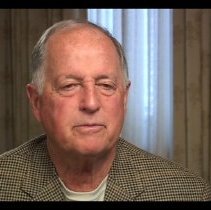
Pat Gillick, Order of Sport recipient, inducted in 2008 and born in Chico, California, discusses his impactful career in baseball management. Pat describes how, after graduating from high school at 16, he played collegiate baseball for four years and Minor League Baseball for five years. Pat explains how he transitioned into an administrative role in the Houston MLB team and eventually joined the expansion franchise of the Toronto Blue Jays in 1976, highlighting the importance of building a solid staff first and players second. Pat details how the Blue Jays gained momentum in 1985, culminating in winning the 1992 and 1993 World Series. Pat discusses player development, explaining the differences between pitcher and hitter development. Pat talks about the Exhibition Stadium, the transition to the now-named Rogers Centre, and the decision to use artificial turf. Pat discusses organizational philosophy, succession planning, and managing player contracts. In closing, Pat is asked about scouts and praises Robert J. 'Bobby' Mattick, Al LaMacchia, Bob Engle, and Epy Guerrero for their contributions to talent development within the organization. Entrevue avec Pat Gillick, 6 novembre 2008. MP4 numérisé à partir d'une DVCAM 40 Advanced ME de Sony. Temps de visionnement : 00:34:52. Pat Gillick, récipiendaire de l'Ordre du sport, a été intronisé en 2008 et est né à Chico, en Californie. Il parle de sa carrière en gestion du baseball, marquée par plusieurs réalisations. Pat décrit comment, après avoir obtenu son diplôme d'études secondaires à l'âge de 16 ans, il a joué au baseball universitaire pendant quatre ans puis dans les ligues mineures de baseball pendant cinq ans. Pat explique comment il est passé à un rôle administratif au sein de l'équipe de MLB de Houston, puis raconte qu'il a rejoint la franchise des Blue Jays de Toronto en 1976, créée lors de l'expansion de la ligue. Il souligne l'importance de construire tout d'abord une équipe administrative solide avant de recruter les joueurs. Pat détaille la montée progressive des Blue Jays à partir de 1985, aboutissant à la victoire de l'équipe en Série mondiale en 1992 et 1993. Pat discute du développement des joueurs, expliquant les différences entre le développement des lanceurs et des frappeurs. Pat parle du stade d'exposition, de la transition vers le Centre Rogers (anciennement le SkyDome) et de la décision d'utiliser du gazon artificiel. Pat discute de la philosophie organisationnelle, de la planification de la succession et de la gestion des contrats des joueurs. En conclusion, on demande à Pat de parler des dépisteurs qui contribuent au recrutement des joueurs et il fait l'éloge de Robert J. 'Bobby' Mattick, Al LaMacchia, Bob Engle et Epy Guerrero pour leurs contributions au développement des talents au sein de l'organisation. |
Scope & Content |
Pat Gillick interview, 6 November 2008. Digitized MP4 from Sony 40 Advanced ME DVCAM. Viewing time 00:34:52. 01:15Sports played as a child: played basketball, football and baseball and in college concentrated on baseball; his hero was Herb Score, a pitcher with Cleveland who lost an eye while playing; Pat saw him play when he was a youth 02:20When you went to USC at a pitcher, did you think this was the way to the Major Leagues? Pat graduated high school at 16 years old and was 17 when he started college: he played for four years, graduated, and in 1959 first year to play professionally 03:02Why didn't you get to the majors? Made it to Triple A, but had some arm problems and "was a little short on ability", he played for five years and was heading back to school when he instead joined Houston's MLB team's administration in 1963 04:16When you gave up your [playing] career and went to Houston, was there any problems for you? "There is a withdrawal you go through..." He played collegiate baseball as well as summer baseball. "A lifestyle that I had gotten used to ...transition made it because was getting back into sport as an administrator rather than" doing something completely different 05:41Was there a turning point when you thought you could be a GM? "When I went to the Yankees in 1974, the game plan was to work up to GM of the Yankees... worked with them for three seasons... came to Toronto in 1976... opportunity presented itself, good move [to Toronto Blue Jays] as with an expansion team you start at ground zero and work your way up" 07:24On putting the first team together: the most important thing is putting your staff together [first], getting the right people to make the right decisions, challenge to select the right people... because they will ultimately build the team; knew it would take five to ten years to the get the team up and running 08:49Interviewer asks about the difference between the Toronto and Seattle expansion teams: Pat talks about the Seattle expansion team and how Seattle had previously had the Seattle Pilots and so had MLB experience so they thought they were ahead in creating a polished team; talks about stocking as many young players as possible with the first five year period which needed support of ownership to follow the plan 10:51Talks about Exhibition Stadium: not too bad then but looking back at the other facilities to compare it to... realized it was not so great, but it was home 12:13Talks about the playing positions: the middle of the field players: the pitcher, catcher, shortstop, second base and centre fielder, left and right field then first and third. Build team around them 13:31Between 1977 and 1985 are there any players you remember having the greatest contribution? "One of the stars, maybe in the league, was Dave Stieb... when Dave went out to pitch... we knew we had an opportunity to win, so consequently... he was a guy we held onto... [Jesse] Barfield, [Lloyd] Moseby... and Dave Stieb really stuck out to me" 14:30Did you feel the [MLB American League] pennant was reachable in 1985? No...when the team turned 500 games, they knew they were going in the right direction... 1985 was a culmination of what they had been doing since 1977 15:23Was there a season or series when people starting to respect the Jays? "I can't really put my finger on that... like in 2008 when we went to spring training I think everyone in our camp felt that the Rays were going to play .500.." Close to the 1983-84 the rest of the league knew they were going to play .500 or better 16:29Was there are time between 1985 and 1992 when you were on World Series track? Was disappointed in not winning in 1985, "but was a long time ago... we had a real good chance of going to the World Series... 1987 was a really tough year... we know we were competitive and at some point we would go to the Series" 18:36On the 1992 season: "You don't ever really feel [nervous], you always have concern because you never know when something's going to happen... kinda keep your fingers crossed that everyone stays healthy... no matter where you are in the season... health is a big concern. Your key players have to stay healthy..." 19:50Preference between the 1992 and 1993 seasons? "1992... because sorta like going up a mountain and getting to the top... take a deep breath, relax and say we made it..." winning the World Series for the first time in Canada 20:44On Toronto as a baseball city: it's a hockey town; the Maple Leafs have a stable fan foundation despite not winning a Stanley Cup in a while; in baseball you have to win to bring the fans to the park and the team must be appealing and attractive 21:46Why do baseball players take so long to develop? "Not so much for a pitcher... a pitcher has control... don't have fear that you're going to get hit... the real tough one is the position player and it's really the offensive part, [they] have to learn to hit...the competition at the a amateur level is such that... it takes 2400 at bats, and that's about four years in the minor leagues..." 24:11At what point did you decide Toronto needed a new stadium? Happened at a board meeting about the 1985 season, needed a facility that would hold all the fans, needed to generate revenue to keep the players 25:23On natural vs artificial turf: prefers natural grass; wanted to use the stadium for other sports so put in the artificial turf 26:48Was another World Series possible in 1993 or 1994? Talks about the baseball strike, they had the opportunity to be competitive, the strike took a lot of enthusiasm out of the fans; he left the team at this time as his assistant was ready to take over 27:47Talks about the philosophy of the organization - to promote people from within, did their succession planning 29:24Challenge in building a team and keeping good players together; you don't want all the contracts expiring at the same time, stagger them so have to fill only 1-2 sport, need long range set of plans 30:31Is there a blueprint you used to build 1992, 1993 that could be applied elsewhere? "I'm basically a pitch and defence kind of guy.. what is very difficult to measure is a player's defensive skills...preventing runs is just as important as scoring runs to me..." 33:12Who would be your top scouts: Robert J. 'Bobby' Mattick, Al LaMacchia, Bob Engle, Epy Guerrero: "They provided a steady flow of talent..." |
Date |
2008/11/06 |
People |
Gillick, Pat |
Search Terms |
Pat Gillick Baseball Toronto Blue Jays Interview World Series |