bil.png)
Archive Record
Images
Metadata
Object ID |
2013.55.62 B |
Object Name |
Video Recording |
Title |
Ellen Burka Interview |
Scope & Content |
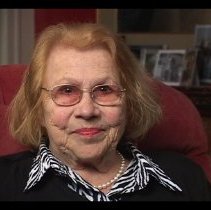
Ellen Burka interview, 2 December 2008. Digitized MP4 from Sony Advanced ME 40 DVCAM. Two videos with a total viewing time of 00:59:43. 1 of 2; 02:25Childhood: grew up in the Netherlands, skated at age 7 on Dutch wooden skates on outdoor pond in Amsterdam; when 11 went to rink with father's secretary and watched the coaches, learned from watching, no formal lessons, late was asked to skate in an exhibition and started getting lessons from then on 04:50On her progress: cycled to the ice rink for lessons 05:21When did you start to compete: started in the 1930's, also did exhibitions, was the best figure skater in Holland when the war started, which ended everything 06:20What were the circumstances of you coming to Canada: in 1946-47 was the senior ladies Champion of the Netherlands, came to Canada with her husband, he was a Czech citizen 07:33Canada was a big culture shock, was stark and alien to her, did not even know there were skating rinks in Toronto 08:22What were your first activities in Canada: came in 1951, her children were 2 and 4, was bored being at home, had done some coaching in Holland and got a phone call asking if she would be able to coach, schedule worked out for her, was back on the ice again 10:18First formal skating job: teaching young skaters, including Louis Strong who worked for the CFSA, taught technique, choreography; she had dance training in Holland so it easy to teach choreography and listening to the music 11:05On being a coach: never thought she would end up coaching, all coincidence, did it at first to get out of the house and stay active 11:38Was there a time when you thought "I was a good coach": no, never thought she was that good, always thought she had to get better, "I want to produce better, I want to produce the best"; her philosophy was "What I do has to be the best"; blessed with a lot of energy and used it to inspire her skaters, considers it to be one of the reasons she got results 13:05How did you learn: totally own her own development, still learning now, "that is where you become better, you have to be open for new ideas", very proud that she helped change figure skating, not only for Canada, but for the world; from her off-ice training in modern dance she had a good vocabulary on how to move, was introduced to modern dance and interpretive dance in the 1930's, when she started teaching she felt figure skating should not be so stiff, believed skating not only a sport but a performing art so you have to use your body with the music, interpret the music, have a theme, do something with it, in the 1950's experimented with this, started theatre on ice, taught kids to feel and move to the music, at that time was 50 years ahead of her time 15:49On Toller Cranston: got a call from Toller who had been told by the CFSA not to skate anymore, asked her to teach him; when she found out he was an artist and needed a place to live, she offered him a room in her home along with her studio space (she is also an artist), he stayed for 7 years; "Toller was not afraid to take on my ideas of changing the style of figure skating. He was 18 at the time and educated in art and understood movement so I could mould him into what I thought would be the right way of skating"; for the first 2 years not really accepted until he got to Europe, they started the new style of figure skating that we see today 17:50Artistic interpretation was a new direction started by her, she used Toller as a tool and he accepted it, he was not afraid to move his body or make outrageous moves on the ice, developed it together with her 18:27How would he fare today: same as he did before, won the free skate at the Worlds and Olympics, his figures kept him down, would do very well today as that style is still there 19:12Considers one of her greatest accomplishments was to change the style of figure skating: what you see today we started in the 1950's experimenting to see if it is possible 19:54On the politics in judging: to judges loved Toller's skating, he was not allowed to win if a Russian was ahead of him, was told that she had the best skater but he was not allowed to win if another skater was up against him, so they kept him down in figures but love his free skating, there was nothing you could do, judging has not changed, still little deals made, it's everywhere 21:57Did you pay any attention to judging: personally never paid attention to judging, frustrating to see it happen, coach can't fight the judges, if you are that good you have to overcome it 21:54On her favourite protégés: my daughter Petra, her first international skater; talks about how coaching at the Lakeshore Skating Club in Toronto, a blue-collar club and the skaters being hard workers, she brought several of them up from scratch to the World and Olympic levels; talks about earning a living as a coach when divorced with two small children to raise, how Petra started skating on her own and then started coaching her when she realized how good she was 25:16Was it tough coaching your daughter: Petra was world class, she was her easiest student she ever had, totally talented, talk about her doing double jumps at age 11-12 and a triple jump after seeing Donald Jackson do one 26:18What other students did you enjoy teaching: "all of my students are equal to me, if they are in the Worlds or just a beginner, because I enjoyed them all", doesn't fuss over her international skaters; talks about the students she taught 20:54Had Elvis Stojko from 8 to 15, and then sent him on to another coach, who was coaching Brian Orser, because it was better for him 28:37What is it that you are looking for in a skater: depends on the genes and body, we can teach them technique but if not athletic or don't have the right body then can't teach them, looks for lift in the jumps, they have to be mentally ready and to want it 29:42Was there any that you thought was a winner: Brian Orser, saw him at age 9 or 10, "I saw right away when he jumped, that is it and he kept it, his body held up, his mind help up" 31:16Any others: Petra right away, Toller was already developed 30:54Did you ever get disappointed: yes, who makes it is one in a million 31:21Is there a single accomplishment that stands out: Petra winning the Worlds and the breakthrough of Toller in Munich, he became a super, super star that night, and all her skaters who do well 32:14"That I could change the style of figure skating is quite important to me", thanks to my background in music and modern dance, skating is something that can adapt to it very well 32:53Barbara Ann Scott: she skated before her time, they are friends today 33:35What are the important things right now in your life: to keep her mind occupied, still coaches, can help with little kids, pleasure for them and for me 34:40Are the coaches today in sync with your beliefs: I hope so, most coaches teach the technique and have choreographers to work with them, there are very good choreographers in Canada who are in sync with me 35:03Were you a rare breed that taught technique and choreography: yes she did both, she even edits the music on her computer 36:04Advice to a young coach: "Learn your technique and be open to everything that is new and try to learn something new every day and don't be afraid to shares with the other coaches who may know more. Learn as much as possible about the sport. Learn about music." 37:18Other sports that interest you: in youth was a swimmer, learned dance, fell into figure skating by chance 38:20Talks about Dorothy Hamill: the year she won the Worlds and the Olympics she was here in Canada and trained with Toller, Carlo Fassi her coach took over and got all the credit, she skated to Ellen's music and choreography and was never acknowledged; she is a lovely person 40:00Most memorable event: World Championships in Colorado Springs with Petra and the second is Munich with Toller 2 of 2: 00:25Goals for practice: dedication and discipline in what you do 00:57Greatest memory: My daughter Petra winning the World Championships and winning the Bronze medal in Innsbruck, these are great accomplishments when you start a young skater from nowhere; the other would be that I was able to change the style of figure skating through my off-ice dance training to make figure skating rather than being a stiff sport into a performance art 01:46Role model: never had a role model, I listened to myself 02:08On being a role model: to give the enthusiasm which I have into them, to make them enthusiastic about what they are doing, to love what they are doing 02:30Why should young people get involved in sports: very important, good for the body, good for the discipline and for becoming disciplined in life, learn to be competitive, these are all things you need later on in life 03:00What did sport teach you about yourself: became punctual, became a role model - the way you carry yourself and behave, what you educate your students, good sense of humour 04:11In what ways did sport affect your life: became an outspoken person, never remarried, totally dedicated to sport, refers to herself as 'bossy' 04:43"If you are involved, in whatever project you are, you have to be involved in ti 100%, you have to focus on it" 05:19What makes a winner: depends on the body, must be suited to the sport, if not there is little you can do about it but you can still enjoy the sport, make it as pleasant as possible, put everything into them 06:41To be gifted helps a lot and to work hard helps a lot, that will add 20% to the whole thing 07:10Define success: I never think of success. It's a floating matter, sometimes you win, next time you lose. It doesn't mean that much to win. 07:30"I'm very pleased that I could develop so many good skaters. I don't think of success, I just think of the accomplishment and the end result." 08:04Who is the best coach/leader you've encountered: no coach has really inspired me so far. I inspire myself. There are coaches that I respect. I only have respect for coaches who are all-round coaches, believes that if you are a good coach you know everything in your profession, not just one detail and most coaches are just detailed 09:20Advice to a young person: work hard, be very dedicated, don't let go, "Anyone who wants to accomplish something in sport, you can't do it halfway. You have to work at it, focus on what you want to become" 10:38As a coach, when do you tell your skater you don't have the right body: couldn't tell them that, I work with anything, the system in Canada is that you work with anyone, not an elite system, make the best out of it and help them enjoy the sport they are in 11:34Have you ever been wrong: so many time, cannot make a prediction in figure skating, talks about changes in a skater's body and injuries that can change things 12:30How's the health of skating in Canada: very good, really looking after the skaters and coaches, Grand Prix circuit good 13:24How are athletes today compared to before: totally different, in the 1950's could get away with a double axel, then came the triple jumps, Petra landed the first triple jump for a woman, so much harder now 14:30On who are the best skaters: every skater has their own virtue, views each one that way 15:38If there is one thing you could tell me about your life, what would it be: figure skating was important to me because I loved the sport and I accomplished a Dutch championship. My daughter became World champion. The skated saved my life during the war because I was put into a concentration camp; talks about how she was protected by an officer and put on exhibition on the frozen pond, she got out of it a whole person 17:07On a memory of laughter: I laugh all the time. Figure skating is very funny. I laugh about judges. I laugh about mistakes. |
Date |
2008/12/02 |
People |
Burka, Ellen Burka, Petra Cranston, Toller Orser, Brian |
Search Terms |
Figure skating Coach Ellen Burka Women in Sport skating Interview Olympic Winter Games |