bil.png)
Archive Record
Images
Metadata
Object ID |
2013.55.70 B |
Object Name |
Video Recording |
Title |
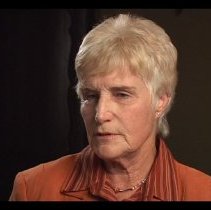
Lucile Wheeler Interview 2006 |
Scope & Content |
Lucile Wheeler interview, 23 October 2006. Digitized MP4 from Sony 40 Advanced ME DVCAM. Viewing time 00:14:45. 00:28Childhood: at that time everyone cross-country skied, skied to area where you could downhill, bindings convertible, started skiing at 2 yrs old, skied across lake to lodge and back home 02:23From an athletic family: Dad was a dog-sled racer and competed at the 1932 Olympic Winter Games in Lake Placid in a demonstration sport; both parents skied, were golfers 03:11Becoming competitive: first race at age 11 at Mont Tremblant, a ski instructor had suggested to her father that she should go in a race 04:10When did you start to take it seriously: made 1950 World Championships Ski Team, only 14 so too young to go, decided to go to boarding school in New Hampshire, skiing was one of the main sports, this is when she realized how much skiing meant to her, while at school qualified for the 1952 Olympic Winter Games in Oslo 05:401950 World Championships: opted not to go as not experienced enough and would be with much older people, good because realized that was what she wanted to do 06:021952 Olympic Winter Games Oslo: just turned 17 when went to the Olympics, had never travelled before, talks about the long flights to Oslo, wonderful learning experience, then went and raced on the continent in Europe and gained wonderful experience competing with the Europeans 06:56Canadian ski team: wasn't a national ski team at that time, only came together every 4 years for the World Championships or the Olympics, would have trials before each to be selected, skied together for 3-4 weeks prior and then the team was dissolved and you were on your own for other races, they usually stayed together 07:52Training: did train all year round but was her own planning and doing 08:11Events skied: downhill, giant slalom and slalom 08:19Where you ever scared doing the downhill course: perhaps when younger, because did not fully understand how to train then or run the course, but her coach never made her do anything she could not do, talks to the trust relationship she had with him 08:58What was it like to be one of the few Canadians in a very European centralized sport: friendly atmosphere, all the teams travelled together by train, go to know each other, party after each race, never felt alone or different, only difference you were 1 or 2 against much stronger teams 09:41Did the Europeans take the Canadians seriously: not at the beginning, she spent 5 weeks in Kitzbuhel, Austria 10:21World Cup races: none in Canada, not even in Europe at that time, not many races , both men and women competed in all 3 events, were important races 11:08Did going to your first Olympics in Norway prepare you for Cortina: familiar with the Olympic atmosphere, had competed at the World between in 1954, was well prepared 11:37Were you confident you would win a medal: no; talks about seeing display of the medals in a window and looking at the Bronze and saying that is the one I don't want, that was the one she won 12:11What do you remember of that race: can't remember a lot, fastest time over the steep part, lost time on flat and roll sections, difficult part was she had bib #3 and had to wait for the rest of the top seed to finish to realize she had won a medal, nerve wracking time 13:24What did it feel like when you knew you had won a medal: thrilled; first one in skiing for Canada; talks about the ice hockey team winning a Bronze and the disappointment in that medal but the excitement over hers 14:04Career after the Olympics: skied for another 2 years, 1957 skied in Europe and had a good year, first Canadian to win the Hamnenkahm ski race in downhill and combined, prepared her for the Worlds, 1958 first Canadian and first North American to win a World Ski Championships, won the downhill and giant slalom and silver in the combined 14:55Did you break ground for Canadians: yes, she retired in 1958 and 1959 was the first time Canada sent a team to train and race in Europe, beginning of the national ski team 15:33Who did you look up to: Rhona and Rhoda Wurtele, twin sisters who skied, they were 13 years older than she was, met them at her first race and has been friends with them ever since, if not had WWII intervened they might have been the first to win a medal, did compete in 1948 but did not have the training needed, still looks up to them 17:00On the legacy: we are very proud that we won the first medals, 9 of us now with Olympic and World Gold medals, had all of them together in 1994; there was a reunion of the 1956 team at Lake Louise on the 50th anniversary and that was the first team the team had been together 17:58Retirement: retired at 23, had to be an amateur then, comes a time when you have to move on, now you can have a career and continue longer 18:34Other skiers she competed against: talks about Anne Heggtveit, Andrea Mead Lawrence 19:36Which meant more - the Olympic Bronze or the World Gold medals: different as the Worlds now held more frequently, from 1956 to 1964 the Olympics were considered the World Championships, at that time on a par in terms of competition and what was expected, the Olympics have grown into a show 20:31Did they have an opening ceremony and all the pageantry they do now: had simple Opening Ceremony with the flags, cauldron, hymn, etc; first pageantry in 1960 at Squaw Valley designed by Walt Disney; 1956 were the first televised Olympics 21:06 Do you still enjoy watching the sport: yes, like to watch to see what is changing; (21:20) changes in equipment, grooming of the sites, when she started competing the Army came out and foot stepped and side slipped the hill, on Mont Tremblant it was snowshoe packed, now smooth so much faster times 22:04What were you skis like: mixture of wood and fibreglass, much longer, own technician with help from the coach, needed to understand the waxes and the conditions 22:50Are the runs more dangerous now: no, we never had runs cancelled because of snow or wind, in some ways today it is safer because they can be postponed, have safety nets along sides of course; first time she wore a helmet was in 1958 23:41Favourite moment: Kirzbuhel, both the course and the town, the people were wonderful to her, she took part in the ceremonies held for Tony Sailor after the World Championships 24:27Special moment: the people you met, from all walks of life, from different parts of the world 25:10Life lesson: to have goals, whether they are small or large and they are attainable 25:55Things learned in sport used in her life: You learn from losing, to pull yourself up and learn from your mistakes and in winning you learn how to be gracious; you can always be better, you can always improve, for any part of your life 27:00On cultural diversity in the world of sport: many different types of people being involved in sport and many different aspects of sport, such as volunteers, coaches, officials, competitors, we have people from all nationalities 28:00On being in sport and not being competitive: First thing is to participate and enjoy, get much needed exercise, team playing with others, individual competitive with yourself, don't need to go into sport with the idea of going to be an Olympic or World Champion, it is to enjoy and improve, if you have that desire to win and train very hard those traits will surface 28:51On induction to the CSHoF: wonderful thrill, know some of the other Honoured Members 29:25Anything else to add: who in the sport world do I look up to - the volunteers are not recognized enough because most of us would not be able to achieve what we do without the volunteers, at any level 30:03Support from parents: when someone is involved in an individual sport have to a have a parent that is very encouraging, both her parents never made her feel that is was something she had to do 30:59Shows Olympic Bronze medal in box 31:30Shows both World Championship Gold medals this interview was conducted for the Bobby Rosenfeld Trophy website; it adds more information to the original HOF interview; 9 videos 1 of 9; 00:07 When did you learn to ski: started at age 2, family had resort Gray Rocks, would cross-country ski across the lake with the mail, everyone cross-country skied, it was as easy as walking 00:54When did you start alpine skiing: started by cross-country skiing into ski area, would climb up and ski down, Grey Rocks put in a rope tow and that opened up the ski hill, had an Austrian ski school instructor Herman Gadner, he suggested to her parents that she go into a race at Mont Tremblant, first race at age 10, was racing against the seniors, first time she met Rhona and Rhoda Wurtele [twin sisters, alpine skiers], they were older than she was but they became life-long friends, still her role models 02:47World Alpine Ski Championships 1950: was selected for the team, very young but had been racing against older skiers, at the time her parents felt she was too young and her education was more important, she attended a boarding school in New Hampshire because they offered skiing, had an arrangement with the school to attend races, she started in a one-room school house, then had a private teacher, then attended boarding school, by not going to the Worlds she felt that racing had been taken away from her and it was something she always had, made her more determined 05:09Which discipline did you prefer: like both of them, more success in downhill, liked the speed and technical requirements, she considers the giant slalom today as the most technical discipline in skiing 06:00What difficulties did you encounter skiing in Europe: went to the 1952 Olympic Winter Games in Oslo, went directly there, was her first international experience, went to the continent afterwards, age 17, most countries had a national team and Canada did not, the only time the skiers came together was for the Olympics or the World Championships for a short period before and then disbanded after, once over they skied on their own, considers this a bit of a disadvantage but also gained a lot of experience meeting other team members and watching them ski and learning from them 07:25How meaningful was it to win the Bronze medal at the 1956 Olympics: she was placing in the first 10 at that time, placed 6th in the giant slalom, talks about seeing the medals displayed in a window and saying she did not want to win the Bronze, she won it and loved it, a dream you don't realize is really going to happen, great breakthrough, Canada was amazed a skiers could win an Olympic medal whereas the hockey team for the first time won Bronze and everyone was upset, beginning of the controversy over amateurism and professionalism, the Russians were virtually professionals 09:411958 World Championships: most memorable experience of her life, winning the Bronze in 1956 had her think she could do more and better, she had returned to Europe in 1957 and raced in what was called an in-between season, was the first Canadian to win the Hahmemkamn race in Kitzbuhl, Austria, won the downhill and combined, at the 1958 World Championships she felt she should win and trained hard to win, remembers that when she was told she won the downhill she almost refused to believe it, 2 days when she won the giant slalom the pressure was off, little easier to win 11:47On the jump from 3rd to 1st on the international scene: throughout her lifetime she had good basic technical training from an early age, when in Europe she watched the other races, mostly the male racers, often skied and trained with them, able to pick up what she wanted from them 2 of 9On placing ahead of Freida Danzer: she had won the Silver in 1956 ahead of Lucile, considered her to always be a threat, "in the downhill you race against the course and not the field. If you race well against the mountain and the course you've done very well against the field. It eliminates competitiveness amongst the racers." 3 of 9Is there one race that is was more difficult: the downhill in the 1956 Olympics was a tremendous learning experience, the top was steep, lot of control gates, high speed turns, her coach asked her "why do you ski where the cows go", realized she took the cow path and then saw the line he wanted her to take 4 of 9; 00:05The 1950's are different than today in that they did not have a national team and the only way she had coaching on a regular basis was through her family or the ski club, plus the fact that she lived in a ski area and skied with other good skiers, she had her Austrian coach for 4-5 years, he spurred her to do what she did, wonderful coach; she and her friends hired him, did their own dry-land training, worked on their own skis, no ski technicians as now 02:01The people she would thank the most: her parents for enabling her to do it, the area she was born in, she was able to ski without it costing a tremendous amount, her coaches, her close friend who gave her confidence and helped her to believe in herself 03:03On Anne Heggtveit: expected big things from her; met her at Lake Placid in 1947 at a US-Canada competition, she was the forerunner, they were a team of 2 at the 1954 Worlds, a team on 4 at the 1956 Olympics and a team of 2 at the 1958 Worlds, trained a lot together, what impressed her about Anne was her natural ability to control the edges on her skis 5 of 9On the film that won the best educational sport film award for 1958: it was made in Banff with Real Charette in 1958, it was to show technique, it included other ski instructors, she remembers the producer asking her to go slower and not to race 6 of 9; 00:01On her retirement: married Kaye Vaughn of the CFL, was involved in a programme at Camp Fortune in Ottawa for preschoolers, moved to the Eastern Townships and she started a programme at the elementary school that continue today 02:31On the leather helmet now in the collection of the Canadian Ski Museum: first time she ever saw a helmet was at the 1956 Olympics, the Swiss team had them, remembers taking notice of it, when they went back to race in 1957 they were able to get the helmets, they are of leather with a little bit on sponge in them, did not give a great deal of protection 7 of 9On winning the Bobby Rosenfeld Award: thrill to be selected to win this award, great feeling to be part of it, to be included with the other names on that trophy, culmination of many years of hard work and enjoyment 8 of 9; 00:06On winning the Bronze in 1956: big response in Canada when she won the medal, didn't think that Canada had skiers who were capable of doing that, she was not the only skiers of that calibre, her win helped promote ski racers 9 of 9; 00:08On the differences between skiing in the 1950's and today: then there was no national team, training was done on their own; today there is a national team; they did not compete in the summer, did their own dry-land training; not like today when they train and compete on snow in the summer, the courses are better today, then they were foot-packed, sometimes there was a mogul left in line, today the grooming is smooth and conditions are the same throughout; then the race number meant a great deal, the early number was better because the course became rutted; the equipment went from long, narrow skis to shaped skis that give you more speed in the turns |
Date |
2006/10/23 |
People |
Wheeler, Lucile |
Search Terms |
Lucile Wheeler Interview Women in sport Alpine skiing skiinng 1956 Olympic Winter Games Cortina d'Ampezzo 1958 World Ski Championships 1952 Olympic Winter Games Oslo |