bil.png)
Archive Record
Images
Metadata
Object ID |
2013.55.21 B |
Object Name |
Video Recording |
Title |
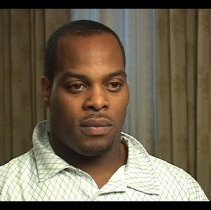
Carlton Chambers Interview |
Interview Summary / Résumé d'entrevue |
Carlton Chambers, Order of Sport recipient, inducted in 2008, born in Toronto, Ontario, shares insights into his athletic journey. Carlton explains that growing up in the Jane and Finch area of North York, he initially played soccer but transitioned to track. Carlton discusses the skills he learned in soccer that he transferred to track, how Mark Guthrie began coaching him, and how he qualified for the 1996 Olympic Games. Carlton emphasizes the mental aspect of sprinting, attributing a large part of success to mental focus. Carlton discusses his training routine, how his strategy mimicked Ben Johnson's need to dominate the race straight out of the starting blocks and reflects on Johnson's doping scandal. Carlton elaborates on his time at Clemson University, his role in relay races, and the technical aspects of passing the baton. Carlton highlights the thrill of winning gold at the Atlanta 1996 Olympic Games despite his injury and how deciding to step down from the final race was a defining moment in his life. Carlton describes the 1994 Commonwealth Games Gold Medal in the 4x100m relay as his best race. Carlton encourages young people to persevere, stay active, and appreciate the opportunities that sports offer, defines a winner as someone determined and unafraid of failure, and encourages youth to never give up on their dreams. Carlton Chambers, récipiendaire de l'Ordre du sport, a été intronisé en 2008 et est né à Toronto, en Ontario. Il partage ses perspectives sur son parcours athlétique. Carlton explique qu'il a grandi dans le quartier Jane et Finch de North York et qu'il a commencé par jouer au soccer, pour ensuite passer à l'athlétisme. Carlton discute des compétences acquises au soccer qu'il a ensuite pu utiliser en athlétisme. Il explique comment Mark Guthrie est devenu son entraîneur et comment il s'est qualifié pour les Jeux olympiques de 1996. Carlton souligne la dimension mentale du sprint, attribuant une grande part du succès à la concentration. Carlton discute de sa routine d'entraînement et de sa stratégie, qui imitait le besoin de Ben Johnson de dominer la course dès le départ. Il réfléchit sur le scandale de dopage de Johnson. Carlton détaille son passage à l'Université de Clemson, son rôle dans les courses de relais et les aspects techniques du passage du témoin d'un sprinter à l'autre. Carlton parle de l'émotion de remporter l'or aux Jeux olympiques de 1996 à Atlanta malgré sa blessure et explique comment la décision de se retirer de la dernière course a été un moment décisif dans sa vie. Carlton décrit la course du relais 4x100m aux Jeux du Commonwealth de 1994, où l'équipe a remporté la médaille d'or, comme la meilleure course de sa vie. Carlton encourage les jeunes à persévérer, à rester actifs et à apprécier les opportunités offertes par le sport. Il définit un gagnant comme quelqu'un de déterminé et qui ne craint pas l'échec, et il encourage les jeunes à ne jamais abandonner leurs rêves. |
Scope & Content |
Carlton Chambers interview, 3 November 2008. Digitized MP4 from Sony 40 Advanced ME DVCAM. Viewing time 00:33:29. 01:52Sports played as a child: grew up in North York, in the Jane and Finch area. Played soccer for 10 years, then went into track; the politics in soccer forced him out although he had made the National Team, always knew he was fast so he tried track 02:07Played forward on soccer team; nickname was The Roadrunner 02:18Childhood idols: Wayne Gretzky, Steve Yzerman, Ben Johnson, "which is now a love-hate... because of his tarnished career" 03:00On starting track: always ran during the school season, went to Brampton and met coach Mark Guthrie "he was one of my biggest fans and felt like a father to me" 03:48Did you always run the short distances? In high school it rough at first since no formal track training but came in second in an Ontario High School meet, "that's when the light bulbs starting popping" 04:38Differences in running in track and soccer: in soccer you are always moving, in track you're starting from the block; is about learning how to get out of the blocks and applying technique and getting the form down. It took 2-3 years to combine and hone form and speed. 05:34What do you do in the blocks? Total concentration, quick explosive reaction, work on speed and power, mentally focused "the 100 metres is 70% mental and 30% physical"; "all athletes train the same way but it comes down to who is more focused than others" 06:44At what point in high school did you decide you were better? Second year of running at high school the teachers' were doing work-to-rule, which meant that he was not able to compete during the school year. During the summer he competed at the Junior level and was unprepared forthe skill required. Carlton "decided then that was not going to happen again." The next year, 1993-1994 he "blew onto the scene." 08:03On the strategy of running the 100 m: mimicked his style after Ben Johnson, goal was to get in front and stay in control of the race 08:50How can you focus ahead and still be aware of the people running on either side? When training and have training partner, it "feels naturally that someone should be there" 10:24How do you relax during a race while using your muscles to the fullest? "It's mental, pure concentration... focus on relaxing, training and letting the power come out... focus on breathing... on relaxing the face...", the race might be 10 seconds but mentally a lot goes on in. "We work by the 10th and the 100th of a second... so every footstep, every inch counts" 11:49Training: 6 days a week, power lifting, swam, long runs for endurance, biking, circuit training, speed work, weighted vests... 13:001988 when Ben tested positive were you angry, upset? When that happened Carlton was still playing soccer, could not believe it at first, that someone he was looking up to had done something like that, highly disappointed but "felt at that point I can run that fast" 13:5020 years later, he (Ben) wasn't the only one, lots of things in sport today need to be cleaned up... "I was a clean athlete", wants others to compete clean 14:23Scholarship to college in the United States (Clemson, South Carolina): three other Canadians attending school there, "felt like home" 15:08Track training at Clemson: "training was great, won some championships... travelled, had fun, a good group of guys [from different cultures], we trained hard and we pushed each other... Go Tigers" 16:06When did you start running the relay? Always did the relay, came naturally to him, position within the team, the most fun race in track and field 17:06Different preparation for the relay? You learn to run on a curve when training for the 200m 17:56Are there any ego conflicts on a team? Any conflicts work themselves out through practice, it becomes a process of elimination of who is best suited for which position 18:42On passing the baton and staying in your lane during a race: problems happen if you get an adrenaline rush, problems if not focused, being too excited, not paying attention to your line; "if a team is focused you can do it". 19:25On getting onto the National 4x100 m relay team that went to Atlanta: There are national trials, which you need to qualify for with a standard time. Then have to place in the top four and then there are two alternate spots. 20:11On running in the semi finals at the 1996 Atlanta Summer Olympic Games: was injured in the open 200m, tore his abductor and hip flexor 21:33Did you know you could win against Team USA? We were the underdogs, Donovan was the Gold medalist but the rest of the team was unknown, "We felt we were destined to win and we believed we could win" 22:16Were you disappointed Donovan did not run full out to the finish line? "At the time he was too excited, too happy... to beat the Americans, on American soil... we were deserving to win" 23:02Best race ever run, if he had to choose between 100m or 4x100m? The relay race at the 1994 Commonwealth Games, ran third leg... "that was my best race"; best time 10:18 seconds but feels he never ran his best time as he was always injured, did not run to full potential 24:17On injuries: the explosive start causes injuries, need proper resources such as nutrition, training, coaches, therapy, vitamins, little things count the most in recovering and competing at that high level 24:56What makes a fast track? The harder the better with bounce-back with the spikes, technology has improved; concrete is too hard, need some rubber for the spikes 25:06Can the 100m race go faster/lower time? Talks about Usain Bolt, believes he can go faster, 10 years ago there was a period where the time did not drop significantly but Usain dropped it... recalls a magazine article titled "Bigger, faster, stronger" 28:00On how to hold the baton during the race: learned at Clemson to pass it at the end, give as much of the baton to the person receiving it, "never had a problem exchanging with Glenroy or Surin... loved doing relays... they were fun" 30:03 On goals: Improving each practice was the goal. 30:28Greatest memory: The 1996 Olympic Games in Atlanta, pinnacle of my career, "at that point matured as a person, man enough to could go to the team and withdraw due to the injury and asked to be replaced"... "That made who I am a stronger person and not afraid to make a decision." 31:06Role model: many role models like his coach, mother, brother, friends: "take good attributes from [them] person and use that to model myself after' 31:30Why do you think young people should play sports? "Stay active, it's fun, you meet different people, different cultures, you stay fit, you have many opportunities in this world that without sports you won't get to the right avenue and achieve what you want to achieve in life." 32:00What did sports teach you about yourself: "I'm a hard worker... I'm very determined, very stubborn. I learned from switching sports that it wasn't very easy. I was determined to be the very best I could be in any sport I was competing in... When barricades were put in front of me I moved through them and I achieved what I wanted to be and that was a Gold medallist in the Olympics." 32:50What makes a winner? "Somebody who doesn't quit. Someone who is determined and not afraid to fail, because there are going to be a lot of failures before you reach your actual goals." 33:12Advice to a young person: "Don't quit, never give up, don't forget your dreams. Always remember where your are coming from because that is what will get you further in life." |
Date |
2008/11/03 |
People |
Bailey, Donovan Surin, Bruny Bolt, Usain Chambers, Carlton |
Search Terms |
Carlton Chambers Track and Field Interview Athletics 100 meter relay 1996 Olympic Games Atlanta Commonwealth Games |