bil.png)
Archive Record
Images
Metadata
Object ID |
2019.2.6 |
Object Name |
Video Recording |
Title |
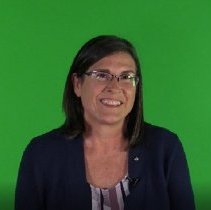
Vicki Keith Interview |
Interview Summary / Résumé d'entrevue |
Vicki Keith, Order of Sport recipient, inducted in 2019, born in Winnipeg, Manitoba, recalls being eighteen hours into a swim across Lake Ontario, battling three-metre swells, and having the fortitude to delay a decision on whether to continue or quit. She describes the decision not to quit as the best decision she ever made. She acknowledges that in this example she purposely did not seek advice because she wanted the decision to be solely her own and not influenced by others. Vicki is asked about her community, which she describes as her supportive family and friends. She further describes her community as the people who supported her through charitable donations which go towards programs for kids with disabilities. Vicki talks about the importance of the YMCA and how they supported her desire to work with young people with physical disabilities by creating the YMCA Penguins aquatic program. Vicki recalls working at Variety Village and the youth she interacted with for many years. She tells the story of one particular youth she coached, Ashley Cowan, who became the first person with a disability to swim across Lake Erie. Vicki elaborates on the importance of the safe and supportive space the Y Penguins provide and her desire to see the program expand nationwide. Vicki talks about how fellow inductee Waneek Horn-Miller's quote resonated. The interview is concluded with short answer questions to Proust Questionnaire style questions. Entrevue avec Vicki Keith, 22 mai 2019. MP4 d'origine numérique, temps de visionnement de : 00:15:24. Vicki Keith, récipiendaire de l'Ordre du sport, a été intronisée en 2019 et est née à Winnipeg, au Manitoba. Elle se souvient d'une traversée du lac Ontario alors que, dix-huit heures après le moment du départ, se battant contre une houle haute de trois mètres, elle a eu la force de repousser la décision de continuer ou d'abandonner. Elle dit que choisir de ne pas abandonner est la meilleure décision qu'elle ait prise de sa vie. Elle reconnaît que lorsqu'elle a pris cette décision, elle a fait exprès de ne demander l'avis de personne car elle voulait que cette décision lui appartienne entièrement et ne soit pas influencée par d'autres. On demande à Vicki de parler de sa communauté, qu'elle décrit comme l'ensemble de l'appui de sa famille et de ses amis. Elle continue en disant que sa communauté, c'est aussi tous ceux qui l'ont appuyée avec des dons allant à des programmes pour enfants présentant une déficience. Vicki parle de l'importance du YMCA et de comment cet organisme a appuyé son désir de travailler avec les jeunes vivant avec des déficiences physiques en créant un programme de natation pour cette population (YMCA Penguins aquatic program). Vicki se souvient des jeunes avec lesquels elle a interagi pendant plusieurs années pendant qu'elle travaillait pour l'organisme Variety Village. Elle raconte l'histoire d'une jeune en particulier, Ashley Cowan, dont elle a été l'entraîneure et qui est devenue la première personne avec une déficience à traverser le lac Érié à la nage. Vicki parle plus en détails de l'importance de créer des espaces sûrs et emplis d'appui, comme celui offert par les Y Penguins, et de son désir de voir ce programme grandir à l'échelle nationale. Vicki explique comment l'a interpellée une citation de Waneek Horn-Miller, autre membre intronisée la même année qu'elle au Panthéon des sports canadiens. L'entrevue prend fin avec des réponses brèves de Vicki à des questions inspirées du questionnaire de Proust. |
Scope & Content |
Vicki Keith interview, 22 May 2019. Born digital MP4, viewing time 00:15:24. 00:00:30:12 So the first question on the list is, given the breadth of your experience, what's the best decision you've ever made? 00:00:39:01 The best decision I ever made was to not make a decision. I was in Lake Ontario, I'd been there for about 18 hours with a three metre swell with the chop on top and I was vomiting continuously and actually sometimes I was underwater vomiting and unable to get my next breathe of air and at two o'clock in the morning I felt that there was no way I could continue and in that moment I decided to make the decision right then but to wait until the sun rose and so I swam for the next four hours in those conditions and when the sun rose I looked around and I knew that I was making the right decision. So the message to me was never to make a life altering decision when you're at your emotional lowest, wait a little bit, work it out, and then when things are coming around then it's time to make the best decision for yourself. 00:01:28:53 00:01:36:12 So the question that comes up… Did anyone help you make that decision? 00:01:39:31 I often go to people and ask for advice and see other perspectives, but, in that moment, if I had of asked for advice I was afraid that I would be given an opportunity to stop and I didn't want that opportunity to be given to me because I was emotionally low enough that I might have accepted it so I kept it to myself at that moment and worked it out on my own. 00:02:05:02 00:02:08:23 How would you characterize the community that helped you achieve your goals in sport. What was it like and how's it changed? 00:02:16:41 The community that I had in sport started out with family who supported me even though they didn't see the possibilities that anything I was aspiring to was possible. Then it was my friends who thought I was a bit of a joke and were coming up with ridiculous ideas like swimming across all five Great Lakes. Which of course the next day I went out and bought a map of the Great Lakes and nailed it to my living room wall and started working towards that. But my community was even more than that and I think that the community that touched me the most was the people who were part of my swim emotionally and who donated money in support of the programs for kids with disabilities. Because of a group of strangers I was able to raise over a million dollars for programs for kids with disabilities and I think that that was the most important community. They didn't have to love me. They didn't even have to like me, but they got drawn into the adventure and wanted to help make a difference. 00:03:15:57 00:04:00:29 Is there a standout person, place or thing in that community that you like to talk about? 00:04:05:33 I think I was really blessed to have the YMCA in my life. I started out very young learning to swim at the Y. I became a volunteer at the Y and the Y sort of played a role my entire life but as I was completing my swimming career I had the YMCA come to me and ask me how they could help and because they came to me and said to me that they wanted to be part of this, I was able to start a program for young people with physical disabilities at the Y and the Y continues to support that program and me to make sure that the young people in our community are given the best opportunities that they can. 00:04:43:22 00:04:46:58 So I'm assuming in these questions that most of our Hall of Famers have moved beyond competition *Yes* (interjection by Keith) but I'm picking up fairly quickly that many of them still compete at some level, either with the kids they're coaching just for fun or actually at a masters level so the question now that you're moving beyond competition, are you a standout person for someone or something else? 00:05:14:12 I think that right from the very beginning I wanted to work with young people with disabilities. At the age of 10 at the YMCA in Ottawa I started to work with a young person with a disability. I remember lifting him into the water and seeing his eyes light up and the smile on his face and I realized at that age that this was his freedom and so that's been something that I've wanted to be able to do… is provide that freedom for more kids. When I started my swimming career I started to work with Variety Village which is a fitness centre for young people with disabilities and then as I moved along in my life I started a program at the YMCA. (** Wendy asks Keith to restart) 00:05:58:32 00:06:01:26 Now that you're moving beyond competition, are you a standout person for someone or something else? 00:06:07:53 I think that the thing that's become the most important to me is working with young people with physical disabilities. I remember at 10 years old, lifting a young person with a disability into the water and watching his eyes light up and the smile on his face and I realized that water to him was freedom and so throughout my life I've wanted be to provide that opportunity to more and more kids. I went to Variety Village and worked at Variety Village for many years and providing opportunities there and then decided I wanted to start a program of my own and follow my own heart and move to Kingston, Ontario and started to program there for kids with disabilities and it's been so much fun to watch them blossom and grow from learn-to-swim kids all the way up to kids who are achieving their goals in open water swimming, but also at the Paralympic level. 00:06:58:36 7:01:11 Is there any kid in particular that you remember that keeps in touch with you, that you still hear about. Is there anyone in that space, I'm just asking? 7:11;38 So many. So one of the young women that I worked with at Variety Village, her name was Ashley Cowan and Ashley came to me wanting to swim across a lake just like I had and I remember her walking onto the pool deck and she had one hundred dollars in the crook of her elbow and handed me the hundred dollars and said "I want to swim just like you." and Ashley was born able body, but developed a disability and was a quadruple amputee at the elbow and at the knee on all four limbs and when she got in the water the first time she could manage maybe half a length of the pool and was completely exhausted and I said to her that was great, but let's just see where you're going to go with this and I put her in a group of young people of about the same swimming level and said you can swim with this group for now and she swam with that group for a couple of weeks. Then she came onto the pool deck one day stomping her legs and said to me "What do I have to do to swim in your group?" and I said "Ashley I explained this to you, when you can swim 10 lengths of the pool without stopping with flip turns, then you can swim in my group," and she said fine, stomped over to end of the pool and dove in the water and swam those length and got out of the water and looked at me and said "now can I swim with you?" and the answer was of course you can. Ashley went on beyond that and she became a national level swimmer. She missed the Paralympic standards by just fractions of a second and was devastated by that and I said "Ashley, why did you come to me?" and she said "Well because I wanted to swim across a lake!" and I said "do you think it's time," and she looked at me and she had almost forgotten about that goal and so we worked for a year and we decided that Lake Erie was a great challenge and we trained, we got her in the water and Ashley became the first person with a disability to swim across Lake Erie. 00:09:04:58 00:09:13:35 Let's see, do you have any ambitions for your community now, however you define it the sports community, the coaching community, the swimming community. Do you have any new ambitions for those groups? 00:09:26:38 I have new ambitions every day, some that I know are going to take root, some that are a splash in the pan. I want to make a difference, a positive impact in every young person that I work with; I want to help them achieve their goals, their dreams. I'd love to see a program like the Y Penguins in every YMCA across Canada because I think that this is a forgotten group. We have young people who just aren't seen. I had a young person on the swim team who started to question whether he existed because people at school ignored him so much. I have young people who sit at lunch every day because nobody will talk to them and what I think sport is offering them and what Y Penguin is offering them, is a place to have friends, to make friends, to be part of something bigger and I think that we need something like that across our country. 00:10:20:45 00:10:25:01 Give me a glimpse of something you find yourself doing now that you'd never thought you do. 00:10:30:03 Something that I never considered doing was coaching at a high level in sport. I wanted to be an age group coach coaching grassroots kids and as time passed I realized that my athletes were moving beyond where I had intended to coach and I had two choices: let them go somewhere else or to continue our relationship and help them grow where they wanted to and so I just went with it and have had a great a journey with my athletes. 00:10:56:57 00:10:59:08 So did you pick a quote? 00:11:22:28 I like Waneek's quote because it touched me right in my heart. I think that we each have a community around us of people that we want to make a positive impact. The young people that I work with have a lot of struggles in their life and they're not the one necessarily that we see physically. 55% of kids with a disability don't have a friend and 8 out of 10 kids are bullied and a lot of those kids have no physical outlet for it and I think that we need to be able to choose a community that's important to us and make a positive impact so we are giving back on a daily basis. 00:12:03:10 00:12:10:57 So now we're onto the super fan round, short answers, they could be whatever you want. I don't know if you're familiar with the Vanity Fair Marcel Proust interview format, but there's 30 of these questions and if you answer all of them they pretty much define your character which is a really cool thing. If you want, look at the back page of Vanity Fair. The questions are there. It's pretty extraordinary. So the question is then what is your greatest fear? 00:12:40:44 My greatest fear is making a fool of myself by accident. I'm okay making a fool of myself on purpose, but I really don't want to do it on accident. 00:12:50:26 00:12:50:45 Excellent, do you have an example of when that has happened? 00:12:52:40 NO! 00:12:56:23 You know there's a book by Milan Kundera called Ridiculous Immorality, where it doesn't matter how many great things you do in your life, you're remembered for the stupidest one. It's a very theory, It's really good. He wrote The Unbearable Lightness. 00:13:08:58 I hope I've done enough good things that they won't remember the, I've never done anything stupid honest! 00:13:14:23 00:13:13:47 Yeah, the problem is that apparently you will be remembered for the stupidest thing you did by a group of people. So what is the thing you most admire in other people? 00:13:22:30 The thing that I most admire in other people is the ability to see someone else in need and provide assistance before they even realize that they are in need. I love to help people, but I'm always astounded by people around me who have stepped in and helped them before I even realized that there was a challenge. 00:13:41:48 00:13:43:28 Very nice and the thing that you most detest in yourself? 00:13:47:28 I don't think it's helpful to detest something in ourselves, there's things in myself that I like and things in myself that I'm not a fan of but I find that there two sides to every coin. One of the things that I struggle with the most is that my brain moves way too fast and I can't keep up with it so sometimes my thought process becomes scattered because I'm three thoughts ahead than my mouth is, but I also think that's one of my greatest advantages because that's one of the reasons I came up with some of the ideas of achievement that I never would have come up with if I was a functioning straight line kind of thinker. 00:14:26:35 00:14:27:56 Very good point and your idea of perfect happiness? 00:14:29:25 Perfect happiness; nice warm summer day, walking into the lake, diving under the waves and being in a completely different world of quiet, of peace, of seaweed, of fish, of sparkling water. 00:14:46:12 |
Date |
2019/05/22 |
People |
Keith, Vicki |
Search Terms |
Vicki Keith Swimming Interview Order of Canada World record Terry Fox Hall of Fame International Marathon Swimming Hall of Fame Ontario Sports Hall of Fame Long distance butterfly Open water butterfly |