bil.png)
Archive Record
Images
Metadata
Object ID |
2014.37.13 |
Object Name |
Video Recording |
Title |
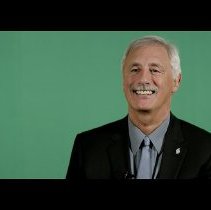
Tim Frick Interview |
Interview Summary / Résumé d'entrevue |
Tim Frick, Order of Sport recipient, inducted in 2014, born in Aldershot, England, talks about his career coaching wheelchair basketball. Tim recalls coaching Rick Hansen and Terry Fox and coaching the Canadian Women's Wheelchair Basketball Team. Tim remembers that when he began coaching, it was an unpaid activity, and he believed that if he was going to coach in any capacity, he wanted to make a real difference to society. Tim explains that coaching wheelchair basketball "led to a lifetime of wonderful experiences" and that his role as a coach is to motivate athletes to give their peak performance. Tim describes that while coaching, he learned that Canada is an exemplary country for embracing the Paralympic movement and is a leader in the concept of inclusion. Tim explains that as a coach, he focuses on the mental preparation of athletes and emphasizes that a good coach influences an athlete's life beyond sport. He also talks about the changes in wheelchair design over the years. Tim recalls the magical moment when Team Canada won Gold at the 1992 Paralympic Games Women's Wheelchair Basketball in Barcelona. Tim describes the values learned in wheelchair basketball, what the "paradox of peak performance" is, and how the only times he failed as a coach was when he was not faithful to his beliefs. Entrevue avec Tim Frick, 22 octobre 2014. MP4 d'origine numérique, temps de visionnement : 00:08:57. Tim Frick, récipiendaire de l'Ordre du sport, a été intronisé en 2014 et est né à Aldershot, en Angleterre. Il parle de sa carrière d'entraîneur de basketball en fauteuil roulant. Tim se rappelle l'époque où il était l'entraîneur de Rick Hansen et Terry Fox ainsi que de l'équipe nationale féminine de basketball en fauteuil roulant. Tim se souvient qu'au début de sa carrière d'entraîneur, ce travail était une activité non rémunérée, et il croyait que s'il était entraîneur, il voulait vraiment faire une différence dans la société. Tim affirme que le métier d'entraîneur de basketball en fauteuil roulant l'a " amené à vivre une vie remplie d'expériences extraordinaires ", et que son rôle consiste à motiver les athlètes à donner leur maximum. Tim décrit que durant son parcours d'entraîneur, il a appris que le Canada est un pays exemplaire en ce qui concerne l'adoption du mouvement paralympique et qu'il est également un leader en matière d'inclusion. Tim explique qu'en tant qu'entraîneur, il se concentre sur la préparation mentale des athlètes et souligne qu'un bon entraîneur influence la vie d'un athlète au-delà du sport. Il parle également des évolutions dans la conception des fauteuils roulants au fil des ans. Tim se souvient du moment magique où l'équipe canadienne a remporté l'or aux Jeux paralympiques de 1992 en basketball en fauteuil roulant féminin à Barcelone. Tim décrit les valeurs apprises au basketball en fauteuil roulant et explique ce qu'est le " paradoxe de la performance maximale ". Il indique aussi comment ses seuls moments d'échec en tant qu'entraîneur ont été ceux où il n'a pas respecté ses convictions. |
Scope & Content |
Tim Frick interview, 22 October 2014. Born digital MP4, viewing time 00:08:57. 00:10How did you get involved with sport for persons with disabilities: in 1976 he was watching a volleyball games at UBC when he was introduced to Rick Hansen; the next summer he was asked to coach wheelchair basketball, which has led to a lifetime of wonderful experiences 00:50What was it like coaching people like Rick Hansen & Terry Fox: he considers himself to be lucky to have coached Rick and Terry and athletes in the squad; he just approached it as coaching and trying to get the best out of an individual, to help them to motivate themselves to perform at their peak 01:20What have you learned to be a great coach: for starters that Canada is a great country, we have really embraced the Paralympic movement and sport and physical activity for people with any kind of abilities; he really learned that if you believe in something and really keep working at it, it will come true 01:58Why is it so important to you to help people with disabilities: when he started coaching he want to be paid but no one was paying coaches then, so he decided that if he was going to get involved in a movement that had some real meaning to it and he could make a real difference to society; he was in the right place at the right time 02:30You really focus on mental preparation. What values do you install in your players: the mental preparation side of things carries over to everyday life, "I think the power of the mind is just incredible" 03:06On the change in technology in wheelchair basketball: when he first started they changed out an old hospital wheelchair themselves to get a better degree of camber; in the late 1970s and early 80s they changed to a sport model which had a rigid chair specifically designed for that particular sport; great for the world in general because some of those details are now found in everyday chairs 03:55Most valuable messages to pass on to coaches: the most important thing is that you not a wheelchair basketball coach; you are not coaching the sport, you are coaching the people within the sport, and if you can show a true genuine interest in their well being and help them become better for it and help them pass that on to future generations then you have done your job 04:27What has coaching given you: an unbelievable life, the opportunity to experience experiences 05:02Is there one special moment: the most magical was the 1992 Barcelona Paralympics, no one thought they would win and that started the legacy 05:46On the importance of being inducted for him and for the Paralympic movement in Canada: for himself any award is nice but it is more important to get Wheelchair Basketball and persons in the movement out into the public mind; we have done a great job in Canada of awareness and inclusion but it still has a long way to go to build it into everyday sport 06:08Values learned: how important friendships are, how valuable your belief in yourself can be, how the fact that the power of the group is much greater than the sum of the power of any individuals in that group 06:33Advice to young children: if you want to achieve a goal in life, typically in sport, you have to have a clear picture of what that goal looks like; to achieve it you have to stop thinking about it and focus on what you are doing right in the moment and have hundreds of little successes everyday and all of a sudden your goal will come true to you 07:13Anything you would do differently: he talks about the two times the team did not have a peak performance and that he made some decisions that were not 100% true to what he really believed; if you beliefs are true, then your results will be true 08:08On instinct: you have to have a strong belief in yourself but not be too overconfident; if your ego gets tied up in it you are done; but on the other hand you have to listen to everybody and take in everyone's input and us it and value it; when that input conflicts with your own true values, stick with your values |
Date |
2014/10/22 |
Year Range from |
1994 |
Year Range to |
2006 |
People |
Frick, Tim Hansen, Rick Fox, Terry |
Search Terms |
Basketball Wheelchair basketball paralympic games coach Interview Tim Frick |