bil.png)
Archive Record
Images
Metadata
Object ID |
2014.37.10 |
Object Name |
Video Recording |
Title |
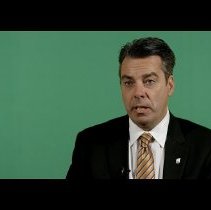
Horst Bulau Interview |
Interview Summary / Résumé d'entrevue |
Horst Bulau, Order of Sport recipient, inducted in 2014, born in Ottawa, Ontario, talks about his ski jumping career. Horst describes the values his parents, emigrants from Germany, gave him. These include working hard and giving a good life to your children. His father learned to ski in Canada and taught Horst on the local ski hills. Horst explains that he enjoyed both alpine racing and jumping as a youth, and that the skills he developed while racing helped him succeed when jumping. Horst recalls that when he won the 1979 World Junior Championship, there wasn't an expectation that he would win, and the success subsequently kickstarted his career. Horst describes his challenges while competing, including missing school and his family while competing in Europe. He describes the 1988 Olympic Winter Games in Calgary as the most memorable because, while he didn't have a podium finish, it was still amazing to represent Canada at home. Horst explains how being inducted into Canada's Sports Hall of Fame is an honour and equates it to winning a gold medal. He talks about the values he learned in ski jumping, such as being humble, proud of your accomplishments, and keeping your family close. His advice to young athletes is not to give up and to be happy. Entrevue avec Horst Bulau, 22 octobre 2014. MP4 d'origine numérique, temps de visionnement : 00:21:04. Horst Bulau, récipiendaire de l'Ordre du sport, a été intronisé en 2014 et est né à Ottawa, en Ontario. Il parle de sa carrière de saut à ski. Horst décrit les valeurs que ses parents, des émigrants venus d'Allemagne, lui ont transmises, notamment la volonté de travailler fort et de donner une bonne vie à ses enfants. Son père a appris à skier au Canada et a enseigné ce sport à Horst sur les pistes locales. Horst explique qu'il aimait autant la discipline du ski alpin que celle du saut, et que les compétences qu'il a acquises dans l'une l'ont aidé dans l'autre. Horst se souvient que lorsqu'il a remporté le Championnat du monde junior en 1979, personne ne s'attendait vraiment à ce qu'il gagne et ce succès a ensuite donné le coup d'envoi à sa carrière. Horst décrit les difficultés qu'il a rencontrées en compétition, notamment celle d'être loin de sa famille et de son école lorsqu'il compétitionnait en Europe. Il décrit les Jeux olympiques de 1988 à Calgary comme les plus mémorables, car, même s'il n'est pas monté sur le podium, c'était tout de même incroyable de représenter le Canada en sol canadien. Horst explique qu'être intronisé au Panthéon des sports canadiens est un honneur comparable à celui de gagner une médaille d'or. Il parle des valeurs acquises en pratiquant le saut à ski, comme l'humilité, être fier de ses réalisations et l'importance de rester proche de sa famille. Son conseil aux jeunes athlètes et de ne pas abandonner et d'être heureux. |
Scope & Content |
Horst Bulau interview, 22 October 2014. Born digital MP4, viewing time 00:21:04. 1of 2: 00:17What values did your father install in you: his family emigrated from Germany, his Dad was born in East Germany, when the war ended he went to northern Germany where he met his Mom; his Dad was a typical European - you don't spend money if you don't have it, pay cash for everything, don't borrow money; he provided for us, he was a carpenter by trade, built their home, worked hard for his family; the values he got from him were to be careful spending, do the best with what he could afford, he tries to do the same; they did things together as a family and Horst tries to carry this over and step up the values for his three children 03:28How did you get involved in sport: his Dad started skiing in 1961 just before Horst was born in 1962, he learned how to ski in Ottawa and golfed in the summer; he brought his passion to his kids who learned from him and on the local ski hills; it was fun to do it with your family and have your Dad coaching you 06:20Why ski jumping: the Ottawa Ski Club at Camp Fortune was one of the largest memberships in the world at that time, it was a public club; there were small ski jumps (10, 20, 40, 60 metre hills), as a kid he raced and did moguls and jumped on his alpine skis for fun, people who were part of the sport at the club saw him jump on his alpine skis and felt he had talent, he race until he was 13 and then stayed with jumping, he had some success at this point 08:02What made you a good ski jumper: he was somewhat fearless from jumping moguls 08:491979 World Junior Championship: he wasn't thinking about winning, it was the first time that the event was held outside of Europe, Quebec City had a new jump built for the competition and he trained on the hill, he was in good form and it "fell in my lap honestly", the expectation wasn't there to win but to get a nice result with a top 10 finish, to actually win was a surprise and it kick started his career 10:11Challenges: the biggest challenge for him and Canadian athletes was missing school because they were travelling and being away from home and his family, this causes a drain on the body, it is tough to be really competitive when travelling all the time, it is hard to live out of a suitcase and not to get a break to go home, the Europeans had an advantage that way 12:21Of the 4 Olympics which was the most memorable: Calgary, home country, best result was 7th on the big hill, was disappointed that he did not medal, was a disappointment because '80 to '83 were his peak years; it was a good result but not a podium; the World Cup results were great and he is proud of them, it would have been nice to win a World Championship, he talks about 1982 having great results until he broke his collar bone 5 weeks before the Worlds 14:56Highlight: being inducted, it's the big one; talks about other inductions but nothing beats this one, "these are the athletes of athletes", both professional and amateur; "this is my medal", something he will cherish 15:51How has ski jumping changed: the skis are longer and wider, the style has gone from leaning over the skis to the V-style, describes 1990 as the year the switch went from parallel to V; the physique of the jumper has changed, in his era they were smaller, lighter guys; need explosive power 17:47Values from the journey: he is super proud of this country, we live in a great country, he saw the East Bloc where it was difficult to live; he learned about the world and how the people are 18:40Be humble in what you do and who you are with and be proud of what you have accomplished, keep your family close and be happy 19:02Advice to young athletes: don't give up, we are not all going to be world champions or a medalist or have rankings; be proud of being on the national team; if you get it in your heart, be happy and have fun and don't give up 19:41Would you do anything different: no, you can't step back; work as hard as you can and give it everything you can |
Date |
2014/10/22 |
Year Range from |
1970 |
Year Range to |
1992 |
People |
Bulau, Horst |
Search Terms |
Interview Horst Bulau Ski jumping skiing Olympic Winter Games |