bil.png)
Archive Record
Images
Metadata
Object ID |
2019.2.7 |
Object Name |
Video Recording |
Title |
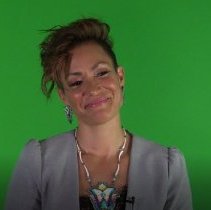
Waneek Horn-Miller Interview |
Interview Summary / Résumé d'entrevue |
Waneek Horn-Miller, Order of Sport recipient, inducted in 2019, born in Montreal, Quebec, describes the best decision she ever made as showing up at the Canadian women's national water polo team tryout. She talks about how her mother taught her, as an Indigenous athlete, to find and seek opportunities and about her family's support and encouragement throughout the years. As a Mohawk woman, Waneek describes her focus on advocating for access to sport for the Indigenous community and looks at examples in Australia and New Zealand for creating strategic plans that include incorporating Indigenous cultural aspects throughout sport and up through the Olympic movement. Waneek elaborates on how proud she is of her Mohawk heritage, how she blended her Indigenous identity into her athletic identity, and how it fit into the water polo team structure. She elaborates on how there is an essential place in sport for honouring and incorporating indigeneity. As a mother, Waneek remarks on how she supports her children's aspirations and passions. Fellow 2019 inductee Alex Bilodeau's quote "I will do all in my power to succeed" resonated with her because of her desire to be a successful Indigenous female athlete and pave the way for future generations. The interview concludes with Waneek providing short answers to Proust Questionnaire questions and describing a motto she received from a friend: "people will not always believe what you say, but they will have to believe what you do, so don't just talk, get out there and do." Entrevue avec Waneek Horn-Miller, 2019. MP4 d'origine numérique, temps de visionnement : 00:23:24. Waneek Horn-Miller, récipiendaire de l'Ordre du sport, a été intronisée en 2019 et est née à Montréal, au Québec. Elle explique que la meilleure décision qu'elle ait prise c'est de se présenter aux essais de l'équipe nationale féminine de water-polo. Elle raconte comment sa mère lui a enseigné, en tant qu'athlète autochtone, à rechercher et à identifier des opportunités et elle parle de l'appui et de l'encouragement de sa famille au fil des ans. En tant que femme mohawk, Waneek dit qu'elle se consacre à militer pour améliorer l'accès des communautés autochtones au sport. Elle s'inspire des exemples de l'Australie et de la Nouvelle-Zélande pour créer des plans stratégiques qui incorporent des éléments des cultures autochtones dans la pratique du sport et dans le mouvement olympique. Waneek parle plus en détails de la fierté qu'elle ressent pour son héritage mohawk, comment elle a mêlé son identité autochtone à son identité d'athlète et de la place que cela a trouvé dans la structure de l'équipe de water-polo. Elle explique qu'il existe dans le sport une place essentielle pour incorporer et rendre hommage à l'identité autochtone. Waneek parle de comment, en tant que mère, elle appuie les aspirations et les passions de ses enfants. " Je ferai tout en mon pouvoir pour réussir ", une citation d'Alex Bilodeau, un autre membre intronisé la même année qu'elle, l'a interpellée parce qu'elle désirait fermement devenir une athlète autochtone accomplie et ouvrir la voie à d'autres générations d'athlètes autochtones. L'entrevue prend fin avec les réponses brèves de Waneek à des questions inspirées du questionnaire de Proust. Elle explique également la devise qu'une amie avait partagé avec elle : " les autres ne croiront pas toujours ce que tu dis, mais ils croiront ce que tu fais, alors ne fais pas que parler; va accomplir des choses ". |
Scope & Content |
Waneek Horn-Miller interview, 2019. Born digital MP4, viewing time 00:23:24. 00:01:34:16 What is the best decision you ever made? 00:01:46:59 The best decision I ever made was to actually show up at the very first national, senior national team tryout. It was a couple of weeks after the Junior Worlds ended, we have been centralized all summer we were exhausted, and we were like [sighs] and I remember a couple of me and my teammates [ah!] are we gonna go I don't know why we were thinking that you know eighteen and not really thinking with our full brain at that time and we were kinda tired and I remember saying you know, we are gonna go, it was that opportunity, it was one of those things if someone gives you a little opportunity a little crack in the door you got to kick that door open and I was really thankful I did that. 00:02:32:16 00:02:32:57 That's very good, so you mention your team also being in the same state of minded for that did anyone help you make that decision to get off your chair and go to that tryout? 00:02:45:59 Well, my mother and my family being that for Indigenous athlete is not always a lot of opportunities and my mom was always telling us as young women when you get one little opportunity you got to really maximize it so she raised us not to you know to being sitting on our butts and waiting for people to come to us sometimes you got to go after it especially when you have a dream of being on the national team you know you don't pass up any opportunity it was my mom that got me going even though I was tired and Worlds had just ended and we got going and got to the Olympic Stadium in Montreal and I was terrified I was absolutely terrified and I went by myself and I am so glad I did it. 00:03:32:05 00:03:33:37 Excellent, thank you, 00:06:05:07 How would you characterize your community that helped you achieve your goals, is the community largely your home base or is it your sport community or is there a training community or people at school the helped you, how would you characterize, what is the composition of that for you? 00:06:26:29 Well obviously my community mainly is like my family. My family was really instrumental, I have two older sisters that were both athletic especially my older sister was very athletic she really set the bar high at a young age. My mother and then as I got more into the higher competitive realm and University certain coaches became very instrumental in just supporting me and keeping my dream alive and like some really, really tough times when I was about fourteen fifteen post Oka crisis, no money, they were there, they helped me, they even paid for Nationals for me, to make sure I didn't give up and kept going and so I have had this interesting community it's not one particular place, it's family , it's my home, community, it's coaches, it's friends and all these people kind of standing by and making sure I didn't give up. 00:07:34:44 00:07:36:46 That's great. So are you that community for other people now? 00:07:45:51 Well yes I try to be supportive and to give back. I'm getting more and more into coaching water polo in Ottawa, and playing still you know trying to be there to give my support, it's pretty cool. For many years, I've been really focused in the Indigenous community and advocating for access to sport, I really, I feel that's my responsibility, you know how can I give this opportunity more Indigenous youth to get to the top echelons of sport and using my voice and using my platform as an Olympian to say this is such an important thing to have access to sport, but also to have the support along the way and seeing someone like me I'm not extraordinary tall, extraordinarily muscular , the greatest complement I ever got was in a very northern community in Saskatchewan, I just given a big speech a little kid came up to me, looks up at me and goes you're not very big are you sure you're an Olympian and it's was funny because in his mind Olympians are supposed to look like super heroes and I looked at him and said yeah my super hero was hard work and I never gave up and that's why I became an Olympian and I was proud of who I am as a Mohawk woman and I took that with me all the way to the Olympics and you got to be proud of who you are, that is some way I've tried to give back , to sort of show the human side of being an Olympian to share my story and to always push the agenda politically and socially. 00:09:24:54 00:09:26:30 Good answer, so in terms of the ambition you have for that very aspect for the sport, for the Mohawk community, and the broader Indigenous community, are there any markers for that sort of that I am working towards this goal, pools, water polo, and sport in general? 00:09:53:53 You know I am a big advocate of sort of a strategic plan any athlete knows, I remember training and we would know what we were doing like a year in advance. That's how far our training was scheduled, but it also made us feel confident, it made us feel so much effort was put, into our training and I feel you know one of the most important things if you look worldwide at other Indigenous communities worldwide that are doing well in sport like Australia, and New Zealand there has been a long-term strategic plan in developing those communities and developed support specific sport making it culturally relevant and also including Indigenous cultural strengthening aspects into the main Olympic movement of those countries like New Zealand does and so this has been a real focus for me when I'm speaking in community, chiefs, even at the federal level. We need to have a strategic plan. We need to put forward this because you know we're trying to develop the opportunities for young people, but it has to be in a way that they understand the long term plan. 00:11:07:30 00:11:09:26 I think the point is really well considered. I think that being able to do sport and being authentic in who you are it applies to many different cultural aspects of being Canadian, and the Indigenous peoples as well as other groups need to feel that they're not distorting who they are to be part of that system when you say you have a strategic plan you're asking for a strategic plan that respects the authenticity of the people and the plan not just one plan for everyone is that right? 00:11:50:01 Yes, it really is like, I know what it means to me, my culture, my community, my ancestors all of these things play in to who I am today and the strengths and skills that I have. I know I've inherited them from a long line of very strong people and in order to succeed, I knew I couldn't down play my Mohawk-ness you know to try to fit into the mold of what sort of the culture of sport was at the time and I remember there was a sort of real push and unsaid push, especially in team sports to conform and I was trying you know to fit my fire was going out, my fire that made me a great athlete was going out and I knew I couldn't do that I knew, I knew I wasn't going to succeed and so I had to figure out how does my culture and who I am as a Mohawk woman how can it fit into a team context and strengthen the team and so I had to really learn that and stoke that fire and be proud, but also understand how I impact and support my teammates. 00:13:02:24 00:13:03:44 It's a really nice way of saying you felt your fire was going out. So do you think Indigenous characteristics of that long lineage of strong people, there really is an opportunity to bring something to Canada's team? 00:13:23:58 Absolutely I mean, when you think about trying to inspire athletes and using stories we hear of famous athletes like you know Muhammad Ali's and all of these people who never gave up. Well if you want to inspire athletes the Indigenous community the Indigenous people, the Nations of this country we're still here because we never gave up, we never gave in, we persevered and that strength and I often talk to young Indigenous youth, but also non Indigenous youth that say this runs in you, this is who you are and remember to honour that. How do you honour that? How do you honour that lineage and that perseverance that you come from and the communities you come from? You do it by being the best possible version of yourself, the most positive, the strongest, working the hardest, you don't re-traumatize yourself, you don't carry that forward, you do what your ancestors never had the opportunity to do because they were too busy just surviving. You take it to the next level and you start to thrive and then you showcase all of those skill and traits that our people have because whether we like it or not, we do represent in a lot of people's eyes sometimes the first Indigenous person they have ever known or every experienced, so you know it's not fair, it's not right until you know our people are populating every national team, Olympic team, out there we are opening minds and opening ideas of what Indigenous people are to every person we meet. Every official, every coach, and every teammate and so bringing the best of our people to that context and learning to teach people about who we are, teach about the impact of our past and how they can support us and that has been a big strength that I was able to get from coaches non-native coaches, non-native teammates who would come in to my world and understand my role in my family, my role, in my community and the impacts of history and all sort of colonization of what it did to me and how I'm trying to get through it and how I'm trying to persevere and be that best version of myself, I had the support once they understood it of these coaches, of these teammates to be able not only help me, but articulate it to everybody else and go you know what I get what she is going through lets help her through, lets be her sister, lets help her. 00:15:49:26 00:15:51:41 That's really nice, perfect. So what do you find yourself doing now, that you never thought you would do? 00:16:01:23 Wow Let me tell you now I'm a mom and I'm on the other side, I'm on the support side of my children's aspirations and whatever they are, I find myself doing trying not to dictate to them what their passions are going to be. I'm trying to let them find them and then develop them and just being that support to them the best way I know how and it's tough because you know me and their dad who is also an Olympic athlete, we have hopes and dreams and ideas and you know and maybe they won't want to do that and I have to let them do that. Maybe they will go in completely other direction and so I've taken some advice from my older sisters and said you know what step back let them find their passion and then be there to help them and so, that's what I'm trying to do. 00:16:51:16 00:16:52:18 Because you never know if you got a computer programmer or not it's always a surprise, so how did you do with the quotes did you see anyone's quote that you liked? In this selection there was Doug Mitchell "You don't have to play sport to be one" or Alex Bilodeau's "I need to do all within my power to pursue my dreams because I looked at my brother and you know his disability." 00:17:22:49 I would say that is the closest thing that sort of motived me. Knowing that I had a really incredible opportunity and that I come, my community, people in my community don't always have those opportunities you know and then the support of family that I had, my mother it really weighed on me from a very young age knowing that and not wanting to fail, not wanting to let people down was something that really drove me and wanting to showcase to the world what Indigenous people are capable of and defying all those pre-conceived notions of what we're capable of which I heard at a young age as an athlete from people telling me you know I heard you're quitters, I heard you're not very smart, I heard you're all these things and being afraid that those were true, maybe all this is true and I got to prove to myself that they are not. So I really wanted to showcase to the world what we were capable of in particular Indigenous women just how strong we are, how tough we are, how amazing we are and just putting that image out there so maybe the next person, the next athlete that comes behind me will have a different, they will walk into a different environment because of some of the changes I've made. 00:18:45:38 00:18:47:19 That's great. Would you mind saying I like Alex's quote to do with all in my power? 00:19:06:12 I really liked Alex's quote "I will do all in my power to succeed." I felt very much the same way he had his brother to inspire him and I had and have the Indigenous community and especially the young ones watching me wanting to show them what was possible, but also the Elders and my family and my community, I wanted to make them proud to be my family. That was really important to me. 00:19:35:25 00:19:36:39 Thank you, that's wonderful, so then I have my speed round which is do you have for the kids out there greatest fear? 00:19:49:15 I'm not gonna lie to you, I'm scared of swimming in the ocean especially when it's really, really rough, I'm afraid. 00:19:55:45 00:19:58:50 That's good what the thing you most admire in others? 00:20:05:52 I admire people who work hard to make a difference for everybody and do it in the shadows and don't need the accolades. I admire those people, I admire people who just want to make the world better and sometimes you don't even know who they are until the passed on and you read about them and you hear about them. Those are the ones that I'm just like I wanna do that, I want to make a difference and you know it stems from a love and a drive they have and the basis of things. I really admire people who love without condition and that's not family or a spouse, but that's the world, the environment, whatever they do they just love, I think that is amazing. They have a sense of peace about themselves and a purpose that really drives them and helps me kinda keep that clear focus on where I'm going to. 00:21:02:09 00:21:03:27 Is there anything you don't like about yourself that you'd like to share? 00:21:11:41 I am working on, I think we all work on our self-doubt. It plagues every athlete you know as you are going towards your dreams. A bit of self-doubt and now that I'm a mom and doing all these other things, it plagues me also, the fear of doing the wrong thing and not sure if I'm making the right decision for my kids, making the right work decision or business decision or decision about life and second guessing it and over thinking it. I'm trying to work on that, to be at peace and say you know what will be, will be. My mom always tells me, you know, when I'm telling her I don't know if I'm a good mom, I don't know if I'm being a good parent, she says is there a roof over your head? Is there food in the fridge? You're doing a good job and your kids are still alive. I'm like yes, so you know it's that self-doubt. 00:22:11:21 00:22:13:48 Good point, good point and do you have an idea of perfect happiness? 00:22:19:18 Perfect happiness for me is being at peace with your decisions and your interactions with the world. That's perfect happiness for me to be peaceful and to know that when people have left my presence they're happier, they feel stronger and they feel more positive about themselves and the world around them. That I have helped impact them with my own peacefulness. 00:22:46:34 00:22:48:26 Nice, now do you have a motto by any chance? 00:22:52:20 Actually, it was said be a very wise friend of mind named Victor Linklater from Moose Factory, Ontario. He said to me once when I was young, people will not always believe what you say, but they will have to believe what you do, so don't just talk, get out there and do. 00:23:11:39 |
Date |
2019/05/22 |
People |
Horn- Miller, Waneek |
Search Terms |
Waneek Horn- Miller interview Water Polo North American Indigenous Games Pan American Games Tom Longboat Award Olympic Games Sydney Olympic Winter Games Vancouver torch bearer |